NdFeB magnets, or Neodymium-Iron-Boron magnets, are known for their exceptional magnetic strength and widespread use in various industries, including automotive, aerospace, and renewable energy. As demand grows for more powerful and efficient systems, the need for high-temperature resistant magnets becomes increasingly important. While NdFeB magnets offer great performance at room temperature, their magnetic properties can degrade when exposed to elevated temperatures. This is where high-temperature grades of NdFeB magnets, such as SH, UH, and EH, come into play. These grades are specifically designed to withstand higher temperatures, maintaining their magnetic stability and performance in demanding environments. Understanding the differences between these grades—specifically their temperature limits and performance characteristics—is essential for selecting the right magnet for applications that involve high-heat conditions. This article explores the key features and distinctions of SH, UH, and EH grades of high-temperature NdFeB magnets.
Understanding NdFeB Magnets
1.Definition of NdFeB Magnets and Core Properties
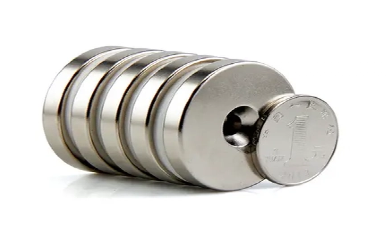
NdFeB magnets, also known as Neodymium-Iron-Boron magnets, are a type of rare-earth magnet made from an alloy of neodymium, iron, and boron. These magnets are renowned for their high magnetic strength, making them one of the most powerful permanent magnets available today. They are also referred to as "Neo magnets" in many industries due to their exceptional performance. The combination of neodymium’s high magnetic permeability, iron’s magnetic properties, and boron’s ability to stabilize the structure results in magnets that offer exceptionally high magnetic energy density and strong coercivity, which means they are resistant to demagnetization.
2.Magnetic Strength and Cost-Effectiveness
NdFeB magnets stand out for their exceptional magnetic strength, with some of the highest magnetic energy products (the product of magnetic field strength and magnetization) among all permanent magnets. Their ability to deliver powerful magnetic fields despite their relatively small size makes them ideal for applications where space is limited but high magnetic performance is required. Compared to other magnets, such as SmCo (Samarium-Cobalt) or Ferrite magnets, NdFeB magnets offer a better cost-to-performance ratio, making them highly cost-effective for a wide range of applications. While SmCo magnets have superior high-temperature resistance, NdFeB magnets provide greater value for money, especially in low-to-moderate temperature environments.
3.Typical Applications
Due to their strong magnetic properties, compact size, and affordability, NdFeB magnets are used in a wide variety of applications, such as:
Electric Motors: In consumer electronics, electric vehicles, and industrial machines.
Generators and Wind Turbines: For renewable energy production, where high efficiency is crucial.
Hard Drives and Data Storage: As high-density magnets for memory and storage devices.
Medical Devices: In MRI machines, where strong magnetic fields are required for imaging.
Speakers and Headphones: Due to their ability to create powerful magnetic fields in compact sizes.
High-Temperature Resistance in NdFeB Magnets
1.Why Temperature Matters
Temperature plays a crucial role in the performance of NdFeB magnets, as elevated temperatures can significantly impact their magnetic properties. NdFeB magnets are highly sensitive to heat due to their magnetic structure. When exposed to high temperatures, the alignment of magnetic domains in the magnet can shift, leading to a reduction in their magnetic strength. This phenomenon is known as thermal demagnetization. As the temperature increases, the magnet’s ability to maintain its strong magnetic field diminishes, which can compromise its effectiveness in many applications. Therefore, understanding the temperature tolerance of NdFeB magnets is essential, especially for industries where components are exposed to heat for prolonged periods, such as motors, generators, and aerospace systems.
2.The Impact of High Temperatures on Magnetic Properties and Performance
High temperatures have a direct and negative effect on the magnetic performance of NdFeB magnets. As temperature increases, the magnetic coercivity (resistance to demagnetization) of the magnet decreases. This means that at elevated temperatures, NdFeB magnets are more likely to lose their magnetic strength.
Thermal Demagnetization: This is the primary concern at high temperatures. The higher the temperature, the more significant the loss of magnetic energy, with temperatures above 80°C often starting to degrade the magnet’s performance.
Reduced Magnetic Force: At elevated temperatures, the magnetic field strength weakens, which means that components relying on the magnet's force (such as motors or actuators) will see a reduction in efficiency. This could lead to failure or inefficiencies in critical systems.
Application Limitations: The typical operating temperature range of standard NdFeB magnets is between 80°C-200°C. Beyond these limits, their performance significantly drops. To address this, high-temperature grades (like SH, UH, and EH) have been developed to offer better heat resistance for more demanding applications.
Performance Comparison Between SH, UH, and EH Grades
1.Temperature Stability
SH Grade: Tolerates temperatures up to 150°C, ideal for medium-temperature environments.
UH Grade: Can withstand up to 180°C, suitable for moderate to higher temperatures like electric vehicles or wind turbines.
EH Grade: Offers the highest resistance, up to 200°C, ideal for extreme temperature applications like aerospace or industrial machines.
2.Magnetic Performance
SH Grade: Provides strong magnetic performance at room temperature but loses strength more rapidly at higher temperatures.
UH Grade: Better performance than SH grade, maintaining stronger magnetic properties at elevated temperatures (up to 180°C).
EH Grade: Best magnetic strength at high temperatures, maintaining performance up to 200°C, ideal for high-performance environments.
3.Cost-Effectiveness
SH Grade: Most affordable with decent performance, suitable for applications with moderate heat requirements.
UH Grade: Offers better performance than SH grade but at a higher cost, good for medium-temperature environments.
EH Grade: Most expensive but provides the best performance in extreme heat environments, justifiable for critical applications like aerospace.
4.Choosing the Right Grade
For moderate heat resistance (up to 150°C), SH grade is cost-effective.
For higher temperatures (up to 180°C), UH grade balances performance and cost.
For extreme heat (up to 200°C), EH grade is the best choice, offering high performance for demanding environments.
Applications of High-Temperature NdFeB Magnets
High-temperature NdFeB magnets are essential in industries and applications where strong magnetic properties are required even at elevated temperatures. These magnets are designed to maintain their magnetic strength and stability in environments that would cause standard NdFeB magnets to degrade. Here are some key industries and applications that benefit from high-temperature NdFeB magnets:
1. Electric Motors
High-temperature NdFeB magnets are used in electric motors where high efficiency and power density are crucial. Motors in electric vehicles (EVs), industrial equipment, and aerospace systems often operate in elevated temperature environments. These magnets help achieve better performance and compactness, essential for applications requiring powerful motors in limited space.
2. Generators
In generators, especially those used for renewable energy (such as wind and hydroelectric power), high-temperature NdFeB magnets enable the efficient generation of electricity. These generators often operate in high-temperature environments where maintaining a consistent magnetic field is critical for performance. The high-temperature resistance of NdFeB magnets ensures long-lasting and reliable power generation.
3. Wind Turbines
Wind turbines require magnets that can withstand continuous exposure to the elements and high operational temperatures. High-temperature NdFeB magnets are used in direct-drive generators within wind turbines. These magnets provide the necessary magnetic strength to generate power efficiently, even in fluctuating temperature conditions, contributing to better energy production and reliability in the renewable energy sector.
4. Automotive Sensors
Automotive applications, particularly sensors used in electric vehicles, engine control systems, and advanced driver-assistance systems (ADAS), often need high-temperature resistant magnets. These high-performance sensors must function in engines and other high-heat areas of vehicles. High-temperature NdFeB magnets provide reliable performance and accuracy, even when exposed to high thermal loads and harsh operating conditions.
FAQ (4 Questions)
1.What is the temperature range for SH grade NdFeB magnets?
SH grade NdFeB magnets can operate effectively at temperatures up to 150°C, making them suitable for many standard industrial applications.
2.What makes UH grade NdFeB magnets different from SH grade?
UH grade magnets can withstand temperatures up to 180°C, offering higher thermal stability compared to SH grade, ideal for applications with moderate heat exposure.
3.How does the EH grade of NdFeB magnets perform at high temperatures?
EH grade magnets are designed to resist temperatures up to 200°C, making them the best choice for high-performance applications in extreme heat environments.
4.Which grade of NdFeB magnets is best for wind turbines?
UH and EH grades are typically preferred for wind turbines due to their ability to withstand higher temperatures encountered in power generation systems.
Conclusion
In conclusion, the key differences between the SH, UH, and EH grades of NdFeB magnets lie primarily in their temperature resistance and magnetic performance at elevated temperatures. SH grade magnets are suitable for moderate temperatures (up to 150°C), offering a cost-effective solution for applications with lower heat exposure. UH grade magnets, with their higher temperature tolerance (up to 180°C), provide better performance in medium-temperature environments like electric motors and wind turbines. EH grade magnets, with the highest temperature resistance (up to 200°C), are ideal for high-performance applications in extreme heat, such as aerospace and high-power generators.
When selecting the appropriate grade, it's important to consider the specific temperature requirements and performance needs of the application. For moderate heat conditions, SH grade magnets are a cost-effective option, while UH grade is a better choice for medium-heat applications that require stronger magnetic properties. For environments that experience extreme heat, EH grade magnets are the best option, ensuring long-term reliability and optimal performance in high-temperature conditions.