When selecting NdFeB magnets, it’s essential to understand the different grades available to ensure you choose the one that best fits your application needs. While the magnetic strength is an obvious factor, other considerations such as temperature resistance, mechanical properties, and specific operational demands are also crucial. Understanding these differences between grades like N35SH, N42H, and N52 will allow you to make a more informed decision that balances performance, durability, and cost.
NdFeB magnets are used across various industries, from electric vehicles to consumer electronics, to renewable energy solutions. However, the grade you select affects everything from operational efficiency to long-term reliability. At Yueci Magnetic, we specialize in providing high-performance NdFeB magnets with precise specifications for any industrial or technological application. In this article, we’ll break down the different grades and explain how each grade performs under specific conditions.
What Are NdFeB Magnet Grades?
Basic Grading
NdFeB magnets, or Neodymium Iron Boron magnets, are often rated by their magnetic energy product (MGOe), which reflects the strength and efficiency of the magnet. The "N" in N35, N42, or N52 corresponds to the magnet’s energy product, which is measured in Mega Gauss Oersteds (MGOe). For example, N35 magnets have an MGOe of approximately 35, whereas N52 magnets reach 52 MGOe, making N52 the highest grade in terms of magnetic strength.
The higher the MGOe, the stronger the magnet, and the more energy it can store. This is important because the strength of the magnet determines how much work it can do, such as generating force in motors or lifting objects in industrial applications. N52 magnets, therefore, offer maximum strength, whereas N35 magnets are typically used in less demanding applications.
Suffix Letter Explained: SH, H, UH
In addition to the numerical grade, NdFeB magnets may have suffixes such as SH, H, or UH, which indicate their temperature rating. The suffix tells you the temperature at which the magnet can retain its magnetic properties before they begin to degrade:
SH: Can operate at temperatures up to 150°C (302°F). Ideal for applications with high but manageable temperature exposure.
H: Suitable for temperatures up to 120°C (248°F). Often used in industrial applications that don’t reach extreme temperatures.
UH: Handles the highest temperatures, up to 180°C (356°F). This grade is used in the most demanding environments, such as aerospace and certain heavy-duty industrial applications.
These ratings are crucial for maintaining the efficiency and performance of the magnet over time, as heat can significantly reduce the strength of NdFeB magnets.
Understanding Performance vs Temperature
N35SH & N42H: High Temperature Options
N35SH and N42H are specifically designed to perform well in higher-temperature environments. For example, N35SH magnets can endure temperatures as high as 150°C (302°F), making them suitable for renewable energy systems like wind turbines, where components are exposed to heat during operation. N42H magnets, with a temperature rating of up to 120°C (248°F), are ideal for industrial applications where higher temperatures are common but not extreme.
In contrast to N52 magnets, which can handle lower temperatures of up to 80°C (176°F), N35SH and N42H offer more temperature tolerance without sacrificing too much in terms of strength. As such, for applications exposed to elevated temperatures, these grades are more appropriate, ensuring the magnet retains its magnetic properties over the long term.
N52 Standard Grade & Its Limits
N52 magnets are the highest-performing NdFeB magnets in terms of magnetic strength, but they are not designed for high-temperature environments. While N52 magnets offer incredible strength with a maximum energy product of 52 MGOe, their temperature resistance is limited to 80°C (176°F). This makes them unsuitable for environments where temperatures exceed this threshold.
For applications in motors, sensors, and robotics where space is a premium but heat exposure is minimal, N52 magnets provide optimal performance. However, if your application involves higher temperatures, it’s crucial to opt for a high-temperature rated magnet like N35SH or N42H.
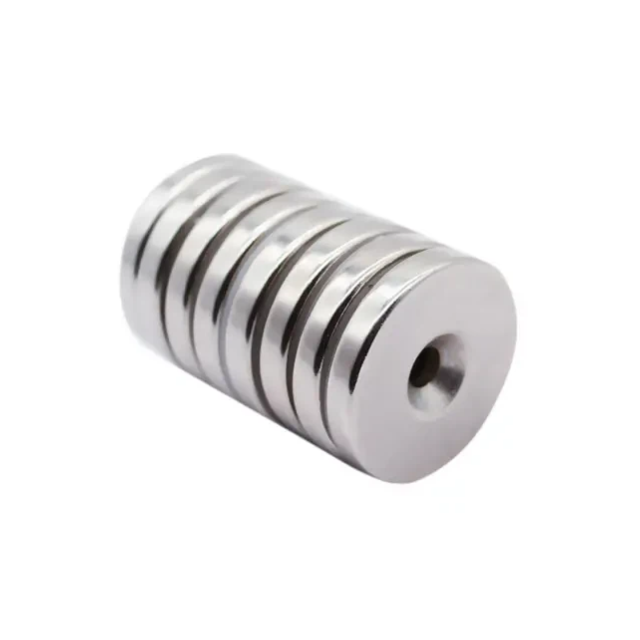
Comparative Table: Grade Specifications
Grade | BHmax (MGOe) | Max Temp (°C) | Best For |
N35SH | ~35 | ~150 | Higher temp applications |
N42H | ~42 | ~120 | Mid temp industrial |
N52 | ~50–52 | ~80 | Maximum strength |
This table clearly shows how N35SH, N42H, and N52 magnets differ in terms of performance and temperature tolerance. When choosing a magnet, it’s important to consider both the magnetic strength and the environmental conditions the magnet will face.
Choosing the Right Grade for Your Application
Motors & Precision Devices
For precision devices like sensors and actuators, N52 magnets are often the best choice because of their high magnetic strength and ability to generate force in small sizes. However, if the device will be exposed to high temperatures, it’s better to opt for N35SH or N42H magnets, as these grades can withstand higher heat while still maintaining performance.
In the case of motors, N52 magnets can be used for high-efficiency motors that need compact designs and maximum power output. But if the motor will operate in an environment with higher ambient temperatures, N35SH or N42H magnets will offer better long-term performance and reliability.
High Temp Industrial Uses
For high-temperature industrial applications, such as power plants or heavy machinery, N35SH and N42H magnets are essential. These grades are designed to perform reliably in extreme conditions, maintaining their strength even at higher temperatures. N35SH magnets can withstand temperatures of up to 150°C, making them ideal for high-performance applications where thermal stability is critical.
In contrast, N52 magnets are not suitable for such environments due to their lower heat resistance. These magnets are better suited for applications where space constraints are critical, and temperatures remain relatively stable.
Cost vs Performance Balance
When deciding between grades, it’s important to balance cost and performance. N52 magnets are the most expensive due to their high magnetic strength, but they are well worth the investment when maximum performance is required. For applications where temperature resistance is the primary concern, N35SH or N42H magnets offer a more affordable solution without sacrificing too much strength.
As a manufacturer, selecting the right grade will ultimately depend on the unique demands of your application. Always weigh the need for magnetic strength against the importance of temperature resistance to determine the most cost-effective solution.
Considerations for Manufacturers & Designers
Durability & Mechanical Strength
When selecting NdFeB magnets, it’s not just the magnetic strength that matters, but also the durability and mechanical strength of the material. High-strength magnets like N52 are ideal for applications requiring strong magnetic forces, but they are also more vulnerable to mechanical stress. N35SH and N42H magnets, while slightly weaker, tend to offer greater stability in harsh conditions, particularly in high-temperature environments.
Designers must consider the application’s specific requirements for both magnetic strength and mechanical durability to ensure the selected magnet can withstand wear and tear over time.
Sintering & Quality Control
The manufacturing process of NdFeB magnets involves sintering, a high-temperature process that plays a critical role in determining the final properties of the magnet. During sintering, the magnet's grain structure and density are refined to optimize performance. Consistent quality control during this process ensures that the magnet maintains its desired characteristics throughout its lifecycle.
Proper sintering and quality control are essential for maximizing the lifespan of NdFeB magnets and ensuring they perform as expected in the field. Manufacturers should prioritize quality when producing high-performance magnets like N35SH, N42H, and N52 to meet the demands of various industries.
Conclusion
In conclusion, selecting the right NdFeB magnet grade is essential for optimizing your application’s performance. While N52 magnets are the best choice for applications requiring maximum strength, N35SH and N42H magnets provide better temperature resistance, making them ideal for environments where heat is a concern. Understanding the unique characteristics of each grade, including their magnetic strength, temperature tolerance, and cost, will help you make an informed decision.
For more information on how NdFeB magnets can enhance your projects, Contact Us today to discuss your specific needs. At Yueci Magnetic, we offer high-quality NdFeB magnets designed to meet the performance and durability requirements of any industry.
FAQ
Q1: What is the difference between N35SH, N42H, and N52 magnets?
A1: N35SH and N42H are designed for high-temperature applications, with N35SH offering heat resistance up to 150°C and N42H up to 120°C. N52 magnets provide the highest strength but are limited to 80°C in terms of temperature resistance.
Q2: Can I use N52 magnets in high-temperature environments?
A2: N52 magnets are not recommended for high-temperature environments, as their magnetic properties degrade above 80°C. For higher temperature applications, choose N35SH or N42H magnets.
Q3: What makes N35SH and N42H magnets more expensive?
A3: N35SH and N42H magnets are designed to handle higher temperatures, which requires more complex manufacturing processes, making them more expensive than N52 magnets.
Q4: What are the best uses for N35SH and N42H magnets?
A4: N35SH and N42H magnets are ideal for industrial applications, motors, renewable energy systems, and other high-temperature environments where performance stability is critical.