Have you ever wondered what makes smartphones so efficient? At the heart of many smartphone components are NdFeB ring magnets. These magnets are crucial for enhancing sound quality and improving haptic feedback. In this post, you'll learn about their composition, role in smartphones, and why they're indispensable for modern technology.
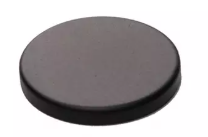
Understanding NdFeB Magnets
Composition and Structure
NdFeB magnets, short for neodymium-iron-boron magnets, are made from an alloy of three elements: neodymium (Nd), iron (Fe), and boron (B). This combination forms a unique crystal structure known as Nd2Fe14B, which is tetragonal. This structure is crucial because it gives the magnet its powerful magnetic properties.
The alloy contains about 12% rare earth elements by volume and about 26.7% by mass. Neodymium provides strong magnetic moments due to its unpaired electrons, iron contributes to magnetic stability and strength, and boron improves the crystal's cohesion through strong covalent bonds. The boron atoms themselves are diamagnetic, meaning they don’t contribute directly to magnetism but help hold the structure tightly together.
The microstructure consists of tiny grains aligned during manufacturing so their magnetic axes point the same way. This alignment is key for creating a strong, uniform magnetic field.
Properties and Characteristics
NdFeB magnets are the strongest type of permanent magnets commercially available. Their magnetic strength comes from high magnetocrystalline anisotropy, meaning the magnet prefers to be magnetized along a specific crystal axis. This feature makes it very difficult to demagnetize.
Key magnetic properties include:
High remanent magnetization (about 1.3 teslas), which means the magnet retains a strong magnetic field after being magnetized.
High coercivity, or resistance to demagnetization.
Maximum energy product (BH max) around 512 kJ/m³, which is much higher than ferrite or samarium-cobalt magnets.
Physically, these magnets are dense and hard, with a density of about 7.3 to 7.7 g/cm³ and hardness values between 500 and 650 on the Vickers scale. However, they have a lower Curie temperature (310 to 400°C), the temperature above which they lose magnetic properties. This means they can lose strength if exposed to high heat.
The magnets are sensitive to corrosion, especially along grain boundaries. To prevent this, manufacturers often apply protective coatings such as nickel or zinc plating.
NdFeB magnets come in various grades, from N28 to N55, where the number indicates the strength, and additional letters indicate temperature resistance and coercivity.
Role of NdFeB Ring Magnets in Smartphones
Enhancing Sound Quality in Speakers
NdFeB ring magnets play a crucial role in improving smartphone speaker performance. Their strong magnetic field allows speakers to produce clearer, louder sound in a compact size. Because these magnets generate powerful magnetic flux, they help move the speaker diaphragm more precisely, resulting in better sound clarity and bass response.
Smartphone speakers need to be small yet powerful. NdFeB magnets meet this demand by providing high magnetic strength in a tiny ring shape. This design fits well inside slim devices, maximizing space for other components. The ring shape also helps distribute the magnetic field evenly around the voice coil, improving efficiency and sound quality.
By using NdFeB ring magnets, smartphone manufacturers can offer users richer audio experiences without increasing device size or weight. This is especially important as consumers expect high-quality sound for calls, music, and video streaming on their phones.
Improving Vibration Motors
Vibration motors in smartphones rely heavily on NdFeB ring magnets to deliver strong, consistent haptic feedback. These motors create vibrations users feel during notifications or touchscreen interactions. The powerful magnetic field from NdFeB magnets helps the motor generate sharper, more precise vibrations while using less energy.
NdFeB ring magnets enable vibration motors to be smaller and lighter, which suits the slim design of modern smartphones. Their high coercivity ensures the magnets maintain strength even after continuous use, providing reliable performance over the phone’s lifetime. The ring shape fits perfectly around the motor’s rotor, enhancing magnetic interaction and motor efficiency.
This improved vibration motor performance enhances user experience, making notifications more noticeable and touch interactions more responsive. It also supports advanced features like adaptive haptics, where vibration patterns change dynamically depending on context.
Advantages of Using NdFeB Magnets
NdFeB ring magnets offer two key advantages that make them indispensable in smartphones: size and weight efficiency, and superior magnetic strength.
Size and Weight Efficiency
Smartphones demand compact, lightweight components to maintain sleek designs and portability. NdFeB magnets excel here. Their exceptional magnetic power means smaller magnets can achieve the same or better performance compared to other magnet types. This size reduction frees up valuable internal space for other components like batteries, cameras, or processors.
Because NdFeB magnets are smaller and lighter, they contribute less to the overall phone weight. This improves user comfort during prolonged handling and enhances the phone’s portability. The ring shape further optimizes space by fitting neatly around coils or motors, making them ideal for tight smartphone interiors.
Superior Magnetic Strength
NdFeB magnets are the strongest permanent magnets available commercially. Their high magnetic flux density enables powerful performance in tiny packages. This strength improves the efficiency of smartphone components such as speakers and vibration motors, allowing them to operate at higher performance levels without increasing energy consumption.
For example, in speakers, NdFeB magnets create a stronger magnetic field that moves the diaphragm more precisely, resulting in clearer sound and better bass response. In vibration motors, their strength produces sharper, more consistent haptic feedback, enhancing user interaction.
The magnets’ high coercivity means they resist demagnetization over time, ensuring reliable, long-lasting performance throughout the smartphone's lifespan.
Manufacturing and Production
Processes Involved
NdFeB ring magnets are mainly produced using two methods: sintering and bonding.
Sintered magnets start with melting raw materials into ingots. These ingots are crushed into fine powder, pressed into shape, and then sintered (heated without melting) to form dense magnets. After sintering, magnets undergo heat treatment, cutting, surface coating, and magnetization. This process yields magnets with excellent magnetic strength and stability, ideal for smartphone components requiring high performance.
Bonded magnets involve melt-spinning the NdFeB alloy into thin ribbons, then pulverizing it into powder. This powder mixes with a polymer binder and is molded into the desired shape by compression or injection molding. An external magnetic field aligns the magnetic particles during molding. Bonded magnets offer flexibility in shape and size but generally have lower magnetic strength than sintered ones.
Manufacturers often apply protective coatings, such as nickel or zinc plating, to prevent corrosion and extend magnet life. Magnetization is the final step, aligning magnetic domains to maximize strength.
Global Production
China dominates NdFeB magnet production, supplying over 85% of the world’s demand. This dominance stems from control over rare-earth mining and established manufacturing infrastructure. Japan and Vietnam contribute smaller shares, about 7% and 1% respectively, but are expanding production capacity.
The United States and Europe have limited production but are increasing output due to supply chain concerns and strategic initiatives. New plants and recycling programs aim to reduce dependence on imports and promote sustainability.
Globally, annual NdFeB magnet production is estimated between 220,000 and 240,000 tonnes, mostly sintered types. This volume supports industries like smartphones, electric vehicles, and renewable energy.
Challenges and Solutions
Corrosion Issues
NdFeB ring magnets face a significant challenge: corrosion. These magnets contain iron, which can rust when exposed to moisture and oxygen. Corrosion often starts at the grain boundaries within the magnet’s microstructure, causing the magnet to weaken or crumble over time. This deterioration can ruin the magnet’s performance in smartphones, where reliability is crucial.
To combat corrosion, manufacturers apply protective coatings. Common coatings include nickel, nickel-copper-nickel, and zinc plating. These layers act as barriers, preventing moisture and air from reaching the magnet's surface. Some manufacturers also use polymer or lacquer coatings for extra protection, especially in humid environments.
Regular quality checks ensure coatings remain intact during production. If the coating cracks or wears off, the magnet becomes vulnerable again. Therefore, selecting suppliers who guarantee durable, corrosion-resistant coatings is vital for smartphone manufacturers.
Temperature Sensitivity
NdFeB magnets also struggle with temperature sensitivity. Their magnetic strength decreases as temperature rises. Above 100°C (212°F), coercivity—the magnet’s resistance to losing magnetism—drops sharply. At the Curie temperature, around 310–400°C (590–752°F), the magnet loses its magnetic properties completely.
Smartphones can heat up during heavy use or charging, sometimes reaching temperatures that challenge NdFeB magnets. If the magnet weakens, speaker sound quality and vibration feedback may degrade, affecting user experience.
To improve temperature resistance, manufacturers add elements like dysprosium (Dy) or terbium (Tb) to the alloy. These rare earth metals help the magnet maintain strength at higher temperatures but increase production costs.
Designers must consider operating temperature ranges when choosing magnet grades. Higher-grade magnets with better temperature tolerance suit smartphones expected to run hotter or in warmer climates.
Future Trends and Innovations
Advancements in Magnet Technology
The technology behind NdFeB ring magnets keeps evolving to meet demands for smarter, more efficient smartphones. Researchers focus on improving magnetic strength, temperature resistance, and corrosion protection. One key advancement is adding rare-earth elements like dysprosium and terbium to the alloy. These elements boost the magnet’s ability to hold strength at higher temperatures, which is crucial as smartphones become more powerful and generate more heat.
New manufacturing techniques also aim to control the magnet’s microstructure better. For example, innovative sintering methods can align magnetic grains more precisely, creating magnets with tailored magnetic fields. This precision enhances performance in smartphone speakers and vibration motors, making them more energy-efficient and responsive.
Another exciting development is hybrid magnet materials combining NdFeB with other compounds. These hybrids can offer a balance of strength, durability, and temperature stability. Researchers are also exploring coatings that provide better corrosion resistance without adding bulk, extending magnet life even in humid or harsh environments.
Potential New Applications in Smartphones
As magnet technology progresses, new uses for NdFeB ring magnets in smartphones are emerging. Beyond speakers and vibration motors, these magnets could improve wireless charging efficiency. Stronger, precisely shaped magnets can help align charging coils better, reducing energy loss and charging time.
Magnets may also play a role in advanced camera stabilization systems. Using compact, powerful magnets to control lens movement can improve image quality by reducing blur from hand shake. This would allow for slimmer camera modules without sacrificing performance.
Additionally, future smartphones might use NdFeB magnets in innovative haptic feedback systems. These could provide more nuanced vibrations, simulating textures or button presses more realistically, enhancing user interaction.
Finally, magnets might assist in modular smartphone designs. They could securely attach or detach components like batteries or accessories, making repairs and upgrades easier for users.
Conclusion
NdFeB ring magnets offer exceptional magnetic strength and compact size, making them essential in smartphones. They enhance sound quality and improve haptic feedback, contributing to superior user experiences. These magnets' ability to fit within slim devices maximizes internal space for other components. Jiangxi Yueci Magnetic Material Technology Co., Ltd. provides high-quality NdFeB magnets, ensuring reliable performance and longevity, adding significant value to smartphone products. Their innovative solutions highlight the indispensable role of NdFeB magnets in modern smartphone technology.
FAQ
Q: What is an NdFeB magnet?
A: An NdFeB magnet, or neodymium-iron-boron magnet, is a type of strong permanent magnet made from an alloy of neodymium, iron, and boron, used widely in smartphone components.
Q: How do NdFeB magnets enhance smartphone speakers?
A: NdFeB magnets improve smartphone speakers by providing a strong magnetic field that enables clearer, louder sound and better bass response in a compact size.
Q: Why are NdFeB magnets essential for smartphone vibration motors?
A: NdFeB magnets are essential for smartphone vibration motors as they deliver strong, precise vibrations with high energy efficiency, enhancing user experience.
Q: What are the benefits of using NdFeB magnets in smartphones?
A: NdFeB magnets offer superior magnetic strength and size efficiency, allowing for powerful performance in compact smartphone components like speakers and vibration motors.
Q: How do NdFeB magnets compare to other types?
A: NdFeB magnets are the strongest permanent magnets available, outperforming ferrite and samarium-cobalt magnets in terms of magnetic strength and efficiency.