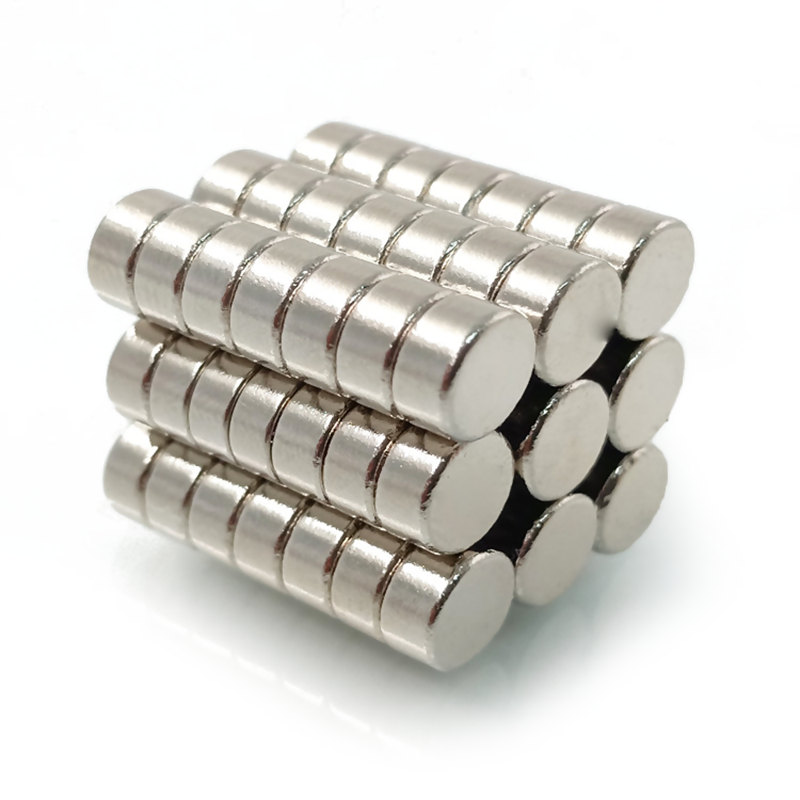
High-performance engineering for 2026 product lines demands peak magnetic energy. The landscape for sourcing and specifying top-tier materials is shifting rapidly. Engineers face tighter constraints and higher performance benchmarks than ever before. Aggressive miniaturization drives innovation in consumer electronics, automotive sensors, and high-efficiency motors. Because of these immense demands, Neodymium N52 magnets remain the commercial pinnacle of NdFeB technology. They deliver unmatched magnetic flux density in remarkably compact geometries.
While N52 offers the highest maximum energy product (BHmax) currently available at scale, securing reliable components requires careful planning. You must navigate complex engineering tradeoffs and volatile supply chains. In this guide, you will explore advanced grain boundary diffusion techniques and next-generation protective coatings. We will dissect supply chain traceability strategies. Finally, we provide a rigorous decision framework to help you evaluate and integrate these powerful components successfully.
Key Takeaways
- Thermal Constraints Remain the Primary Bottleneck: N52 offers unmatched room-temperature strength, but operating limits (typically ~80°C) require specific design compromises or advanced grain boundary diffusion techniques.
- Coating and Customization Innovations: 2026 trends heavily favor specialized micro-machining and multi-layer protective coatings to combat long-term corrosion in harsh environments.
- Supply Chain Traceability is Now Mandatory: Geopolitical constraints and ESG requirements are forcing OEMs to demand rigorous origin verification and alternative sourcing pathways for rare earth elements.
Evaluating the Business Case for Neodymium N52 Magnets
Engineers often default to the highest available material specifications during early design phases. However, integrating premium magnetic materials requires rigorous technical justification. You must systematically assess whether standardizing on N52 genuinely outperforms N42, N45, or N50 grades in your specific operational environment. Over-engineering a magnetic circuit wastes resources. Under-engineering compromises product functionality.
Miniaturization mandates dictate many modern design choices. Aerospace applications demand aggressive weight reduction across all subsystems. Portable electronics face constantly shrinking internal volumes. In these restrictive spatial geometries, only peak-grade components provide sufficient magnetic flux density. You can map out your available spatial constraints to determine if lower grades fail to meet baseline flux targets. If physical space is strictly limited, the highest available grade becomes an absolute necessity. For example, drone gimbal motors rely heavily on maximum energy density to maintain fast response times while shedding excess weight.
You should define project success using strict, measurable criteria rather than theoretical material maximums. We recommend avoiding generic datasheet values. Instead, you must define exact pull force targets for your specific assembly. Establish precise Gauss metrics at specific air gaps. Furthermore, establish clear long-term demagnetization thresholds. Defining these parameters ensures you select a material capable of surviving real-world abuse.
- Best Practice: Always test magnetic materials in their final assembly state. Steel return paths and adjacent components dramatically alter the effective magnetic field.
- Common Mistake: Specifying an overly powerful magnetic field can accidentally interfere with nearby sensitive microelectronics. You should always shield your sensor circuits appropriately.
2026 Engineering Innovations: Pushing N52 Capabilities
Grain Boundary Diffusion Technology (GBDT) represents a massive leap forward in material science. Recent advancements allow marginal improvements in thermal tolerance for high-grade materials. They achieve this enhancement without sacrificing intrinsic coercivity. Engineers can now push realistic operating temperature ceilings slightly higher. Heavy rare earth elements like Dysprosium infiltrate only the grain boundaries during the GBDT process. This targeted diffusion creates a robust thermal barrier. Next-gen variants handle heat significantly better than traditional legacy batches. This innovation extends the lifespan of high-performance stators and rotors.
Advanced custom coatings are also evolving rapidly for 2026 applications. Industry standards are transitioning beyond basic Nickel-Copper-Nickel (Ni-Cu-Ni) layers. Engineers now specify epoxy, Parylene, and specialized titanium coatings for mission-critical assemblies. Medical devices require these advanced barriers to ensure strict biocompatibility. Severe corrosive environments, such as offshore wind turbine sensors, demand extreme moisture resistance. Vapor deposition techniques ensure perfectly uniform coating thicknesses even on complex microscopic shapes.
Precision manufacturing enables highly custom geometries previously thought impossible. Radially oriented rings optimize complex magnetic circuits by directing flux exactly where needed. Tight-tolerance micro-magnets fit seamlessly into microscopic sensor housings. Design-for-Manufacturability (DFM) considerations remain critical when exploring these custom shapes. Proper engineering reduces cracking and chipping during automated assembly lines.
- Best Practice: Specify generous corner radii on all custom shapes. Rounded edges distribute mechanical stress evenly.
- Common Mistake: Sharp corners concentrate stress and lead to rapid chipping during handling. Chipping destroys the protective coating and guarantees rapid oxidation.
Comparison Chart of Advanced Coating Options | Coating Type | Corrosion Resistance | Ideal Application | Thickness Profile |
| Ni-Cu-Ni | Moderate | General enclosed electronics | 10-20 microns |
| Epoxy | High | Humid industrial environments | 15-30 microns |
| Parylene | Very High | Implantable medical devices | 1-5 microns |
| Titanium | Extreme | Harsh chemical processing | 2-10 microns |
Supply Chain Realities and Raw Material Risks
Geopolitical volatility directly impacts rare earth mining concentrations. This volatility threatens supply stability globally heading into 2026. Certain regions control the vast majority of raw material extraction and refinement. Any localized disruption creates immediate global shortages. The electric vehicle (EV) sector and wind turbine manufacturers consume massive material volumes. They compete directly for the exact same raw elements required for precision engineering. An EV drive motor uses kilograms of magnetic material. This massive consumption heavily dictates market availability for smaller engineering firms.
Compliance and Environmental, Social, and Governance (ESG) traceability are now mandatory requirements. You must navigate a highly complex regulatory landscape. Sourcing heavy rare earth elements (HREEs) like Dysprosium and Terbium requires strict auditing protocols. Modern consumers and regulatory bodies demand complete transparency regarding material extraction methods. Evaluate vendor transparency rigorously before signing long-term agreements. Audit material origin data thoroughly. Demand independent conflict-free certifications to protect your brand reputation.
To mitigate these severe supply chain risks, you must implement proactive strategies. Relying on a single factory introduces unacceptable vulnerabilities. We recommend adopting a robust mitigation framework to ensure uninterrupted production cycles.
- Establish dual-sourcing models across different geographical regions to avoid localized disruptions.
- Secure long-term supply contracts to buffer against sudden material shortages.
- Conduct annual onsite audits of your primary and secondary raw material vendors.
- Integrate alternative magnetic materials into fallback engineering designs to ensure rapid pivot capabilities.
N52 vs. Emerging Alternatives: A Decision Framework
Let us address the persistent marketing noise surrounding N54 and N55 grades. These ultra-high numbers exist mostly in extreme lab environments. Highly restricted, fragile batches sometimes reach these theoretical metrics. However, anything above N52 often lacks commercial viability for mass production. These experimental grades suffer from poor yield consistency. They exhibit severe thermal instability. They are incredibly brittle and prone to shattering during basic assembly. Mass production requires absolute reliability. Therefore, standardizing on proven materials remains the only logical engineering choice.
Sometimes, you must purposefully downgrade your material selection. Consider operational scenarios where ambient temperatures consistently exceed 80°C. In these environments, dropping to an N48SH or N50H grade provides vastly superior long-term performance. High-temperature variants resist demagnetization much better under thermal stress. A stronger magnet is useless if it loses its field completely when an engine block gets hot. You must match the intrinsic coercivity (Hcj) to your specific thermal environment.
Sintered NdFeB offers unmatched peak strength through powder metallurgy processes. Bonded NdFeB alternatives offer complex shape capabilities via injection molding. Bonded magnets require significantly lower tooling efforts. They allow for intricate geometries impossible with sintered variants. However, bonded polymers sacrifice significant magnetic flux density. You must decide whether complex physical shapes outweigh raw magnetic power in your specific design.
Decision Matrix: Grade Selection vs Thermal Environment | Material Grade | Max Operating Temp | Primary Application Focus | Coercivity Level |
| Standard N52 | ~80°C | Maximum strength at room temp | Standard |
| N50H | ~120°C | High strength with moderate heat | High (H) |
| N48SH | ~150°C | Industrial motors and EV sensors | Super High (SH) |
Procurement Strategies: Vetting Custom N52 Suppliers
Theoretical datasheets are simply insufficient for high-stakes engineering projects. You must mandate independent Helmholtz coil testing from your manufacturing partners. Handheld Gauss meters only measure a single point on a surface. Single-point measurements are notoriously unreliable for validating overall batch consistency. A Helmholtz coil measures the total magnetic moment accurately. Request comprehensive demagnetization curve analysis for different temperature ranges. Enforce strict BHmax verification on every single incoming batch.
Shortlist vendors offering robust engineering and prototyping support. Exceptional suppliers provide finite element analysis (FEA) services. Request magnetic simulation data during the initial prototyping phase. Simulations show exactly where flux leakage occurs. You can optimize your steel return path based on these digital models. Fixing a magnetic circuit digitally saves months of physical prototyping delays.
Assess supplier scalability carefully before finalizing designs. Can they transition seamlessly from short-run custom batches to high-volume automated production? Automated production lines must maintain strict quality control without degrading tolerances. We highly recommend performing comprehensive in-house validation. Sourcing reliable Neodymium N52 magnets ensures your end product performs exactly as intended. Verify all bulk shipments against your approved prototype benchmarks. Reject any batches falling outside a strict five percent tolerance window.
- Best Practice: Request full material trace certificates detailing the exact elemental composition of your specific batch.
- Common Mistake: Skipping incoming quality control checks based on a supplier's past performance. Magnetic properties drift over time if factory calibration slips.
Conclusion
High-leverage components drive the most critical hardware innovations planned for 2026. Peak magnetic materials offer unprecedented engineering freedom for miniaturization and efficiency. However, you must heavily scrutinize their selection against strict thermal limits and broader supply chain security concerns. Blindly specifying the highest grade often leads to catastrophic system failures if thermal parameters exceed material capabilities.
Take action by establishing a direct dialogue with specialized engineering teams early in your design cycle. Run comprehensive magnetic simulations before locking in your final specifications. Confirm whether this specific peak grade optimally fits your application environment, or if a high-temperature alternative provides safer long-term performance. Implement strict validation testing to secure your production lines against inconsistent batches.
FAQ
Q: What is the maximum operating temperature for a standard Neodymium N52 magnet?
A: The operational limit generally sits around 80°C (176°F). Pushing temperatures higher risks permanent demagnetization. The internal magnetic domains lose their alignment under excess heat. If your application exceeds this threshold, you must use modified 'H' or 'SH' grades designed specifically for thermal stability.
Q: Is N55 commercially available and better than N52?
A: N55 exists primarily in extreme lab environments or highly restricted, fragile batches. It lacks commercial viability for mass production due to severe brittleness and thermal instability. Therefore, N52 remains the realistic, reliable ceiling for commercial manufacturing and dependable engineering applications.
Q: How do you verify if a supplier is actually providing N52 and not a weaker grade?
A: You must move beyond theoretical datasheets. Request full BH curve reports from the manufacturer. Conduct in-house validation using a Helmholtz coil to measure total magnetic moment. Alternatively, perform strict pull-force testing using a standardized steel plate to verify consistent strength.
Q: Can Neodymium N52 magnets be machined or drilled after purchase?
A: No. Machining creates an extreme fire risk due to highly flammable dust. The material is also incredibly fragile and shatters easily. All custom shapes, holes, and chamfers must be formed and fully coated at the factory before final magnetization occurs.