In industrial applications where strong, compact magnetic performance is required, NdFeB magnet products have become the first choice for engineers and manufacturers worldwide. Among the many shapes available, neodymium rod magnets and neodymium cylinder magnets are often discussed together—and sometimes even confused with each other.
Although these two magnet types look similar at first glance, their manufacturing processes, magnetic orientation, performance characteristics, and application scenarios can differ in important ways. Choosing the wrong type may lead to inefficient magnetic performance, higher costs, or unexpected design limitations.
As a professional NdFeB magnet manufacturer, we often help customers clarify these differences so they can select the most suitable magnet for their specific use case. In this article, we’ll explain the key distinctions between neodymium rod magnets and cylinder magnets, compare their performance in real industrial applications, and provide practical guidance for selecting the right option for your project.
If you are sourcing high-performance NdFeB magnets for industrial use, this comparison will help you make a more informed decision.
1. What Is an NdFeB Magnet?
An NdFeB magnet, also known as a neodymium magnet, is made from an alloy of neodymium, iron, and boron. It is currently the strongest type of permanent magnet available on the market, offering extremely high magnetic energy density in a compact size.
Key advantages of NdFeB magnets include:
Exceptional magnetic strength
Compact size with high holding force
Wide range of grades (N35–N52 and beyond)
Versatile shapes and coatings
Suitability for precision and heavy-duty industrial applications
Rod magnets and cylinder magnets are both derived from NdFeB material, but their shape definition and usage focus can differ.
2. Neodymium Rod Magnets: Definition and Characteristics
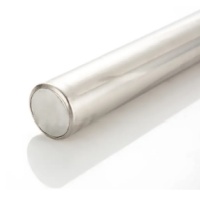
Neodymium rod magnets are typically long, slender magnets with a length that is significantly greater than their diameter. This elongated geometry is not accidental—it is specifically engineered to support applications where magnetic reach, directional force, and precision alignment are more critical than surface holding power.
Because of their shape, rod magnets are especially effective in applications that require magnetic fields to extend over a distance or operate within confined, narrow spaces where wider magnets cannot be installed. These magnets are most commonly axially magnetized, meaning the north and south poles are located at the two flat ends of the rod. This magnetization pattern produces a focused, linear magnetic field along the length of the magnet.
Key Features of Neodymium Rod Magnets
Neodymium rod magnets are characterized by their high length-to-diameter ratio, which allows them to be easily inserted into narrow channels, bores, or precision housings where space is limited. This geometry makes them especially suitable for compact mechanical and electronic systems that require directional magnetic performance without increasing overall component size.
One of the most important features of rod magnets is their strong axial magnetic field. Because they are typically magnetized along their length, the magnetic poles are concentrated at the two flat ends, producing a focused and predictable magnetic field. This is ideal for directional magnetic sensing, where accuracy and repeatability are critical.
Compared to wider magnets of similar volume, rod magnets offer effective magnetic penetration over distance, enabling reliable detection or interaction with target components even when small air gaps are present. Their elongated shape allows magnetic force to be delivered in a controlled direction, making neodymium rod magnets particularly valuable in detection, sensing, and linear positioning applications that demand consistent magnetic response and precise field orientation.
Typical Applications
Magnetic sensors and probes, where directional field accuracy is critical
Industrial detection equipment, such as position or proximity detection systems
Medical and laboratory devices, including diagnostic instruments and sample handling tools
Magnetic separation systems, especially for fine or linear material flow
Linear motion and positioning components, where precise alignment is required
In many cases, rod magnets are chosen when precise magnetic directionality and field consistency matter more than raw surface holding strength. Their geometry allows engineers to control how the magnetic field interacts with surrounding components, reducing interference and improving system reliability.
However, due to their slender shape, rod magnets may require additional mechanical support in high-vibration environments. Proper housing design and alignment are essential to ensure long-term stability and performance.
3. Neodymium Cylinder Magnets: Definition and Characteristics
Neodymium cylinder magnets feature a more balanced proportion between diameter and length, resulting in a compact, robust magnetic component. While they may visually resemble rod magnets, cylinder magnets are typically optimized for holding force, mounting stability, and structural integration rather than extended magnetic reach.
Cylinder magnets are widely used in industrial assemblies because their geometry allows them to deliver strong surface contact force while maintaining mechanical durability. Depending on application requirements, cylinder magnets can be magnetized either axially or diametrically, offering greater flexibility in magnetic field orientation.
Key Features of Neodymium Cylinder Magnets
Uniform cylindrical geometry, suitable for precision machining
Strong surface holding force, ideal for fastening and retention
Better mechanical stability when installed in housings or fixtures
Available in both axial and diametrical magnetization, supporting diverse design needs
The larger diameter relative to length allows cylinder magnets to generate a concentrated magnetic field at the contact surface, making them highly effective for clamping, holding, and rotational applications.
Typical Applications
Motors and generators, where compact high-strength magnets are required
Automation equipment, including actuators and positioning systems
Magnetic fixtures and clamps, used in manufacturing and assembly lines
Industrial tooling, such as magnetic holders or alignment tools
Consumer electronics, where space efficiency and stability are critical
One of the major advantages of cylinder magnets is their ease of integration. Their shape fits naturally into standard machined holes, recesses, or magnet pockets, simplifying assembly and improving mechanical retention. This makes them especially suitable for high-volume production environments where consistency and repeatability are essential.
Compared to rod magnets, cylinder magnets typically offer greater resistance to bending or breakage due to their shorter length and thicker profile. This makes them more suitable for applications exposed to vibration, mechanical shock, or frequent handling.
4. Key Differences Between Rod Magnets and Cylinder Magnets
Although both are NdFeB magnets, their performance differs depending on geometry and usage.
Comparison Table: Rod Magnets vs. Cylinder Magnets
Feature | Neodymium Rod Magnets | Neodymium Cylinder Magnets |
Shape Ratio | Long and slender | Balanced diameter and length |
Magnetic Focus | Directional / linear | Surface holding strength |
Common Magnetization | Axial | Axial or diametrical |
Installation | Inserted into narrow spaces | Mounted in housings or fixtures |
Holding Force | Moderate at surface | Strong surface contact |
Typical Use | Sensors, probes, separation | Motors, tooling, automation |
5. Magnetic Performance Considerations
Magnetic Field Distribution
Rod magnets produce a more elongated magnetic field, making them suitable for applications requiring magnetic reach or detection. Cylinder magnets, on the other hand, generate a more concentrated surface field, ideal for holding or fastening applications.
Mechanical Stability
Cylinder magnets generally offer better mechanical stability, especially when press-fitted or glued into metal components. Rod magnets may require additional support if used in high-vibration environments.
Customization Options
Both magnet types can be customized in terms of:
NdFeB grade
Coating (NiCuNi, epoxy, zinc, etc.)
Tolerance and surface finish
Magnetization direction
A professional NdFeB magnet supplier can help tailor either option to your design requirements.
6. How to Choose the Right NdFeB Magnet for Your Application
When deciding between a neodymium rod magnet and a cylinder magnet, consider the following factors:
Application Function – Detection, holding, rotation, or positioning
Available Installation Space – Length vs. diameter constraints
Required Magnetic Strength – Surface force or magnetic reach
Mechanical Environment – Vibration, temperature, and stress
Assembly Method – Press-fit, adhesive bonding, or housing
Choosing the right shape is just as important as choosing the right NdFeB grade.
7. Manufacturing Quality Matters
Regardless of shape, the performance of any NdFeB magnet depends heavily on manufacturing precision, including:
Working with an experienced manufacturer ensures consistent performance, long service life, and reliable batch-to-batch quality.
At Jiangxi Yueci Magnetic Material Technology Co., Ltd., we focus on producing high-quality NdFeB magnet solutions for industrial customers worldwide. Our production capabilities allow us to manufacture both rod magnets and cylinder magnets to precise specifications, supporting a wide range of applications.
Conclusion
While neodymium rod magnets and cylinder magnets may look similar, their functional differences can significantly impact performance in real-world applications. Rod magnets excel in directional and linear magnetic tasks, while cylinder magnets are ideal for stable holding and mechanical integration.
Understanding these distinctions allows engineers and procurement teams to optimize both performance and cost. If you are evaluating NdFeB magnet options for your next project, selecting the correct shape is a critical first step.
For more information about NdFeB magnet solutions, customization options, and industrial applications, we welcome you to learn more about Jiangxi Yueci Magnetic Material Technology Co., Ltd. and explore how our expertise can support your magnetic component needs.
FAQ
Q1: Are neodymium rod magnets stronger than cylinder magnets?
Not necessarily. Strength depends on NdFeB grade and size, but cylinder magnets usually provide stronger surface holding force.
Q2: Can both rod and cylinder magnets be customized?
Yes. Both types can be customized in size, grade, coating, and magnetization direction.
Q3: Which NdFeB magnet is better for industrial sensors?
Neodymium rod magnets are often preferred due to their directional magnetic field.
Q4: Do rod magnets and cylinder magnets use the same NdFeB material?
Yes. Both are made from NdFeB; the difference lies in geometry and application focus.