In today’s industrial landscape, magnetic materials play a critical role in enabling high-efficiency, high-precision, and miniaturized technologies. From electric motors and generators to automation systems, medical devices, and renewable energy equipment, magnets are no longer passive components—they are core performance drivers. Among all permanent magnets available on the market, NdFeB Magnet (Neodymium Iron Boron Magnet) stands out as the most powerful and widely adopted solution for modern industrial applications.
For factories, OEMs, and system integrators, understanding what an NdFeB magnet is—and how to select the right grade, coating, and specification—is essential for ensuring performance reliability and cost efficiency. As manufacturers and suppliers of magnetic materials, we frequently support buyers who are upgrading from traditional ferrite or AlNiCo magnets, or optimizing existing designs to achieve higher power density. This guide is designed to provide buyers with a clear, practical, and technically grounded overview of NdFeB magnets, helping you make informed procurement decisions with confidence.
1. What Is an NdFeB Magnet?
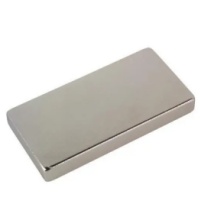
An NdFeB Magnet is a type of rare-earth permanent magnet composed primarily of neodymium (Nd), iron (Fe), and boron (B). It is currently the strongest commercially available permanent magnet material, offering exceptionally high magnetic energy density compared to conventional magnet types.
NdFeB magnets are typically produced through either sintering or bonding processes. Sintered NdFeB magnets are most common in industrial applications due to their superior magnetic performance, while bonded NdFeB magnets are used where complex shapes or lower magnetic strength are acceptable.
Basic Composition and Structure
Element | Function in NdFeB Magnet |
Neodymium (Nd) | Provides strong magnetic force |
Iron (Fe) | Enhances magnetic saturation |
Boron (B) | Stabilizes crystal structure |
The unique crystal structure of Nd₂Fe₁₄B enables extremely high remanence and coercivity, making NdFeB magnets ideal for compact, high-performance designs.
2. Key Magnetic Properties of NdFeB Magnets
The superior performance of NdFeB magnets is defined by several critical magnetic parameters that directly influence their suitability across a wide range of industrial applications. Compared with conventional ferrite or AlNiCo magnets, NdFeB magnets deliver significantly higher magnetic strength within much smaller volumes. This unique advantage makes them indispensable for modern systems that demand compact design, high efficiency, and reliable performance under continuous operation.
Core Magnetic Characteristics
Property | Typical Range | Industrial Impact |
Remanence (Br) | 1.0–1.4 T | Strong magnetic output |
Coercivity (Hcj) | ≥ 800 kA/m | Resistance to demagnetization |
Maximum Energy Product (BHmax) | 35–55 MGOe | Compact, high-power designs |
Working Temperature | 80–230°C (grade-dependent) | Thermal reliability |
Remanence (Br) measures the amount of magnetic flux density remaining in the magnet after the external magnetizing field is removed. A higher remanence allows NdFeB magnets to generate stronger magnetic fields, enabling higher torque output and stronger holding force. This characteristic is particularly important in motors, actuators, and generators, where designers must maximize power density while minimizing overall size and weight.
Coercivity (Hcj) represents the magnet’s ability to resist demagnetization when exposed to opposing magnetic fields, mechanical vibration, or elevated temperatures. High coercivity is essential in industrial environments where magnets operate near electric currents or fluctuating magnetic fields. Without sufficient coercivity, magnets may suffer gradual magnetic loss, leading to reduced efficiency and shortened service life.
The maximum energy product (BHmax) is often the most critical selection parameter for engineers and procurement teams. It reflects the maximum amount of magnetic energy a magnet can store. Higher BHmax values allow system designers to achieve required performance using smaller magnets, which contributes directly to equipment miniaturization, material savings, and improved energy efficiency.
Finally, working temperature defines the thermal limits at which a magnet can operate without permanent performance loss. NdFeB magnets are available in multiple temperature grades, making correct selection essential for applications such as motors, compressors, and automated equipment that generate sustained heat during operation.
3. Common Grades and Temperature Classes
NdFeB magnets are available in multiple grades, each engineered to balance magnetic strength, thermal stability, and cost. The grade suffix primarily indicates the magnet’s maximum operating temperature, which directly affects long-term performance reliability.
NdFeB Grade Classification
Grade Suffix | Maximum Operating Temperature |
N | 80°C |
M | 100°C |
H | 120°C |
SH | 150°C |
UH | 180°C |
EH | 200°C |
AH | 230°C |
Selecting the correct grade is critical for industrial buyers. While standard N-grade magnets provide the highest magnetic strength, they are suitable only for low-temperature environments. As operating temperatures increase, higher-grade suffixes such as H, SH, or UH are required to prevent irreversible demagnetization.
It is important to note that higher temperature grades often involve:
Increased use of heavy rare earth elements
Slightly reduced magnetic strength
Higher material and processing costs
However, these trade-offs are justified in applications where thermal stability is essential, such as electric motors, aerospace components, and high-speed automation systems. Choosing an underspecified grade may reduce upfront cost but significantly increase failure risk and lifecycle expense.
4. Manufacturing Process of NdFeB Magnets
Understanding how NdFeB magnets are produced helps buyers evaluate supplier capability, consistency, and quality control standards. Most industrial-grade NdFeB magnets are manufactured using the sintered process, which offers superior magnetic performance compared to bonded alternatives.
Sintered NdFeB Manufacturing Steps
Raw material alloy melting
Powder milling and alignment
Magnetic field pressing
Vacuum sintering
Precision machining
Surface coating
Magnetization and inspection
Each step plays a crucial role in determining final magnet performance. During powder milling, particle size distribution directly affects coercivity and magnetic uniformity. Magnetic field pressing ensures proper grain alignment, which maximizes remanence and energy product.
Vacuum sintering consolidates the powder into a dense structure while minimizing oxidation. Post-sintering precision machining is necessary due to the material’s brittleness, allowing tight dimensional tolerances required by industrial assemblies.
Finally, magnetization and inspection ensure each batch meets specified magnetic and dimensional criteria. Reputable manufacturers implement full traceability and statistical quality control at this stage to ensure consistency across large-volume orders.
5. Surface Coatings and Corrosion Protection
Despite their excellent magnetic properties, NdFeB magnets are inherently prone to oxidation due to their high iron content. Without proper surface protection, corrosion can rapidly degrade performance and structural integrity—especially in humid, saline, or chemically active environments.
Common NdFeB Coatings
Coating Type | Protection Level | Typical Applications |
Ni-Cu-Ni | High | Motors, electronics |
Epoxy | Very high | Humid or corrosive environments |
Zinc | Moderate | Cost-sensitive applications |
Phosphate | Low | Dry indoor use |
Nickel-copper-nickel (Ni-Cu-Ni) plating is the most widely used coating due to its balance of corrosion resistance, durability, and appearance. Epoxy coatings provide superior protection in aggressive environments but may add thickness and limit tolerance-critical designs.
For buyers, coating selection should be aligned with:
Operating environment (humidity, chemicals, salt exposure)
Mechanical wear risk
Dimensional tolerance requirements
Cost and lifecycle expectations
Choosing the correct coating significantly extends service life, reduces maintenance frequency, and improves long-term reliability—making it a critical factor in industrial NdFeB magnet procurement.
6. Typical Industrial Applications of NdFeB Magnets
NdFeB magnets are widely used across industries that demand high efficiency and compact design.
Major Application Areas
Industry | Application Examples |
Automotive | EV motors, sensors, actuators |
Automation | Servo motors, robotics |
Renewable Energy | Wind generators |
Electronics | Speakers, hard drives |
Medical | MRI components, precision devices |
Their ability to deliver strong magnetic force with minimal size makes them indispensable in modern engineering systems.
7. Key Buying Considerations for NdFeB Magnets
For industrial buyers, selecting the right NdFeB magnet involves balancing performance, durability, and cost.
Procurement Evaluation Factors
Factor | Why It Matters |
Grade selection | Determines temperature and strength |
Dimensional tolerance | Ensures assembly compatibility |
Coating quality | Prevents corrosion |
Magnetization direction | Affects system performance |
Batch consistency | Ensures production stability |
Working with experienced manufacturers ensures these parameters are controlled and traceable.
8. Why Work with an Experienced NdFeB Manufacturer
As an industrial supplier, we understand that NdFeB magnets are not commodity items—they are engineered components. At Jiangxi Yueci Magnetic Material Technology Co., Ltd., we focus on providing stable, high-quality NdFeB magnet solutions tailored to industrial requirements, including custom grades, coatings, and precision machining.
By aligning material science expertise with production consistency, we help buyers reduce risk, improve system performance, and optimize long-term costs.
Conclusion
NdFeB magnets have reshaped modern industry by enabling smaller, lighter, and more powerful systems across countless applications. For buyers, understanding what an NdFeB magnet is—and how to evaluate grades, coatings, and manufacturing quality—is essential for making the right investment.
With proper selection and reliable sourcing, NdFeB magnets deliver exceptional performance, durability, and value. If you are exploring NdFeB magnet solutions for motors, automation systems, or other industrial applications, we welcome you to connect with Jiangxi Yueci Magnetic Material Technology Co., Ltd. to discuss technical requirements and long-term supply strategies.
FAQ
1. What makes NdFeB magnets stronger than other magnets?
NdFeB magnets have the highest energy product among permanent magnets, allowing stronger magnetic force in smaller sizes.
2. Are NdFeB magnets suitable for high-temperature environments?
Yes, but the correct high-temperature grade must be selected to ensure thermal stability.
3. Do NdFeB magnets require surface coating?
In most cases, yes. Coatings protect against corrosion and extend service life.
4. Can NdFeB magnets be customized for industrial use?
Yes. NdFeB magnets can be customized in shape, grade, coating, and magnetization direction.