Neodymium magnets (NdFeB) are powerful and versatile, but they are prone to corrosion. Without proper protection, their performance can decline. In this article, we will explore how to choose the right coating for corrosion protection. You'll learn about key factors that affect durability and efficiency, ensuring your magnets perform at their best.
Understanding the Need for Corrosion Protection for NdFeB Magnets
Neodymium magnets are composed of neodymium, iron, and boron. While this combination offers powerful magnetic properties, it also makes them vulnerable to oxidation, rusting, and deterioration in certain environments. This corrosion can drastically reduce the magnet's performance over time, leading to magnetic strength loss, potential surface damage, and even failure in critical applications.
Why Coating Is Essential for NdFeB Magnets
Prevents Oxidation and Rust: The iron in NdFeB magnets is particularly susceptible to environmental factors like humidity and salt, which can trigger corrosion. A good coating shields the magnet, preventing rust and deterioration.
Improves Longevity: A proper coating extends the service life of the magnet, making it reliable in long-term applications.
Protects Magnetic Properties: Corrosion can diminish the magnetic strength of NdFeB magnets. Coatings help maintain these properties.
Tip: Regular monitoring of the magnet's coating during its service life helps identify potential issues early, allowing for timely maintenance.
Key Factors to Consider When Choosing a Coating for NdFeB Magnet Corrosion Protection
When selecting a coating for corrosion protection, several critical factors should guide your decision-making process. These include environmental exposure, temperature tolerance, wear resistance, and budget constraints. Let’s break down these factors:
1. Environmental Conditions: Exposure to Moisture and Chemicals
The first step in choosing a suitable coating for your NdFeB magnets is understanding the environment in which the magnet will be used. Is the magnet exposed to moisture, high humidity, chemicals, or extreme temperatures?
Humid and Saltwater Environments
Nickel (Ni) plating offers moderate corrosion resistance and is commonly used for NdFeB magnets exposed to atmospheric conditions.
Zinc plating is suitable for environments with light humidity but should be avoided in environments with exposure to saltwater.
Chemical Exposure
Epoxy coatings provide high resistance to chemical exposure and are effective in industries like food processing or chemical manufacturing.
PTFE (Teflon) coatings are highly resistant to chemicals, acids, and solvents, making them ideal for aggressive chemical environments.
Tip: If your application involves exposure to aggressive chemicals or extreme moisture, consider selecting PTFE or epoxy coatings for enhanced protection.
2. Temperature Tolerance: Protecting Magnets from Heat
NdFeB magnets can lose their magnetic properties at high temperatures, a phenomenon known as thermal demagnetization. Therefore, the coating you select must be capable of withstanding extreme temperatures without compromising the magnet's strength or integrity.
High-Temperature Resistance
Gold plating is ideal for high-temperature environments because it maintains its properties even under heat, offering both corrosion resistance and a stable surface.
Nickel-plated magnets also provide some thermal resistance but may have limits in extremely high temperatures.
Tip: For magnets used in high-temperature settings (e.g., automotive or aerospace), consider coatings like gold or specialized high-temperature epoxy coatings.
3. Durability and Physical Protection: Impact Resistance
In addition to corrosion resistance, the magnet’s coating must provide protection against physical wear, impacts, and scratches. This is particularly important in industrial or mechanical environments where the magnet may be subjected to frequent handling or harsh conditions.
Wear and Tear Resistance
Rubber coatings offer excellent impact protection and prevent surface damage. They also provide a non-slip surface, which is beneficial in handling or mounting applications.
Epoxy coatings are durable and provide impact resistance, especially in heavy-duty industrial settings.
Tip: For magnets subjected to frequent physical contact, consider rubber or epoxy coatings to absorb impacts and reduce surface damage.
4. Aesthetic Requirements: Appearance and Visual Appeal
In some applications, particularly consumer-facing products or devices, the appearance of the magnet is an important consideration. Some coatings enhance the visual appeal of the magnet, making it more attractive in finished products.
Aesthetic Coatings
Gold provides an elegant and shiny finish, making it ideal for high-end consumer products or medical devices.
Nickel and chrome plating also provide shiny finishes and are used in decorative applications where appearance is key.
Tip: Choose gold or chrome plating for applications where aesthetics are as important as performance.
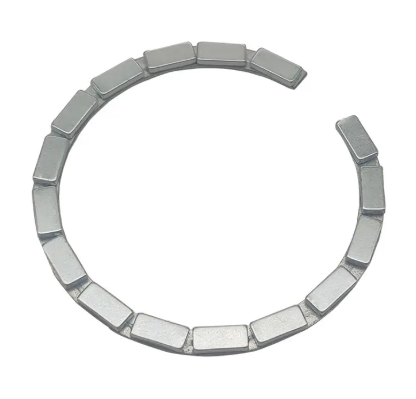
Coating Options for Neodymium Magnets
There are various coating options available for NdFeB magnets, each with distinct characteristics and advantages. Below is an overview of the most commonly used coatings and their features:
1. Nickel Plating (NiCuNi)
Advantages: Offers excellent corrosion resistance and a shiny, metallic finish. It’s suitable for most applications, providing long-term durability.
Applications: Commonly used in consumer electronics, automotive, and industrial machinery.
2. Zinc Plating
Advantages: Provides moderate corrosion protection at a low cost. However, it is less durable than nickel.
Applications: Suitable for environments with moderate exposure to humidity but not ideal for marine or chemical environments.
3. Epoxy Coating
Advantages: Offers high corrosion and impact resistance. Epoxy coatings are ideal for harsh environments.
Applications: Used in industries like food processing, medical devices, and chemical handling.
4. PTFE (Teflon) Coating
Advantages: Exceptional chemical resistance and low friction properties. Protects against moisture and extreme chemicals.
Applications: Suitable for magnets in wet environments, labs, or applications requiring low friction.
5. Gold Plating
Advantages: Provides superior corrosion resistance and an attractive finish, ideal for high-end or medical applications.
Applications: Used in high-end consumer products, electronics, and medical devices.
How to Choose the Right Coating for Your NdFeB Magnets
Selecting the correct coating requires balancing several factors, including the specific environmental conditions the magnet will face, the desired durability, and the coating’s impact on the magnet’s performance. Here’s a step-by-step guide to help you choose the right coating for your NdFeB magnets:
Step 1: Assess the Environment
Identify the environmental challenges your magnet will face, such as humidity, temperature fluctuations, and exposure to chemicals. If the magnet is used in a wet or corrosive environment, a coating like epoxy or PTFE may be most effective.
Step 2: Determine the Required Durability
If the magnet will be exposed to physical wear or frequent handling, opt for coatings with excellent abrasion and impact resistance, such as rubber or epoxy.
Step 3: Evaluate Aesthetic Needs
For applications where the magnet’s appearance matters, choose coatings like gold or chrome for an attractive finish that also offers protection.
Step 4: Consider Budget and Cost-Effectiveness
More advanced coatings like gold or PTFE may offer superior performance but come at a higher cost. Nickel and zinc coatings provide good performance at a lower price point, making them suitable for less demanding environments.
Tip: If your budget is tight, consider a nickel or zinc coating for general-purpose use. Save gold or PTFE coatings for high-performance applications.
Conclusion
Selecting the right coating for corrosion protection is essential for maintaining the magnetic properties, durability, and performance of NdFeB magnets. By considering environmental conditions, physical demands, aesthetic needs, and budget, you can make an informed choice that enhances the magnet’s longevity and functionality.
Each coating offers unique benefits, from corrosion resistance to wear protection. Understanding the differences in coatings like nickel, epoxy, PTFE, and gold ensures your magnet performs optimally for your specific application.
YUECI KEJI provides high-quality Neodymium Magnet solutions that cater to various industries. YUECI KEJI's products deliver exceptional value with superior corrosion resistance and performance.
FAQ
Q: Why do NdFeB magnets need a protective coating?
A: NdFeB magnets are highly susceptible to corrosion due to their iron content. Applying a protective coating prevents rust and ensures long-lasting performance in various environments.
Q: How to choose coating for NdFeB magnet corrosion protection?
A: When selecting a coating, consider factors like environmental conditions, temperature tolerance, and budget. Popular coatings include nickel, epoxy, and PTFE for optimal corrosion resistance and durability.
Q: Can a coating improve the strength of a Neodymium magnet?
A: While coatings primarily protect against corrosion, they can also enhance the magnet's durability. Coatings like gold or nickel can increase the overall lifespan of Neodymium magnets.
Q: What are the advantages of using epoxy coating on Neodymium magnets?
A: Epoxy coating provides excellent resistance to wear, moisture, and chemicals, making it ideal for harsh environments. It enhances the longevity of Neodymium magnets, especially in industrial applications.