High-grade neodymium magnets are often mislabeled in commercial marketplaces. This leaves industrial buyers highly vulnerable to underperforming components. You might expect massive pull force but receive weak magnetic fields instead. In 2026, finding a genuine Industrial N40 Neodymium Magnet requires cutting through exaggerated pull-force claims. Engineers must focus on verified batch consistency, thermal stability, and precise dimensional tolerances. Simply trusting a marketplace title creates massive production risks. Procurement teams face a maze of unverified specifications and deceptive marketing tactics. Without strict validation protocols, your entire manufacturing run could face catastrophic assembly failures. This guide evaluates top N40 magnet categories and establishes strict evaluation criteria for suppliers. It outlines critical handling realities to help you make a risk-free procurement decision. You will learn exactly how to bypass marketing hype, interpret complex testing data, and secure reliable magnetic components designed specifically for your rigorous mechanical applications.
Key Takeaways
- The N40 Sweet Spot: N40 offers an optimal balance of high magnetic remanence and cost-efficiency compared to lower-grade N35 or highly brittle N52 magnets.
- Verification is Mandatory: Always request Gauss meter readings and material certificates (e.g., RoHS/REACH) from suppliers to avoid "fake grade" scams common on open marketplaces.
- Coating Dictates Lifespan: An industrial N40 magnet is only as durable as its plating; choose Ni-Cu-Ni for general mechanics and Epoxy for moisture-heavy or woodworking applications.
- Application-Specific Sourcing: Shortlist suppliers based on your specific use case—whether it’s dimensional strictness for 3D printing or shatter-resistance for industrial jigs.
Why Specify an Industrial N40 Neodymium Magnet?
Engineers often default to N52 when designing new mechanical assemblies. They assume maximum magnetic strength automatically yields the best results. However, this simplistic approach frequently backfires in real-world manufacturing. Higher grades introduce severe brittleness and rapidly diminishing returns regarding performance. An Industrial N40 Neodymium Magnet provides the absolute ideal sweet spot. It delivers exceptional magnetic remanence without sacrificing vital structural integrity. When you factor in structural demands and manufacturing budgets, N40 outshines N52 consistently. You get reliable holding power without acquiring excess strength you do not actually need.
Next, consider the critical thermal limitations. Standard N40 operates safely up to 80°C (176°F). Exceeding this exact temperature limit causes irreversible demagnetization. If your environment generates excessive heat, standard N40 will fail rapidly. You must specify high-temperature variants like N40H or N40SH. These specialized grades withstand much higher thermal loads. Baseline N40 works perfectly for climate-controlled factories or indoor consumer products. Conversely, it struggles inside hot combustion engine bays or unventilated outdoor enclosures sitting in direct sunlight. Matching the thermal grade to the environment is absolutely non-negotiable.
Industry leaders validate N40 across several demanding applications:
- Magnetic Separation: Capturing stray ferrous debris from food processing lines requires consistent, uniform pull force across large surface areas. N40 provides this stability reliably.
- Precision Motors: Brushless electric motors rely heavily on N40 magnets. They ensure stable magnetic fields and predictable, smooth torque output at high rotational speeds.
- Heavy-Duty Woodworking Fixtures: Carpenters frequently embed these reliable magnets into complex jigs. This holds heavy lumber firmly in place during aggressive routing operations.
- Custom 3D Printed Enclosures: Makers and engineers press-fit N40 discs into plastic housings. This creates seamless, hidden snap-closures that last for thousands of cycles.
Key Evaluation Dimensions for N40 Magnets
True Pull Force vs. Marketplace Claims
Suppliers often exaggerate pull force on commercial listings to drive quick sales. They test magnets under highly unrealistic laboratory conditions. You must read their pull-force charts critically. A mathematically valid chart accounts for mating steel plate thickness and unavoidable air gaps. It also carefully differentiates between shear force and direct pull force. A magnet sliding down a vertical steel wall uses shear force. This sliding force is significantly lower than direct vertical lifting capacity. Always discard commercial listings claiming physically impossible pull-force-to-volume ratios. An Industrial N40 Neodymium Magnet cannot lift a massive steel block if it only fits in the palm of your hand. You must rely on physics, not marketing hype.
Pull Force Reduction by Air Gap (Typical N40 Disc) | Air Gap (mm) | Retained Pull Force (%) | Practical Application Risk |
| 0.0 (Direct Contact) | 100% | Optimal holding power on clean bare steel |
| 1.0 | ~45% | Thick paint or plastic covers reduce grip |
| 3.0 | ~15% | Weak attraction; easily dislodged by vibration |
| 5.0+ | <5% | Virtually zero mechanical holding value |
Dimensional Tolerances and Machining Reality
Standard industrial manufacturing tolerances typically range from ±0.05mm to ±0.1mm. Tight dimensional tolerances are absolutely critical for modern automated assembly lines. If you use robotic pick-and-place arms to press-fit magnets, tiny size variations cause massive jams. A magnet slightly too large will shatter delicate plastic housings instantly. One slightly too small will rattle loosely or fall out entirely during transit. You must demand strict dimensional consistency across every single production batch. Variations in size also alter the total magnetic mass, which changes the overall magnetic field strength unpredictably.
Coating and Corrosion Resistance
Neodymium material oxidizes incredibly fast when exposed directly to ambient air. The outer coating dictates the ultimate operational lifespan of the component. We evaluate the industry standards based on durability and chemical resistance.
| Coating Material | Wear Resistance | Corrosion Defense | Ideal Industrial Application |
| Nickel-Copper-Nickel (Ni-Cu-Ni) | Very High | Moderate | Internal motor assemblies, cleanroom machinery |
| Zinc Plating (Zn) | Moderate | Low | Cost-sensitive indoor mechanical arrays |
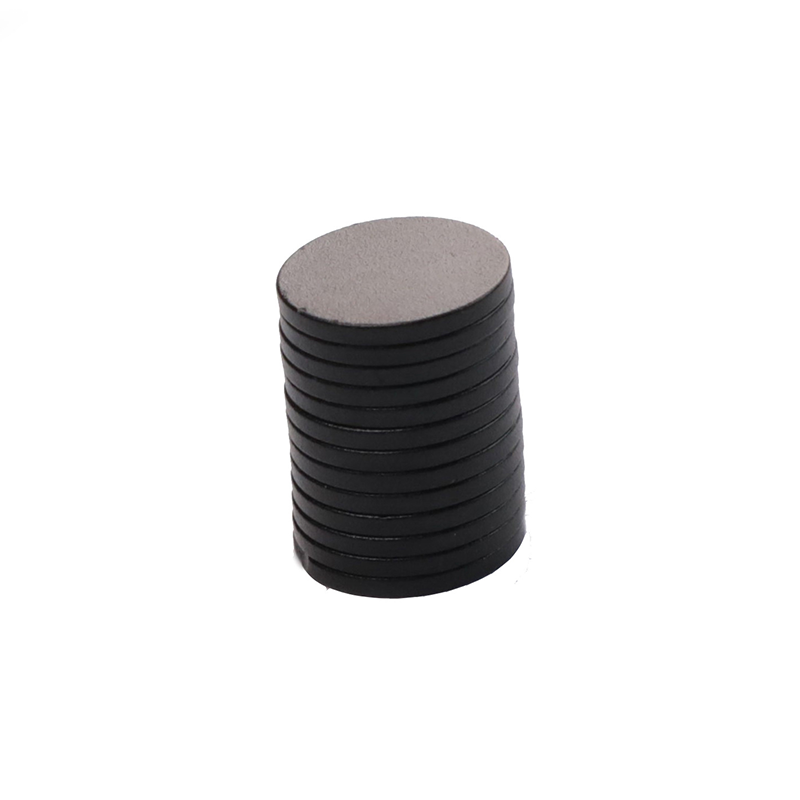
| Black Epoxy | Low (scratches easily) | Excellent | Marine applications, humid environments, woodworking |
Nickel-Copper-Nickel (Ni-Cu-Ni) is the undisputed industry standard for general mechanical wear. It provides a shiny, extremely hard finish. Zinc plating offers a highly budget-friendly alternative for very mild, dry environments. Epoxy coating delivers excellent moisture and chemical resistance, though it scratches more easily under heavy abrasive loads.
Top N40 Magnet Categories for Specific Industrial Applications
Best for Precision Engineering & 3D Printing Prototyping
Precision engineers desperately need micro-sized magnets for functional prototyping. Vital features to look for include strict ±0.05mm manufacturing tolerances and uncompromised Ni-Cu-Ni plating. We evaluate these tiny components based on highly consistent weight and exact physical dimensions. They must fit cleanly and snugly into precisely printed cavities. If the dimensions fluctuate even slightly, the rigid plastic walls will warp or crack under pressure. A highly reliable Industrial N40 Neodymium Magnet ensures your snap-fit mechanical joints operate flawlessly without requiring messy adhesives.
Best for Woodworking Jigs & Workshop Tooling
Lumber workshops subject magnetic components to brutally harsh conditions. Critical features to look for include pre-drilled countersunk holes, thick epoxy coatings, and the inclusion of non-magnetic mounting hardware. We rigorously evaluate these magnets by their lateral shear-force resistance. Coating durability is equally paramount in these settings. Fine wood dust acts as a surprisingly aggressive abrasive over time. Furthermore, direct mechanical impact from heavy hardwood lumber easily chips standard bare magnets. A tough epoxy layer provides a vital protective cushion against blunt impacts. Countersunk holes allow flush, secure screw mounting directly into wooden jigs.
Best for Bulk Manufacturing & Sensor Assemblies
Large-scale global production requires absolute uniformity above all else. Essential features to look for include standard block or cylinder shapes and rigorously batch-tested Gauss ratings. You should also demand fully ISO-certified manufacturing facilities. We prioritize overall supplier reliability and quality consistency over single-unit raw pull strength. Scalable, predictable inventory ensures your active production line never stops unexpectedly. Documented quality control processes guarantee every magnetic sensor behaves identically in the field. You absolutely cannot afford catastrophic field failures caused by wildly fluctuating magnetic field strengths.
Implementation Risks: Handling, Safety, and Lifespan
The Brittleness Reality: Neodymium is an inherently brittle, fragile material. Many novice engineers mistake it for solid, unbreakable steel. In reality, it behaves much more like delicate ceramic. If two N40 magnets snap together freely from a distance, they will likely shatter upon impact. Flying magnetic shrapnel poses a severe, immediate eye hazard to assembly workers. You must separate strong magnets using specialized plastic wedges. Never slide them aggressively against hard, unprotected metals. Treating them like structural steel will result in rapid component destruction.
Machining Warnings: Never attempt to drill, tap, or saw an Industrial N40 Neodymium Magnet after initial production. Conventional workshop machining instantly destroys the magnetic component. Standard drill bits generate massive amounts of friction heat. This rapid heat accumulation causes immediate, irreversible demagnetization. Furthermore, fine neodymium dust is highly toxic when inhaled and dangerously flammable. Top-tier manufacturers only shape these rare-earth magnets using specialized diamond-tipped tools and heavy liquid coolant floods.
Assembly Safety Protocols: Safe industrial rollout requires implementing extremely strict handling procedures.
- Personal Protective Equipment (PPE): Assembly operators handling large magnetic blocks must wear heavy-duty safety gloves and shatter-resistant goggles at all times.
- Non-Magnetic Workstations: Assemble sensitive components on wooden or specialized aluminum tables. This prevents sudden, violent impact accidents with steel tools.
- Pacemaker Warnings: Post highly visible, clear signage prohibiting individuals with pacemakers from entering designated high-gauss assembly zones.
- Safe Storage and Transit: Keep spare magnets fully separated by thick foam layers within magnetically shielded shipping containers.
How to Shortlist and Verify a Magnet Supplier
Requesting Proof of Performance: Never blindly trust a generic online product description. Instruct your procurement team to ask specifically for actual demagnetization curves. These complex B-H curves prove the underlying material grade mathematically. You should also request certified third-party testing data. Legitimate, high-quality suppliers readily provide this vital documentation upon request. It thoroughly verifies the magnet will perform reliably under your specific operational loads and temperature ranges.
Sample Testing: We strongly recommend ordering a small initial batch first. Use an accurately calibrated in-house Gauss meter to carefully verify surface field strength. Compare these actual readings against theoretical physics models. If extreme environmental factors are a valid concern, run a rigorous salt-spray test. This verifies the long-term integrity of the metallic plating. Substandard, cheap coatings will quickly blister and peel within days of exposure. An authentic Industrial N40 Neodymium Magnet will successfully endure the specified environmental stress without failing.
Supply Chain Assessment: Evaluate potential supplier lead times very carefully. Ask deep questions about their custom shape capabilities and manufacturing limits. Scrutinize their 2026 raw material sourcing transparency closely. Ethical, fully traceable rare-earth supply lines ensure long-term manufacturing stability. You want a proactive partner who can scale rapidly with your future manufacturing demands. Avoid shady suppliers who cannot accurately trace their raw neodymium materials back to legitimate, environmentally conscious mining operations.
Conclusion
Successfully sourcing reliable magnetic components requires extreme diligence and careful research. You must actively look past aggressive marketing campaigns boasting the strongest possible materials. Focus heavily on verifiable technical specifications and authentic material certificates. Align the magnet's protective coating directly with your harsh end-use environment. Match the thermal rating precisely to your highest expected operating temperature to avoid sudden demagnetization. Always validate the supplier's detailed quality control documentation before placing large bulk orders. Implementing proper safety and handling protocols will preserve your valuable investment. Taking these careful steps guarantees highly consistent performance and fundamentally protects your final product assemblies from premature failure.
FAQ
Q: How can I tell if my magnet is actually N40 and not N35?
A: You cannot verify the true grade simply by looking at it. Use a highly calibrated surface Gauss meter to take precise magnetic readings. Compare these exact numbers against the magnet's physical dimensions using standard mathematical calculators. For absolute certainty, send a small sample to an independent lab for specialized fluxmeter testing. Always ask suppliers for comprehensive material test reports.
Q: Is an N40 magnet strong enough for industrial lifting?
A: Yes, if configured correctly. Raw magnets are rarely used alone for heavy lifting applications. They perform significantly better inside a machined steel pot or Halbach array. This directs the magnetic circuit to maximize holding force safely. The exact load capacity depends entirely on the steel assembly design, not just the raw magnetic material.
Q: Do N40 magnets lose their strength over time?
A: Under normal ambient conditions, neodymium magnets lose only a tiny fraction of a percent of strength over a decade. They are essentially permanent. However, exposing them to heat above 80°C or severe physical shock will cause rapid, irreversible demagnetization. Damaged or corroded outer coatings also expose the raw material to rapid degradation over time.