Balancing magnetic strength and thermal stability presents a constant engineering challenge. Industrial designs demand reliable performance under extreme conditions. The "SH" (Super High) designation implies robust heat resistance. However, real-world deployment always demands strict thermal management. Operating Neodymium (NdFeB) magnets near their 150°C limit introduces severe risks. You face potential magnetic flux degradation. This physical loss severely impacts motor efficiency and sensor accuracy. Engineers cannot simply rely on basic specification sheets. You need a highly rigorous, evidence-based framework to evaluate these components properly. We will show you exactly how to test and implement these materials safely. You will learn to prevent unexpected performance drops during critical operations. We will also help you eliminate costly assembly failures in the field. By understanding core magnetic limits, you can optimize your entire system architecture. Let us explore the fundamental thermal boundaries of Neodymium magnets.
Key Takeaways
- Geometry dictates limits: The 150°C maximum operating temperature is not absolute; a magnet's Permeance Coefficient (Pc) determines its actual thermal threshold before demagnetization.
- Flux loss is categorized: Engineers must design around reversible losses (which recover upon cooling) and prevent irreversible losses (which require remagnetization).
- System-level failure points: In high-temperature assemblies, structural adhesives and protective coatings often fail before the magnet's intrinsic coercivity is breached.
- Strategic alternatives: Evaluating N35SH requires benchmarking against UH/EH Neodymium grades and Samarium Cobalt (SmCo) to balance unit cost against thermal risk.
1. The Thermal Reality of N35SH: Understanding Flux Degradation
Engineers often confuse theoretical temperature limits. You must clearly define your thermal baseline. The Curie Temperature for SH grades sits around 310°C to 340°C. At this exact point, the material loses all magnetic properties. However, the Maximum Operating Temperature is much lower. It typically tops out at 150°C. You cannot safely operate near the Curie point.
Elevated temperatures affect magnetic output in two distinct ways. First, you will observe reversible loss. Temporary flux reduction happens as the magnet heats up. Once the system cools, full magnetic strength returns automatically. Second, you must prevent irreversible loss. This permanent domain shift occurs when temperatures exceed a critical threshold. The magnet crosses the knee of the demagnetization curve. It will never recover its original strength naturally. You would have to remagnetize the component entirely.
You must understand Intrinsic Coercivity (Hcj) to prevent failure. Standard N35 grades have low Hcj ratings. They demagnetize quickly under heat. The N35SH grade offers a much higher Hcj rating. It typically measures at or above 20 kOe. This high resistance acts as a thermal shield. It becomes the critical metric for resisting thermal demagnetization in demanding applications.
2. Evaluating a High-Temperature Resistant N35SH Magnet for Your Application
Your magnet's physical shape heavily influences its heat resistance. We call this relationship the Permeance Coefficient (Pc). The operating load line dictates how much heat the magnet can survive. Thin, flat magnets suffer irreversible loss at lower temperatures. Thick, cylindrical magnets resist demagnetization much better. You must calculate the Pc before finalizing your design.
Reading demagnetization curves requires careful attention. Vendors supply B-H curves at various temperature intervals. You should analyze these curves at 100°C, 120°C, and 150°C. Look closely at the knee of the curve. If your operating point falls below this knee, you face permanent magnetic loss. Always verify performance claims using these temperature-specific charts.
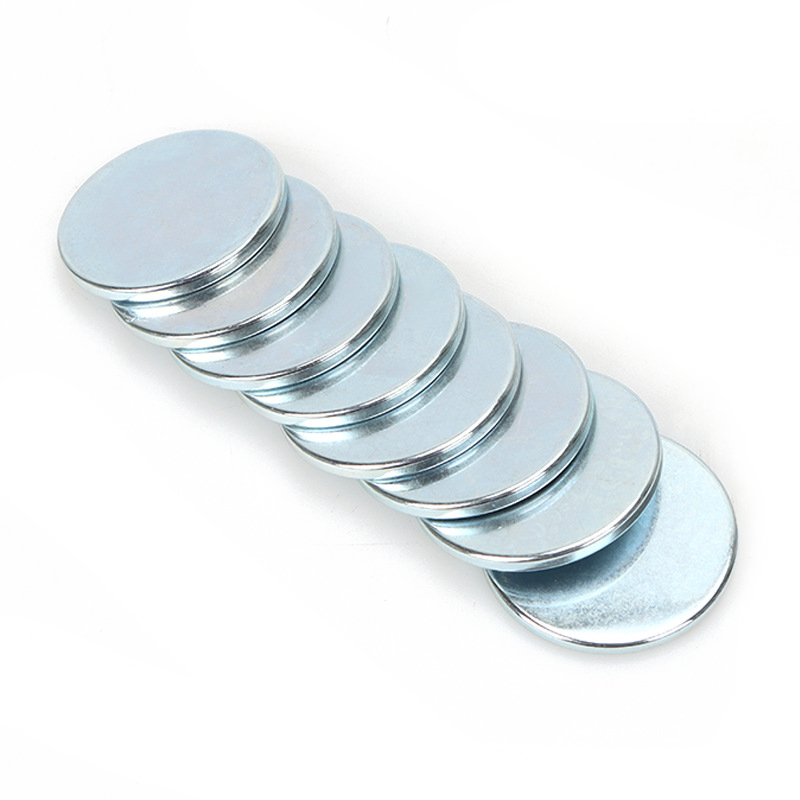
Environmental variables complicate thermal management significantly. Heat rarely acts alone in industrial applications. External demagnetizing fields compound your thermal stress. Consider a standard BLDC motor stator. The opposing magnetic fields push the rotor magnets hard. When evaluating a High-Temperature Resistant N35SH Magnet, you must account for these combined forces. They can easily push the magnet past its theoretical operational limits.
Best Practices for Magnetic Evaluation
- Always calculate the exact Permeance Coefficient (Pc) for your specific geometry.
- Request B-H curves representing your maximum expected ambient temperature.
- Map the external opposing fields in your motor or sensor assembly.
- Apply a 10% safety margin to your maximum calculated thermal load.
3. Implementation Risks and System-Level Vulnerabilities
Rapid temperature changes create severe thermal shock. Subjecting NdFeB magnets to fast heating and cooling cycles causes physical damage. You risk structural micro-cracking inside the material. These invisible cracks severely weaken the overall magnetic output. Thermal shock also causes surface coatings to fracture. You must control your environmental ramp rates carefully.
Standard surface treatments struggle during prolonged 150°C exposure. NiCuNi, Zinc, and Epoxy coatings all react differently to extreme heat. Epoxy may soften or degrade over time. Nickel layers might experience micro-cracking due to thermal expansion. If the coating micro-cracks, oxygen penetrates the surface. This exposure introduces a massive risk of internal oxidation. A rusted Neodymium magnet loses mass and magnetic strength rapidly.
Many systems fail due to assembly weaknesses rather than magnetic loss. High-temperature environments destroy structural adhesives easily. Potting compounds often melt under sustained heat. The N35SH magnet might survive the 150°C exposure perfectly. However, the mounting adhesive loses its tensile strength. The magnet then detaches from the rotor or housing. You must specify industrial adhesives rated for at least 180°C continuous operation.
4. Shortlisting Logic: N35SH vs. Alternative Materials
Sometimes, N35SH does not provide enough thermal safety. You must know when to justify an upgrade. N35UH (Ultra High) offers a 180°C limit. N35EH (Extreme High) pushes this boundary to 200°C. Upgrading to UH or EH grades provides a wider safety margin. If your motor experiences unexpected thermal spikes, this margin prevents catastrophic demagnetization.
You must also compare NdFeB against Samarium Cobalt (SmCo). Continuous operation near 150°C to 180°C creates a clear crossover point. At these sustained temperatures, SmCo becomes a safer long-term investment. It exhibits almost zero irreversible loss at 150°C. However, SmCo brings distinct disadvantages. It remains highly brittle and prone to chipping. It also carries a higher upfront material expense.
Engineers must perform a strict cost-to-risk analysis. You have two primary paths to solve thermal issues. You can over-engineer the active cooling system. Alternatively, you can source higher-grade rare earth materials. Evaluating the failure risk helps determine the most effective path. Better airflow might eliminate the need for EH grades entirely.
Material Property Comparison Chart
| Material Grade | Max Operating Temp | Curie Temperature | Intrinsic Coercivity (Hcj) | Thermal Shock Resistance |
| Standard N35 | 80°C | 310°C | ≥ 12 kOe | Moderate |
| N35SH | 150°C | 340°C | ≥ 20 kOe | Good |
| N35UH | 180°C | 350°C | ≥ 25 kOe | Good |
| SmCo (2:17) | 300°C - 350°C | 800°C+ | ≥ 25 kOe | Poor (Brittle) |
5. Engineering Best Practices for N35SH Rollouts
Assembly timing fundamentally dictates production success. You must evaluate when magnetization occurs in your process. Performing heat-intensive operations after magnetization carries immense risk. Wave soldering and heat-curing adhesives expose fully charged magnets to extreme thermal stress. Press-fitting hot components into assemblies can instantly demagnetize the material. We highly recommend assembling the raw, unmagnetized components first. You can then magnetize the entire completed assembly safely.
Thermal expansion tolerances require precise calculation. NdFeB possesses a unique coefficient of thermal expansion (CTE). The material actually expands differently depending on the magnetization direction. As temperatures rise to 150°C, the magnet changes shape slightly. If you press-fit the magnet tightly into a steel rotor, expansion forces multiply. This immense pressure can crack sensor housings or shatter the magnet itself. You must leave calculated tolerance gaps to absorb this physical expansion.
Rigorous validation testing guarantees field reliability. Do not skip physical testing phases. You must implement specific quality assurance protocols before approving volume production.
Required Validation QA Protocols
- Thermal Aging Tests: Bake the magnets in an environmental chamber at 150°C for 500 hours. Measure the final output against the baseline.
- Helmholtz Coil Flux Measurements: Record the total open-circuit magnetic flux before and after the heat cycles. This clearly identifies irreversible loss.
- Accelerated Lifecycle Testing: Run your assembled motor or sensor under maximum electrical load in a heated environment. Monitor performance drops in real-time.
- Adhesive Shear Testing: Apply lateral force to the bonded magnet while it remains at 150°C to verify structural integrity.
Conclusion
The N35SH grade stands as a highly capable choice for elevated temperatures. It delivers excellent magnetic strength while surviving tough environments. However, its success depends entirely on strict magnetic circuit design. You must calculate the load line accurately to avoid irreversible loss. Never assume a 150°C rating applies universally to every shape and size.
Do not rely solely on standard specification sheets. Always request grade-specific B-H demagnetization curves targeted at your exact operating temperature. This data remains your best defense against unexpected failures.
As a next step, model your specific geometry to find the actual Permeance Coefficient (Pc). Order prototype batches of your chosen magnets immediately. Subject these samples to rigorous physical thermal-cycle testing. Validate your adhesives and coatings before moving into volume production. Taking these proactive engineering steps guarantees a reliable, high-performance final product.
FAQ
Q: Can an N35SH magnet continuously operate at exactly 150°C?
A: Not guaranteed. It depends heavily on the magnet's shape (Permeance Coefficient) and the presence of opposing magnetic fields. 150°C is an upper boundary, not a safe continuous operating baseline for all shapes.
Q: What happens if my N35SH magnet briefly exceeds 150°C?
A: It will likely experience irreversible flux loss. When it cools down, it will not return to its original magnetic strength. It will require complete remagnetization to restore full power.
Q: Does the surface coating improve the heat resistance of an N35SH magnet?
A: No. Coatings like Nickel or Epoxy protect against corrosion and physical wear. They do not insulate the magnet from ambient thermal saturation. They cannot alter its intrinsic magnetic temperature limits.
Q: How does N35SH compare to N52 in a high-temperature environment?
A: Despite N52 being stronger at room temperature, it has a much lower temperature tolerance (typically 80°C). In a 120°C–150°C environment, an N35SH will retain far more magnetic flux and significantly outperform an N52.