Operating high-performance motors, sensors, or complex industrial equipment in elevated temperatures poses severe operational risks. Permanent magnetic loss easily occurs if you specify the wrong material for the job. Extreme heat degrades permanent magnets in specific ways we often overlook during design. Standard neodymium magnets degrade rapidly once ambient conditions push above 80°C. Choosing the wrong thermal grade inevitably leads to catastrophic equipment failure and significant mechanical downtime. Conversely, over-engineering your thermal specifications generates unnecessary procurement expenses without yielding tangible performance benefits. This guide provides a clear technical framework for carefully evaluating thermal thresholds. We will explore essential magnetic strength metrics, load lines, and crucial environmental factors. You will learn practical strategies to balance coercivity against physical dimensions. Use these actionable insights to confidently specify the exact magnet grade for your demanding high-temperature application.
Key Takeaways
- Maximum Operating Temperature ($T_{max}$) and Intrinsic Coercivity ($H_{cj}$) are the primary metrics for preventing irreversible demagnetization.
- The High-Temperature Resistant N35SH Magnet offers the optimal balance of magnetic strength and thermal stability for applications up to 150°C.
- For environments exceeding 200°C, engineers must pivot from Neodymium (NdFeB) to Samarium Cobalt (SmCo) or Alnico materials, despite the trade-offs in brittleness and cost.
- Prototyping must account for the initial thermal cycle, which often causes a minor, irreversible flux loss even in correctly specified magnets.
The Physics of Heat and Magnetic Failure
Heat acts as the ultimate adversary to permanent magnetism. Thermal energy excites the atomic structure inside the material. This agitation disrupts the aligned magnetic domains. Understanding how heat interacts with magnetic fields prevents premature component failure.
Curie Temperature ($T_c$) vs. Maximum Operating Temperature ($T_{max}$)
Engineers frequently confuse these two critical temperature thresholds. They represent entirely different stages of magnetic degradation.
The Maximum Operating Temperature ($T_{max}$) defines the practical limit for engineering applications. Operating below this threshold ensures the magnet performs reliably. If you exceed this limit, the magnet begins to lose its strength permanently. Manufacturers determine this value based on specific testing parameters.
The Curie Temperature ($T_c$) represents the point of total structural magnetic collapse. At this extreme heat level, the material loses its ferromagnetic properties entirely. The internal atomic alignment scrambles. Even if the material cools down, it will not recover its magnetic field. It becomes a simple piece of unmagnetized metal.
Types of Magnetic Loss
When thermal thresholds are breached, magnets experience three distinct categories of degradation. You must account for each type during the design phase.
- Reversible Loss: This occurs within safe operating limits. As the magnet heats up, its field weakens slightly. Once the temperature drops back to normal, the magnetic strength recovers fully. You do not lose any permanent performance.
- Irreversible Loss: This happens when you push the magnet past its $T_{max}$ but keep it below its Curie Temperature. The magnetic field drops permanently. Cooling the magnet will not restore the lost flux. You must physically remagnetize the component to restore its original strength.
- Structural Loss: Extreme heat causes permanent metallurgical damage. High temperatures can trigger severe oxidation or alter the alloy phase. The physical matrix of the magnet changes forever. Remagnetization becomes impossible.
The Coercivity Factor
Intrinsic Coercivity ($H_{cj}$) measures a magnet's ability to resist demagnetization. Think of it as the magnetic "resistance" to external forces. These forces include opposing magnetic fields and thermal energy. High coercivity materials hold their internal domain alignment tightly. To survive high temperatures, a magnet requires a massive coercivity rating. Material scientists achieve this by altering the underlying chemical composition.
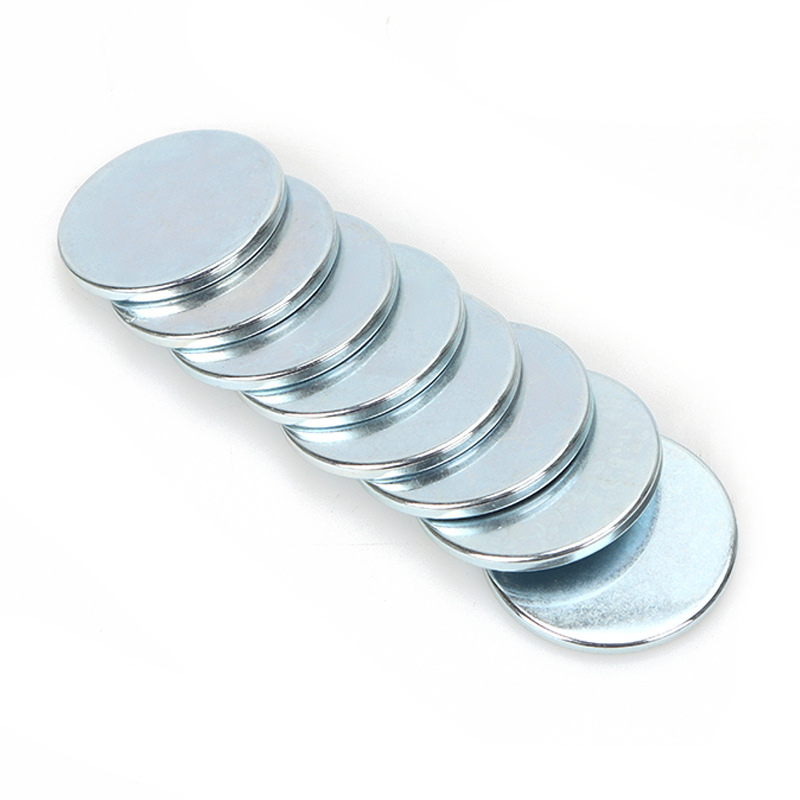
Decoding High-Temp Neodymium: The Role of the High-Temperature Resistant N35SH Magnet
Neodymium (NdFeB) dominates the modern engineering landscape. It offers the highest energy product available. However, standard grades fail rapidly under thermal stress. To solve this, manufacturers developed specific thermal grades.
The Suffix System
Industry standards use a simple suffix system to denote thermal tolerance. The letters follow the energy product number (like N35 or N42). Each letter corresponds to a distinct Maximum Operating Temperature limit.
| Suffix | Grade Name | Max Operating Temp ($T_{max}$) |
| None | Standard | 80°C |
| M | Medium | 100°C |
| H | High | 120°C |
| SH | Super High | 150°C |
| UH | Ultra High | 180°C |
| EH | Extra High | 200°C |
| AH | Abnormal High | 220°C |
Spotlight on N35SH
Automotive sensors, high-speed servos, and industrial actuators frequently operate in the 120°C to 140°C range. In these environments, standard grades fail instantly. This is precisely why the High-Temperature Resistant N35SH Magnet serves as the industry standard. It perfectly bridges the gap between raw power and thermal stability.
Performance Specs: The "35" denotes a Maximum Energy Product (BHmax) of approximately 35 MGOe. This sustains a strong Remanence (Br) for high-torque applications. The "SH" rating guarantees it resists demagnetization up to 150°C. Engineers rely on this specific grade to maintain reliable flux density under continuous moderate heat.
Cost-to-Performance Ratio: Specifying an SH grade is highly cost-effective. Many engineers mistakenly default to UH (180°C) or EH (200°C) grades for a "safety factor." These ultra-high grades require heavy Dysprosium doping. Dysprosium is a rare, expensive element. If your application sits safely at 130°C, a High-Temperature Resistant N35SH Magnet eliminates unnecessary material expenses while delivering robust reliability.
Material Decision Matrix: NdFeB vs. SmCo vs. Alnico
When temperatures climb above 150°C, your material options shift dramatically. Neodymium cannot solve every thermal problem. You must evaluate Samarium Cobalt and Alnico alternatives.
Neodymium (NdFeB) High-Temp Grades
Neodymium remains the top choice for maximum holding force in tight spaces. Heavily doped grades (UH, EH, AH) push the thermal limit up to 220°C. Manufacturers add Dysprosium and Terbium to increase the intrinsic coercivity. This process makes the magnet highly heat-resistant. However, heavy doping slightly reduces the overall magnetic strength compared to standard room-temperature grades. Use these only when torque and size constraints demand extreme energy density below 220°C.
Samarium Cobalt (SmCo)
When applications hit the 250°C to 350°C range, Samarium Cobalt becomes the mandatory pivot. Aerospace systems, downhole drilling tools, and military applications rely heavily on SmCo.
Trade-offs: SmCo offers exceptional temperature stability and excellent corrosion resistance. It rarely requires protective plating. However, you face significant compromises. SmCo is highly brittle. It chips easily during assembly or mechanical shock. Furthermore, raw material scarcity makes it more expensive than Neodymium.
Alnico
Alnico magnets consist of Aluminum, Nickel, and Cobalt. They dominate extreme heat environments. They perform reliably up to 500°C and beyond.
Trade-offs: Alnico boasts the highest thermal stability among commercial magnets. Unfortunately, it suffers from remarkably low coercive force. Opposing magnetic fields easily demagnetize Alnico. It also delivers a lower overall energy product compared to rare earth options. You must design magnetic circuits specifically to protect Alnico from stray demagnetizing fields.
Key Evaluation Criteria for High-Temp Applications
Selecting a thermal grade requires more than reading a data sheet. Real-world conditions dictate actual magnetic performance. You must evaluate the operating environment, magnet geometry, and protective coatings.
Operating Environment (Continuous vs. Peak)
Determine your exact thermal profile before finalizing any specification. Magnets respond differently to continuous soaking versus short spikes.
- Continuous Operating Temperature: The sustained heat level during standard operation. If your motor runs continuously at 130°C, you need an SH grade.
- Peak Temperature Spikes: Brief surges in heat due to heavy loads or friction. A magnet might survive a 5-second spike to 160°C, but continuous exposure would ruin it.
Always map your thermal limits carefully. Do not base your specification solely on the absolute peak if that peak lasts only milliseconds.
Permeance Coefficient (PC) / Load Line
A magnet's physical shape directly influences its temperature resistance. The Permeance Coefficient (PC), also known as the load line, quantifies this geometric relationship.
Thin, flat magnets suffer from low Permeance Coefficients. They demagnetize much faster at high heat than thick, long magnets. A thin N35SH disc might fail at 130°C, while a thick cylinder of the exact same grade easily survives 150°C. You must review the demagnetization curves (B-H curves) at your target temperature. Ensure your specific magnet geometry keeps the operating point well above the "knee" of the curve. Poor geometry accelerates thermal failure.
Corrosion and Coating Requirements
High temperatures frequently correlate with harsh, corrosive environments. Neodymium contains iron, making it highly susceptible to rust. Protective coatings are non-negotiable.
- NiCuNi (Nickel-Copper-Nickel): The standard industry coating. It handles moderate heat well but can degrade if exposed to high humidity at elevated temperatures.
- Epoxy: Provides excellent salt spray resistance. However, basic epoxy degrades or flakes off near 150°C. You must specify high-temp epoxy variants.
- Thermal Expansion: Different coating materials expand at different rates compared to the underlying magnet. Rapid heating can cause the coating to crack, exposing the raw magnet to rapid oxidation.
Implementation Risks and Prototyping Best Practices
Transitioning from a digital design to physical production introduces hidden variables. Implementing high-temp magnets requires careful prototyping. Avoid common pitfalls by following established engineering best practices.
The "First Cycle" Drop
Prepare your engineering team for the standard 1-5% irreversible flux loss. This drop occurs during the initial heat cycle. Even correctly specified magnets experience this stabilization phase. As the material reaches its operating temperature for the first time, marginally aligned domains flip.
Best Practice: Pre-stabilize your magnets before final assembly. Subject them to a thermal baking cycle slightly above your target operating temperature. This forces the initial flux drop in a controlled environment. Once baked, the magnet will perform with absolute consistency during all future cycles.
Thermal Shock
Rapid temperature gradients destroy magnetic integrity. Moving magnets too quickly between extreme heat and freezing cold induces severe physical stress. Rare earth magnets are structurally brittle ceramics. Sudden thermal shock causes internal micro-fractures. These fractures lead to eventual structural disintegration. Always implement gradual heating and cooling cycles during both manufacturing and operation.
Supply Chain and Compliance
High-temperature NdFeB heavily depends on Dysprosium and Terbium. These heavy rare earth elements face volatile supply chains. Geopolitical shifts rapidly affect availability.
Furthermore, ensure your selected materials meet strict environmental standards. Verify full RoHS (Restriction of Hazardous Substances) and REACH compliance. Some older specialized coatings or extreme-temperature adhesives may contain restricted compounds. Partner closely with your manufacturer to secure long-term material consistency.
Conclusion
- Summary: Selecting a high-temperature magnet requires balancing thermal limits against magnetic strength, physical geometry, and material cost. Extreme heat dictates specific material choices and structural considerations.
- Recommendation: Start by mapping your continuous operating temperature and required flux density. For the broad 120°C–150°C range, a High-Temperature Resistant N35SH Magnet is highly recommended. It delivers the ideal blend of durability and magnetic force.
- Next Steps: Request comprehensive material safety data sheets (MSDS) from your supplier. Obtain demagnetization curves (B-H curves) mapped specifically at your target operating temperature. Order prototypes early to conduct extensive thermal cycle testing in your own facilities.
FAQ
Q: Can a demagnetized high-temperature magnet be remagnetized?
A: Yes, if the loss was merely irreversible flux loss. The ambient heat must not have exceeded the material's Curie temperature. Additionally, the magnet must not have suffered metallurgical oxidation or structural cracking. If the physical matrix remains intact, exposing it to a powerful external magnetizing field will fully restore its original strength.
Q: Why is my N35SH magnet failing below 150°C?
A: Likely due to a low Permeance Coefficient. If the geometry is too thin, it cannot resist demagnetization efficiently. Other factors include exposure to strong opposing magnetic fields in your assembly. Alternatively, continuous ambient heat might be exceeding the rated spike temperature, slowly degrading the internal domains over time.
Q: Does adding high-temperature resistance lower the magnet's strength?
A: Yes. To increase coercivity and heat resistance, manufacturers substitute some Neodymium with heavy rare earth elements like Dysprosium. This chemical alteration slightly lowers the overall Remanence (magnetic strength). Therefore, a high-temperature grade generally exhibits slightly lower raw holding force compared to a standard-temperature grade sharing the same N-rating.