Engineers and procurement teams constantly face a tough balancing act. You must weigh raw magnetic performance against resource allocation and thermal stability when designing new assemblies. Defaulting to the lowest-grade option often leads to underperforming products. Conversely, over-specifying creates unnecessary fragility and bloated project expenses. The N40 grade emerges as the optimized middle ground between standard commercial grades and highly specialized variants. It delivers robust magnetic strength without the rapid thermal degradation seen in top-tier categories.
This guide provides a clear technical definition, a practical evaluation framework, and reliable sourcing logic for these specific magnetic components. You will learn how to read technical specifications accurately. We will also explore thermal suffixes, coating necessities, and assembly risk mitigation. By the end, you will know exactly when and how to implement this material in your upcoming hardware projects.
Key Takeaways
- Performance Baseline: N40 specifies a Maximum Energy Product (BHmax) of roughly 40 MGOe, offering approximately 10-15% more magnetic pull than standard N35.
- Cost-to-Strength Ratio: Serves as the optimal choice when N35 is too weak for compact footprint requirements, but N52 introduces unnecessary cost and thermal fragility.
- Thermal Realities: Standard N40 degrades at 80°C (176°F); high-temperature industrial environments strictly require suffixed variants (N40M, N40H, N40SH).
- Implementation Risk: Raw N40 neodymium is highly susceptible to corrosion and mechanical chipping; precise coating and assembly tolerances are non-negotiable success criteria.
Decoding the N40 Technical Specification
Understanding the standard nomenclature prevents critical design errors. The "N" stands for Neodymium. This refers specifically to the NdFeB (Neodymium-Iron-Boron) alloy family. The number "40" represents the Maximum Energy Product. We measure this value in Mega-Gauss Oersteds (MGOe). A value of 40 indicates a powerful, mid-to-high tier magnetic field. It provides significant holding force for its given volume.
Core magnetic properties define how the material behaves under stress. Remanence (Br) measures the residual magnetic flux density. For N40, Br typically ranges between 12.5 and 12.8 kiloGauss (kG). This metric directly dictates the sheer magnetic field strength available. Coercivity measures resistance to demagnetization. We look at Normal Coercivity (Hcb) and Intrinsic Coercivity (Hcj). High Hcj values ensure the magnet retains its field when exposed to opposing external magnetic forces.
Physical characteristics dictate how you handle and integrate the material. The material boasts a high density of approximately 7.4 to 7.5 g/cm³. However, its Vickers hardness averages around 600 Hv. This high hardness makes the material extremely brittle. You cannot machine it using standard cutting tools. Manufacturers must use diamond-tipped wet grinding wheels to shape it. Standard machining tolerances typically hold at ±0.1 mm. Tightening these tolerances to ±0.05 mm requires specialized secondary operations.
Standard Physical Properties of N40 NdFeB | Property | Typical Value | Unit |
| Density | 7.4 - 7.5 | g/cm³ |
| Vickers Hardness | 560 - 600 | Hv |
| Compressive Strength | 800 - 1000 | N/mm² |
| Standard Machining Tolerance | ±0.1 | mm |
Engineers must reference these physical limits during the early prototyping phase. Ignoring the brittleness often leads to structural failure during press-fit assembly. You must design housings that protect the bare alloy from direct mechanical impacts.
N40 vs. N35 and N52: Navigating the Trade-offs
Many design teams struggle to choose between N35, N40, and N52. You should upgrade from N35 when spatial constraints become severe. If your product housing shrinks, you cannot use a larger magnet. N40 allows you to achieve the required pull force in a smaller physical volume. This 10-15% increase in magnetic strength over N35 makes it ideal for miniaturized sensors and compact consumer electronics.
Defaulting to the strongest grade rarely yields practical benefits. The N52 grade represents the upper limit of commercial NdFeB strength. However, it introduces significant diminishing returns. The ultra-high magnetic strength comes with increased mechanical fragility. N52 magnets chip much faster under impact. Furthermore, N52 possesses significantly lower thermal stability. It degrades rapidly in environments where N40 remains perfectly stable.
The business case for N40 relies on predictable scalability. It offers a balanced formulation. The raw materials used to achieve 40 MGOe are abundant and straightforward to process. This ensures stable unit economics during high-volume manufacturing. Motor stators, magnetic separators, and automated sorting machines frequently utilize N40. It delivers consistent magnetic flux density without the extreme supply chain volatility associated with top-tier grades.
Grade Comparison Chart: N35 vs N40 vs N52 | Specification | N35 (Standard) | N40 (Optimized) | N52 (Maximum) |
| BHmax (MGOe) | 33 - 35 | 38 - 41 | 49 - 52 |
| Relative Pull Force | Baseline | +10% to +15% | +35% to +40% |
| Mechanical Brittleness | Moderate | Moderate | Very High |
| Application Match | Large assemblies | Compact precision | Extreme miniaturization |
You can clearly see why N40 dominates mid-tier engineering requirements. It guarantees optimal holding power while preserving structural integrity. We highly recommend mapping your exact spatial envelope before committing to any grade above N40.
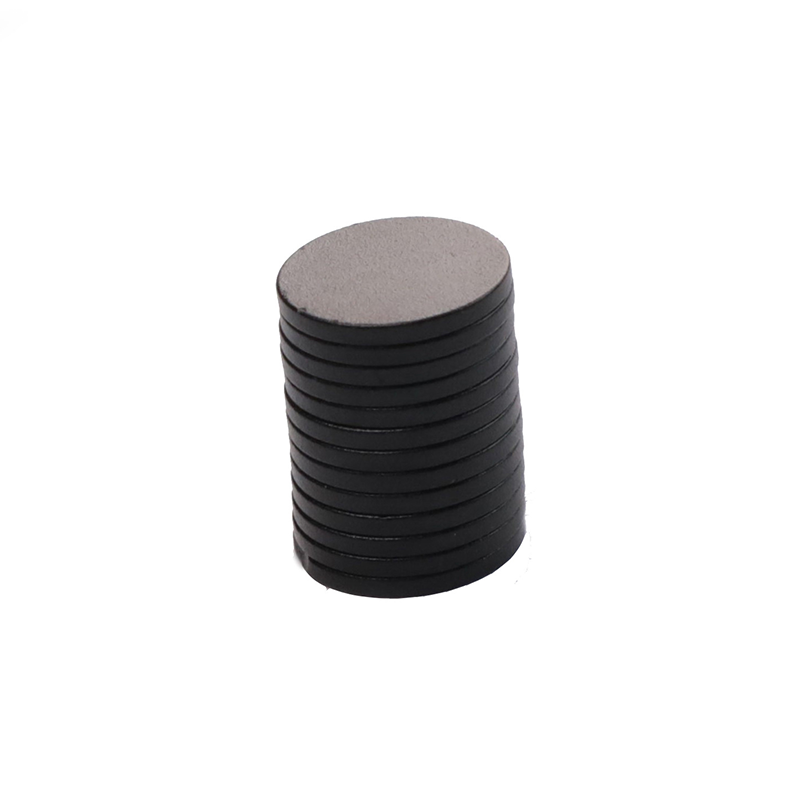
Temperature Ratings for the Industrial N40 Neodymium Magnet
Thermal degradation presents the greatest risk to magnetic assemblies. Irreversible demagnetization occurs when the material absorbs too much ambient heat. The standard Industrial N40 Neodymium Magnet carries a maximum operating temperature of 80°C (176°F). Exceeding this threshold causes the internal magnetic domains to scatter permanently. Even if the environment cools down, the original magnetic strength will not return.
Industrial applications frequently demand higher thermal resilience. Manufacturers resolve this by altering the alloy composition. They add trace elements like Dysprosium (Dy) or Terbium (Tb). These additions increase the intrinsic coercivity. This process creates high-temperature suffix variants. You must evaluate these solution categories carefully based on your operating environment.
- N40M (Medium): Rated up to 100°C. Ideal for enclosures exposed to moderate direct sunlight or adjacent power supplies.
- N40H (High): Rated up to 120°C. Frequently specified for standard automotive cabin sensors and light industrial machinery.
- N40SH (Super High): Rated up to 150°C. Necessary for commercial pump couplings and industrial actuators generating internal friction heat.
- N40UH/EH (Ultra/Extreme High): Rated up to 180°C and 200°C respectively. These require heavy Dysprosium doping. They serve heavy-duty electric motors and aerospace components.
Navigating global supply chains requires strict regulatory compliance. You must ensure all selected high-temp variants meet RoHS and REACH directives. Heavy metal doping can sometimes introduce restricted substances if sourced irresponsibly. Always request current compliance declarations from your manufacturing partners before approving the final bill of materials.
Mitigating Implementation Risks: Coatings and Assembly
Raw NdFeB oxidizes rapidly when exposed to atmospheric moisture. This corrosion vulnerability forces engineers to mandate protective surface treatments. If rust penetrates the surface, the magnet begins to flake and crumble. The internal magnetic matrix degrades entirely. Selecting the correct barrier layer prevents catastrophic field failure.
You must evaluate different coating technologies based on environmental exposure. We utilize a strict coating evaluation framework to match protection levels with application demands.
- Ni-Cu-Ni (Nickel-Copper-Nickel): This represents the standard industrial choice. It applies three distinct electrolytic layers. It offers balanced protection, excellent aesthetic finish, and reasonable production efficiency.
- Zinc: This coating remains inferior to Nickel regarding moisture resistance. However, it proves highly useful in low-exposure, highly cost-sensitive assemblies where the magnet sits fully sealed inside plastic.
- Epoxy: This heavy-duty polymer coating is mandatory for marine applications. It provides superior salt-spray resistance. You must use epoxy for any high-humidity or chemical-exposure environments.
Mechanical assembly presents an equally severe risk profile. N40 magnets possess low tensile strength and high brittleness. Automated assembly lines often experience high defect rates due to chipping and cracking. Fast-moving robotic arms snapping magnets into steel housings create severe impact shock.
You can prevent assembly line failures by implementing specific automated handling guidelines:
- Avoid Direct Metal Impacts: Design insertion tools using brass, nylon, or hard plastics. These materials absorb shock during the pressing phase.
- Control Approach Speeds: Program pick-and-place robots to slow down during the final 5 millimeters of approach. This prevents the magnetic pull from aggressively snapping the component into place.
- Utilize Adhesive Dispensing: Rely on industrial adhesives rather than tight mechanical interference fits. Press-fitting highly brittle materials guarantees micro-fractures.
- Implement Non-Magnetic Spacers: Keep magnets separated by plastic shims in the feeding trays. Allowing them to clump together causes heavy edge chipping before they even reach the assembly station.
Procurement Logic: Shortlisting and Supplier Verification
Sourcing reliable magnetic components requires rigorous vetting. You must define clear success criteria before contacting manufacturers. Align your required magnet geometry precisely with the application intent. Common shapes include discs, blocks, and rings. Each shape interacts differently with surrounding ferrous materials. You must also specify the exact magnetization direction. An axially magnetized disc behaves entirely differently than a diametrically magnetized one. Clarifying these parameters upfront eliminates significant back-and-forth communication.
Validating supplier claims separates certified manufacturers from unreliable vendors. Do not accept basic data sheets at face value. You must demand comprehensive testing documentation. Request certified demagnetization curves (B-H curves) measured at your specific operating temperature. These curves prove the intrinsic coercivity claims.
Coating integrity requires independent validation. Demand salt spray test results. A standard Ni-Cu-Ni coating should easily withstand 24 to 48 hours of neutral salt spray testing without showing red rust. Epoxy coatings should demonstrate hundreds of hours of resistance. Additionally, ask for dimensional tolerance reports from recent production runs. Consistent machining tolerances indicate excellent quality control on the factory floor.
Long-term reliability justifies working exclusively with certified industrial manufacturers. Unverified suppliers often mix lower-grade scrap materials into their pressing processes. They might label a batch as N40 when it barely performs at N35 levels. This leads to high failure rates in the field. Partnering with transparent, data-driven manufacturers ensures your assemblies perform exactly as engineered over their entire intended lifespan.
Conclusion
The N40 grade stands out as a highly versatile and structurally balanced industrial choice. It bridges the gap between basic performance and extreme magnetic strength. By understanding its physical constraints, thermal limitations, and surface vulnerabilities, you can engineer highly resilient product architectures. Selecting appropriate coatings and strictly controlling assembly environments will eliminate the most common failure modes.
We recommend taking immediate action on your current designs. Prototype your next assembly using distinct N40 temperature variants to establish a real-world thermal baseline. Alternatively, consult directly with a magnetic engineer to confirm your exact dimensional tolerances and coating specifications. Solidifying these technical details now prevents costly revisions after you finalize high-volume purchase orders.
FAQ
Q: How much stronger is an N40 magnet compared to N35?
A: An N40 magnet generally delivers a 10% to 15% increase in maximum energy product (BHmax) over an N35 magnet. In practical applications, this translates directly to a noticeable 10-15% increase in actual pull force, assuming the physical dimensions and surrounding steel structures remain identical.
Q: Can an N40 magnet lose its magnetism?
A: Yes, it can permanently lose its magnetism under specific conditions. Exceeding its maximum operating temperature (80°C for standard N40) causes irreversible demagnetization. Severe physical impacts that crack the structure, or prolonged exposure to massively stronger opposing magnetic fields, will also degrade its internal magnetic alignment.
Q: How do I calculate the exact pull force of an N40 magnet for my project?
A: Exact pull force depends heavily on the magnet's volume, shape, and the thickness of the target steel. Theoretical calculators provide a baseline estimate. However, we strongly recommend physical testing. You must test the specific grade and geometry against your actual application materials to determine true holding power.
Q: Is N40 suitable for outdoor industrial applications?
A: Raw N40 is never suitable for outdoor use due to rapid oxidation. It is only suitable for outdoor industrial applications if fully encased in waterproof housings. Alternatively, it must be sealed with specialized, heavy-duty epoxy coatings to withstand moisture and prevent corrosive failure.