Standard neodymium (NdFeB) magnets offer unparalleled magnetic strength for modern engineering projects. They drive the performance of everything from compact actuators to heavy-duty rotors. However, they suffer severe performance degradation in high-heat industrial applications like electric motors and sensitive automotive sensors. You risk catastrophic system failures when relying on basic material grades in these extreme environments.
Upgrading to a heat-resistant grade requires balancing magnetic output (remanence) against resistance to demagnetization (coercivity). Engineers constantly face a difficult trade-off between thermal stability and overall magnetic power. Making the wrong choice leads to compromised energy efficiency or early mechanical breakdown.
To make an informed engineering decision, buyers must understand the metallurgical science behind thermal grades. We will explore how to evaluate a baseline high-temp standard for your upcoming designs. You will learn exactly how the High-Temperature Resistant N35SH Magnet operates under extreme thermal stress.
Key Takeaways
- Standard NdFeB magnets lose irreversible flux above 80°C; SH-grade magnets push this operational threshold to 150°C.
- Heat resistance is achieved by doping the alloy with Heavy Rare Earth Elements (HREEs) like Dysprosium (Dy) or Terbium (Tb), which increases intrinsic coercivity (Hcj).
- The "Maximum Operating Temperature" is a guideline, not an absolute—a magnet's actual thermal limit heavily depends on its shape (Permeance Coefficient).
- A High-Temperature Resistant N35SH Magnet offers a specific, cost-effective balance for mid-tier thermal applications before requiring highly expensive UH/EH grades or shifting to Samarium Cobalt (SmCo).
The Thermal Vulnerability of Standard Neodymium (Business Problem)
Thermal failure represents a massive engineering risk. When motors or magnetic couplings exceed their specific thermal thresholds, operational efficiency drops rapidly. This sudden loss of magnetic flux leads to catastrophic mechanical failure. System downtime ruins operational schedules. You must account for thermal loads during the initial design phase.
Engineers must distinguish between reversible and irreversible flux loss. Reversible loss means temporary weakening. The magnet recovers its full strength upon cooling back to room temperature. This happens naturally in all magnetic materials as thermal energy increases. Irreversible demagnetization represents a permanent loss of strength. You must physically remagnetize the material to restore its original magnetic capabilities.
You also need to understand the difference between Operating Temperature ($T_{max}$) and Curie Temperature ($T_c$). Operating temperature defines the practical limit for application stability. It tells you how hot the environment can get before irreversible loss occurs. Curie temperature indicates the extreme point where all magnetism is completely lost. Once a magnet reaches its Curie temperature, the internal structure changes. The material becomes purely paramagnetic.
The Microstructural Science of Heat Resistance (Solution Mechanics)
Elevating intrinsic coercivity (Hcj) provides the primary defense against thermal degradation. Resisting heat physically means resisting demagnetizing fields. High Hcj serves as the primary metric for thermal stability. You need high coercivity to prevent magnetic domains from flipping alignment under thermal stress.
Heavy Rare Earth Elements (HREEs) play a crucial role in creating high-temperature grades. Standard neodymium requires specific chemical enhancements to survive harsh environments.
- Domain Wall Pinning: Substituting a fraction of Neodymium with Dysprosium (Dy) or Terbium (Tb) locks the magnetic domains tightly in place.
- Thermal Agitation Defense: These added elements prevent thermal agitation from scrambling the carefully aligned magnetic structure.
- Anisotropy Enhancement: HREEs increase the magnetocrystalline anisotropy of the alloy. This makes the magnetic fields harder to reverse.
You must acknowledge the inherent engineering trade-offs. Adding these heavy rare earth elements slightly reduces the overall magnetic remanence (Br). You sacrifice a small amount of pure strength to gain high thermal stability. Furthermore, elements like Dysprosium are scarce. This scarcity significantly increases material acquisition costs. You cannot simply specify the highest thermal grade without impacting project budgets.
Evaluating the High-Temperature Resistant N35SH Magnet (Evaluation Criteria)
Decoding the specific nomenclature of NdFeB magnets helps you select the correct material. The N35SH spec contains two distinct pieces of technical information. The "N35" denotes the energy product. It acts as your magnetic strength baseline. The "SH" stands for Super High. This thermal grade classification denotes a maximum operating temperature of approximately 150°C (302°F).
You must review specific performance metrics when evaluating a High-Temperature Resistant N35SH Magnet. The typical Remanence (Br) sits around 11.7 to 12.1 kGs. The Intrinsic Coercivity (Hcj) curve demonstrates resistance up to roughly 20 kOe. These figures guarantee strong performance in demanding motor applications.
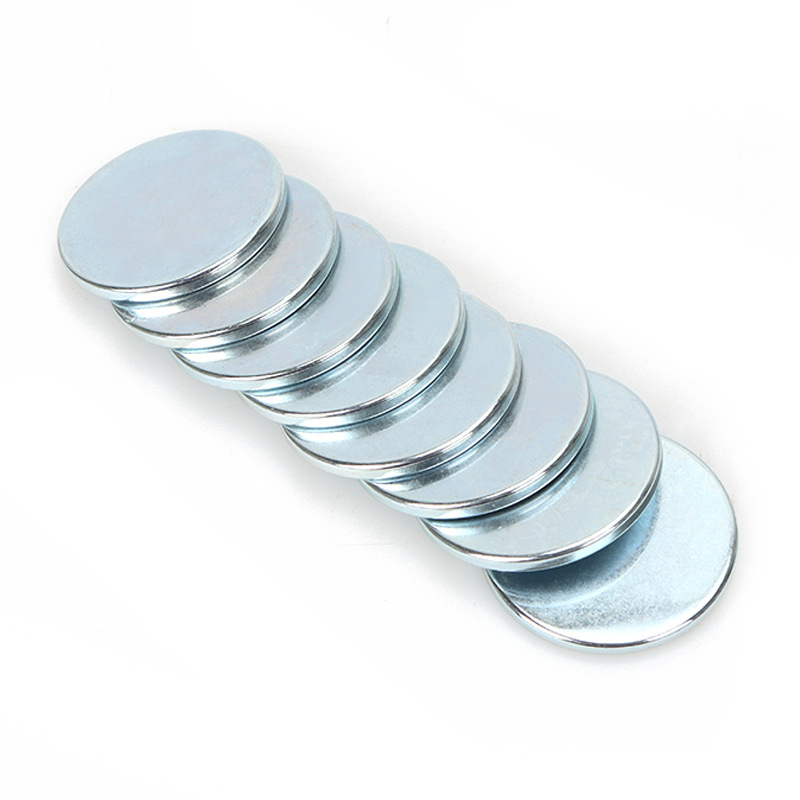
The Permeance Coefficient (Pc) factor acts as a crucial trustworthiness check. A rating of 150°C is only achievable if the magnet's physical geometry provides a sufficiently high Pc. You determine the Pc by calculating the thickness versus the diameter. Thin magnets have low permeance coefficients. They will suffer irreversible demagnetization well below 150°C. Thick, blocky shapes handle heat much better than thin discs.
Here is a breakdown of N35SH performance indicators:
| Magnetic Property | Typical Range / Value | Engineering Relevance |
| Remanence (Br) | 11.7 - 12.1 kGs | Determines the overall magnetic output and torque capability. |
| Intrinsic Coercivity (Hcj) | ≥ 20 kOe | Provides resistance against demagnetization at 150°C. |
| Max Energy Product (BHmax) | 33 - 36 MGOe | Indicates the total energy density stored in the magnet. |
| Curie Temperature (Tc) | ~ 340°C | The absolute failure point where structure becomes paramagnetic. |
N35SH vs. Alternatives: Making the Right Engineering Choice (Shortlisting Logic)
Engineers must carefully compare the N35SH grade against other common options. Standard N grades begin losing irreversible flux at just 80°C. M (Medium) and H (High) grades handle 100°C and 120°C respectively. The step-up to an SH grade becomes justified for enclosed industrial motors or automotive sensors. These environments frequently push ambient temperatures past 120°C during peak loads.
You might wonder about higher tiers like UH (180°C) or EH (200°C) grades. These higher grades represent a sharp point of diminishing returns. UH and EH grades contain significantly more Dysprosium. This drives up component costs exponentially. A High-Temperature Resistant N35SH Magnet usually hits the ideal performance sweet spot for most modern 150°C requirements.
You also need to compare N35SH against Samarium Cobalt (SmCo) alloys. SmCo withstands brutal temperatures ranging from 250°C to 350°C. It possesses incredible natural corrosion resistance. However, SmCo is highly brittle. It chips easily during assembly processes. It also often costs far more than N35SH due to high cobalt content. You should choose N35SH when operating temperatures stay strictly below 150°C and your assembly requires maximum physical durability.
Consider this simple selection chart to guide your engineering shortlisting:
| Material Grade | Max Operating Temp | Best Use Case |
| Standard N-Grade | 80°C | Consumer electronics, standard indoor fixtures. |
| H-Grade (High) | 120°C | Open-air actuators, moderate industrial tools. |
| SH-Grade (Super High) | 150°C | Enclosed electric motors, automotive sensors. |
| SmCo (Samarium Cobalt) | 250°C - 350°C | Aerospace, deep-well drilling, extreme heat. |
Implementation Risks and Procurement Considerations (Rollout Realities)
Procuring specialized thermal magnets introduces unique supply chain challenges. Dysprosium availability fluctuates heavily in global markets. Relying heavily on SH grades requires high supplier transparency. You must establish strong cost-forecasting strategies to protect your manufacturing margins. Sudden spikes in heavy rare earth metals can quickly derail a production budget.
High heat accelerates the oxidation process of neodymium alloys. You must evaluate protective coating options suitable for continuous 150°C environments.
- Nickel-Copper-Nickel (Ni-Cu-Ni): Provides standard industrial protection. It handles heat well but scratches easily.
- Epoxy Resin: Delivers superior chemical resistance. It performs exceptionally well in enclosed, humid motor casings.
- Zinc: Offers basic corrosion protection. However, zinc layers can degrade rapidly under high thermal stress.
- Phosphating: Used primarily as a temporary protective layer before integration into sealed systems.
You must enforce strict prototyping requirements. Advise your engineering teams to request detailed demagnetization curves (B-H curves) from suppliers. You need these curves plotted at your specific target temperatures like 120°C or 140°C. Never rely solely on room-temperature data sheets. Standard data sheets often mask how steeply the coercivity drops near the upper thermal limit.
Conclusion
Achieving high-temperature resistance is essentially a complex metallurgical trade-off. You must balance intrinsic coercivity, raw magnetic strength, and material expenditure. Pushing thermal limits requires careful engineering foresight and precise geometry calculations.
We highly recommend shortlisting the N35SH grade as the ideal middle-ground for demanding 150°C applications. It provides robust protection against irreversible flux loss without incurring the massive premiums associated with UH or EH grades.
Always validate your specific Permeance Coefficient (Pc) directly with a magnetic supplier before placing bulk orders. Request localized temperature testing data to ensure your custom shapes can actually survive your target environment. Taking these proactive steps guarantees long-term reliability for your electric motors and sensor assemblies.
FAQ
Q: What happens if an N35SH magnet exceeds 150°C?
A: The magnet experiences irreversible demagnetization. The magnetic domains lose their alignment due to excessive thermal energy breaking the domain wall pinning. You will notice a permanent drop in overall magnetic strength once the assembly cools down.
Q: Does the "SH" rating mean the magnet is always safe at 150°C?
A: No. Thermal stability depends heavily on the magnet's physical shape and thickness. Thin magnets have a low Permeance Coefficient (Pc) and can demagnetize long before reaching 150°C. External opposing magnetic fields in the application also lower this threshold.
Q: Can a demagnetized N35SH magnet be remagnetized?
A: Yes. Irreversible flux loss caused by exceeding operating temperatures can be restored using a commercial magnetizer. However, if the material exceeded its Curie temperature and suffered actual structural metallurgical damage, remagnetization will fail.
Q: Why is N35SH more expensive than N52?
A: N52 has a higher energy product and raw strength. However, N35SH contains Heavy Rare Earth Elements like Dysprosium and Terbium. These rare, expensive additives are absolutely essential to achieve its high thermal stability rating.