Standard neodymium magnets suffer rapid magnetic field loss in high-heat environments. Such failures risk catastrophic breakdowns in electric motors and continuous industrial machinery. Engineers constantly battle heat generation during intensive mechanical operations. We understand this persistent challenge in thermal management.
The High-Temperature Resistant N35SH Magnet emerges as a highly specific engineering compromise. It carefully balances moderate magnetic strength against exceptional thermal stability. This balance allows consistent performance where standard magnetic grades fail completely.
This technical evaluation guide helps product designers and procurement managers navigate complex material selection. You will determine if the N35SH grade meets your exact thermal and torque requirements. We cover everything from core technical specifications to critical implementation risks.
Key Takeaways
- Thermal Threshold: N35SH magnets maintain operational stability up to 150°C (302°F) due to their high intrinsic coercivity (Hcj).
- Magnetic Strength: Offers a Maximum Energy Product (BHmax) of roughly 35 MGOe—providing strong magnetic force while prioritizing temperature resistance over maximum raw pull strength.
- Application Fit: Ideal for electric motors, automotive sensors, and magnetic couplings where operating temperatures consistently exceed 100°C but stay below 150°C.
- Evaluation Rule: If your application exceeds 150°C, alternative grades (like UH/EH) or Samarium Cobalt (SmCo) are strictly required to prevent irreversible demagnetization.
Decoding the N35SH Grade: Technical Specifications
Engineers must understand the precise naming conventions behind neodymium magnets. Manufacturers use a standardized alphanumeric system to communicate performance metrics. We can break down the N35SH nomenclature into three distinct identifiers.
First, the letter "N" signifies a NdFeB (Neodymium Iron Boron) permanent magnet. This indicates the base alloy composition. Second, the number "35" represents the Maximum Energy Product (BHmax). This value sits between 33 and 36 MGOe (MegaGauss-Oersteds). It dictates the magnetic density and overall field strength. Finally, the "SH" suffix denotes a Super High-temperature grade. Metallurgists engineer this specifically for maximum continuous operating temperatures of 150°C.
You must evaluate three key magnetic properties to establish a baseline for your application.
Intrinsic Coercivity (Hcj)
The Hcj value measures ≥ 20 kOe. This represents the critical metric dictating resistance to demagnetization. Magnets face extreme stress under high heat and opposing magnetic fields. A high intrinsic coercivity ensures the magnet retains its internal alignment. This metric separates standard grades from specialized high-temperature variants.
Remanence (Br)
Remanence measures the residual magnetic flux density. For N35SH, Br falls between 11.7 and 12.1 kGs (kiloGauss). This provides sufficient magnetic pull for most motor applications. It delivers a balanced torque output without overwhelming system constraints. Higher Br usually means lower thermal resistance.
Curie Temperature (Tc)
The Curie Temperature reaches approximately 340°C. We must clarify an important physical distinction here. The Curie temperature is the absolute limit where all magnetism disappears. However, the 150°C maximum operating threshold marks where irreversible loss begins. You must never push an N35SH magnet near its Curie temperature. Focus entirely on the 150°C operational limit during your design phase.
Core Engineering Features & Evaluation Criteria
Understanding the internal structure helps us predict long-term performance. NdFeB magnets rely on a delicate crystalline lattice. Extreme heat naturally disrupts this alignment.
Resistance to Irreversible Demagnetization
Standard neodymium magnets lose their flux rapidly above 80°C. Manufacturers solve this by altering the microstructure. They introduce heavy rare earth elements into the alloy matrix. Elements like Dysprosium (Dy) or Terbium (Tb) substitute some neodymium atoms. This substitution pins the magnetic domain walls securely in place. It physically prevents flux loss at 150°C. The added elements dramatically increase the intrinsic coercivity.
Coating and Corrosion Compliance
Bare NdFeB oxidizes rapidly when exposed to ambient humidity. Iron makes up a large percentage of the alloy. You must evaluate standard plating options based on your specific operating environment. Proper coating ensures longevity and structural integrity.
- Zinc Plating: Suitable for dry, low-humidity environments. It provides basic sacrificial protection.
- Nickel-Copper-Nickel (Ni-Cu-Ni): The industry standard for most motor applications. It offers excellent durability and moderate moisture resistance.
- Epoxy Coating: Recommended for enhanced moisture or chemical resistance. It creates a robust barrier against harsh industrial solvents.
Below is a technical evaluation table for coating selection:
| Coating Type | Corrosion Resistance | Max Operating Temp | Best Use Case |
| Ni-Cu-Ni | Moderate/High | >200°C | Enclosed electric motors |
| Epoxy | High | ~150°C | Chemical processing pumps |
| Zinc | Low/Moderate | ~120°C | Dry consumer electronics |
Mechanical Machinability and Brittleness
We must carefully assess the physical fragility of sintered NdFeB. The sintering process creates a hard but extremely brittle ceramic-like material. It chips easily under mechanical impact. You must frame the requirement for precise tolerances early. Engineers should finalize all dimensions during the manufacturing stage. Post-sintering modifications carry a high risk of fracturing. Any drilling or threading will likely destroy the component.
Best Practices
Always design housings to protect the magnet from direct mechanical impacts. Press-fit assemblies require strict dimension controls to prevent cracking.
Common Mistakes
Never attempt to machine a magnetized N35SH component. The generated heat will cause localized demagnetization, and the magnetic dust poses severe fire hazards.
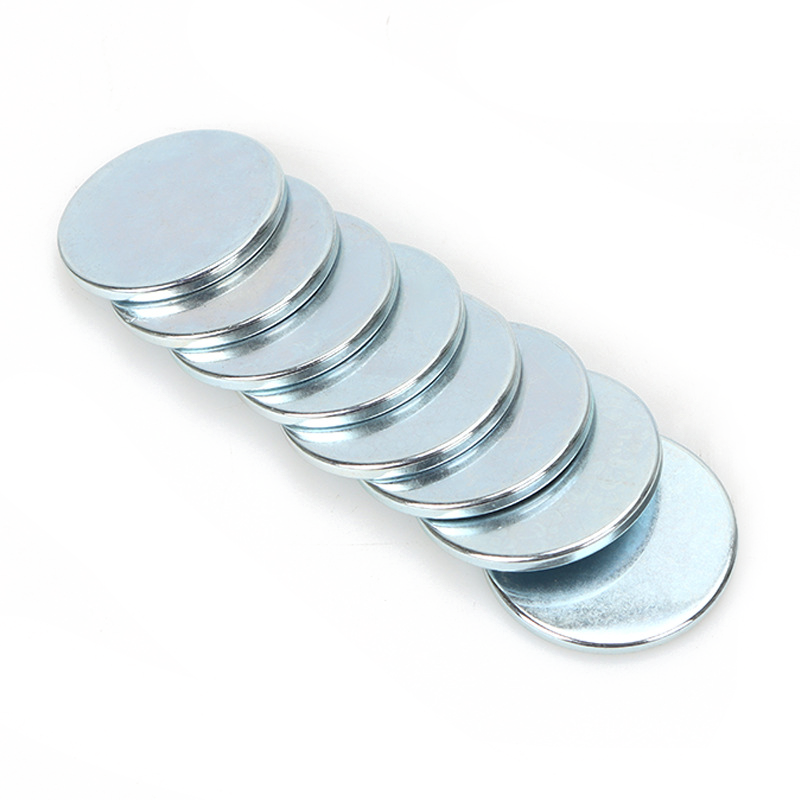
N35SH vs. Alternative High-Temp Magnets (Solution Categories)
Choosing the correct grade requires comparing thermal limits against magnetic output. We often see engineers over-specify their requirements. This leads to unnecessary project expenses. Below is a comparative chart detailing how N35SH stacks up against alternatives.
High-Temperature Magnet Comparison Chart | Grade | Max Temp Limit | Magnetic Strength (Br) | Cost Profile |
| N52 (Standard) | 80°C | Very High | Low / Baseline |
| N35H | 120°C | Moderate | Low / Medium |
| N35SH | 150°C | Moderate | Medium |
| N35UH | 180°C | Moderate | High |
| SmCo (Samarium Cobalt) | 300°C+ | Moderate / High | Very High |
N35SH vs. N35H and N35UH
The N35H grade remains cheaper than SH variants. However, it fails rapidly when internal temperatures cross 120°C. You should only use N35H if strict thermal safety margins allow it. Conversely, N35UH operates safely up to 180°C. This performance comes with a significant cost premium. The UH grade requires a much higher heavy rare earth metal content. You should not specify UH unless your application consistently spikes above 150°C.
N35SH vs. Standard N52
Engineers frequently compare the trade-off between raw strength and thermal survivability. The standard N52 grade offers massive magnetic pull at room temperature. Yet, N52 fails rapidly and permanently above 80°C. At 120°C, an N35SH magnet will actually output more functional magnetic force than an N52 magnet. The N35SH maintains its field integrity under heat.
N35SH vs. Samarium Cobalt (SmCo)
You must know exactly when to pivot away from neodymium entirely. If applications exceed 200°C, SmCo becomes mandatory. SmCo magnets inherently resist extreme heat and corrosion. They do not require protective coatings. However, SmCo is a necessary, albeit more expensive and highly brittle, alternative. Use SmCo only when NdFeB cannot survive the environment.
Business Use Cases & Application Matching
Different industries leverage thermal stability in unique ways. We see the High-Temperature Resistant N35SH Magnet deployed across multiple high-stress sectors. Matching the grade to the application ensures long-term operational success.
High-Performance Electric Motors (EVs & Industrial)
Electric vehicle engines and heavy industrial motors generate massive internal heat. Rotor applications face continuous heavy loads. Internal operating temperatures often spike dramatically during acceleration or prolonged use. A standard magnet would lose flux, dropping motor efficiency. The SH grade guarantees consistent torque output. It prevents permanent motor degradation during peak thermal cycles.
Magnetic Couplings & Pumps
Chemical processing environments rely on leak-proof magnetic couplings. These systems transfer torque through solid physical barriers. High-speed rotation generates substantial secondary friction heat. The N35SH grade excels here. It delivers enough magnetic strength to transfer heavy torque loads. Simultaneously, it withstands the continuous heat radiating from fluid friction inside the pump housing.
Automotive & Aerospace Sensors
Precision sensors operate in punishing environments near engine blocks. Hall-effect sensors and actuators require perfectly stable magnetic fields. They must read position data across a wildly fluctuating temperature range. A drop in magnetic flux alters the sensor calibration. N35SH provides reliable signal generation from freezing startups to hot engine conditions. It ensures the electronic control unit receives accurate mechanical data.
Procurement Realities & Implementation Risks
Sourcing advanced rare earth materials introduces specific supply chain challenges. Procurement teams must proactively manage these distinct variables.
Cost Volatility
Heavy rare earth metals drive the performance of "SH" grades. Dysprosium and Terbium are highly specialized commodities. They are subject to severe global supply chain pricing fluctuations. Geopolitical shifts rapidly alter raw material availability. You should forecast costs by tracking rare earth market indices. Securing long-term material contracts helps stabilize budget forecasts for production runs.
Tolerance & Shape Constraints
Custom shapes directly impact magnetic alignment. Stepped blocks, thin-walled cylinders, and tight arc segments pose manufacturing challenges. Complex shapes increase physical vulnerability. Thin profiles concentrate thermal stress, making them susceptible to micro-fractures. You should consult manufacturers early. Ensure your required geometry does not compromise the inherent strength of the N35SH material.
Quality Assurance Verification
You must verify a supplier is actually delivering genuine N35SH material. Visual inspection cannot differentiate between an N35 and an N35SH magnet. Room temperature pull-testing proves completely inadequate. You must demand stringent verification protocols.
- Request detailed demagnetization curve reports mapped specifically at 150°C.
- Require standardized Hcj testing following IEC 60404 methodologies.
- Conduct independent thermal shock testing on sample batches before approving mass production.
- Verify the plating thickness using X-ray fluorescence (XRF) to ensure corrosion compliance.
Conclusion
The N35SH grade serves as the optimal crossover point for critical engineering applications. It provides a highly reliable magnetic field specifically tailored for the 100°C to 150°C operating window. Engineers secure necessary torque output without overspending on extreme high-temperature materials.
Procurement teams and designers must align their parameters early. First, map out your exact thermal environment comprehensively. You must document average operating temperatures alongside potential peak heat spikes. Second, request a certified demagnetization curve chart from your supplier tested at 150°C. Finally, always order representative sample batches. Subject these pieces to rigorous thermal shock testing in your own facility before authorizing mass production.
FAQ
Q: Can a High-Temperature Resistant N35SH magnet be used above 150°C?
A: No. Exceeding 150°C results in irreversible demagnetization. The internal crystalline structure breaks down under excessive heat. Once cooled back to room temperature, the magnet will not regain its original magnetic strength. You must upgrade to UH grades or SmCo for hotter environments.
Q: Is N35SH stronger than an N52 magnet?
A: At room temperature, N52 is significantly stronger and provides more raw pull force. However, at temperatures exceeding 100°C, N52 will lose a massive percentage of its strength. In these high-heat scenarios, N35SH becomes practically stronger and vastly more stable.
Q: Does the "SH" grade require different protective coatings?
A: The base NdFeB material still requires standard plating options like Ni-Cu-Ni, Zinc, or Epoxy to prevent rapid oxidation. However, the chosen coating must also be thermally rated to survive continuous exposure to 150°C without blistering, cracking, or flaking off the magnet surface.