Engineering high-performance systems like EV motors and industrial sensors demands a strict balancing act. You must maximize magnetic strength. You must ensure thermal stability. You also need to manage raw material dependencies. Finding the right permanent magnet for these applications often requires navigating complex trade-offs. The baseline for many of these demanding environments starts at the "SH" designation. This "Super High" rating indicates a maximum operating temperature of up to 150°C (302°F). This threshold makes the High-Temperature Resistant N35SH Magnet a frequent starting point for thermal evaluation in modern motor design.
But does your application truly need to exceed this baseline? Material science offers various paths when heat becomes an issue. You can upgrade to higher-tier NdFeB thermal grades like UH, EH, or AH. Alternatively, you can shift entirely to different material families like Samarium Cobalt (SmCo) or Alnico. This article provides a skeptical, evidence-based comparison to help you finalize your material selection. We will evaluate technical limits, geometric dependencies, and physical compromises across these high-temperature options.
Key Takeaways
- The high-temperature resistant N35SH magnet offers a ceiling of 150°C (302°F) and an intrinsic coercivity (Hcj) of ≥20 kOe, representing the optimal cost-to-performance ratio before heavy rare earth element pricing spikes.
- Upgrading to UH (180°C) or EH (200°C) grades requires evaluating the steep cost penalties associated with added Dysprosium (Dy) or Terbium (Tb).
- For continuous operating temperatures exceeding 200°C, engineers must shift away from NdFeB entirely and evaluate Samarium Cobalt (SmCo) or Alnico, accepting compromises in brittleness or maximum energy product (BHmax).
- Final selection should rely on application-specific thermal cycling tests rather than standard spec sheets, as geometry (Permeance Coefficient) heavily dictates real-world thermal demagnetization.
Establishing the Baseline: Capabilities of the High-Temperature Resistant N35SH Magnet
Defining "high temperature" in commercial and industrial applications requires precision. Heat levels vary wildly across different sectors. Standard neodymium magnets (like the N35 or N52 grades) typically fail around 80°C. Once an application crosses the 100°C mark, standard grades suffer catastrophic demagnetization. Industrial environments generally classify anything between 120°C and 150°C as a moderately high-temperature zone. This specific thermal window represents the primary operating arena for SH-grade materials.
Understanding the core specifications of this baseline material helps frame further comparisons. Here are the defining metrics:
- Max Operating Temperature: 150°C (302°F).
- Curie Temperature: ~340°C.
- Br (Remanence): 11.7–12.1 kGs.
- Hcj (Intrinsic Coercivity): ≥20 kOe.
These specifications make the material highly suitable for distinct industrial applications. Automotive Electric Power Steering (EPS) sensors rely heavily on this thermal stability. Servo motors in robotics represent another ideal use case. Magnetic separators processing hot materials also benefit from these parameters. In these environments, operating temperatures consistently hover between 120°C and 140°C. Most importantly, these systems strictly avoid thermal spiking past the critical 150°C ceiling.
However, engineers must acknowledge inherent limitations. Magnetic performance does not remain flat up to 149°C and suddenly drop at 150°C. Instead, performance drops logarithmically as ambient heat approaches the 150°C threshold. This phenomenon causes reversible flux loss. The magnet loses a percentage of its pulling force while hot but recovers it upon cooling. You must account for this temporary weakness during the design phase to prevent motor stalling under heavy loads.
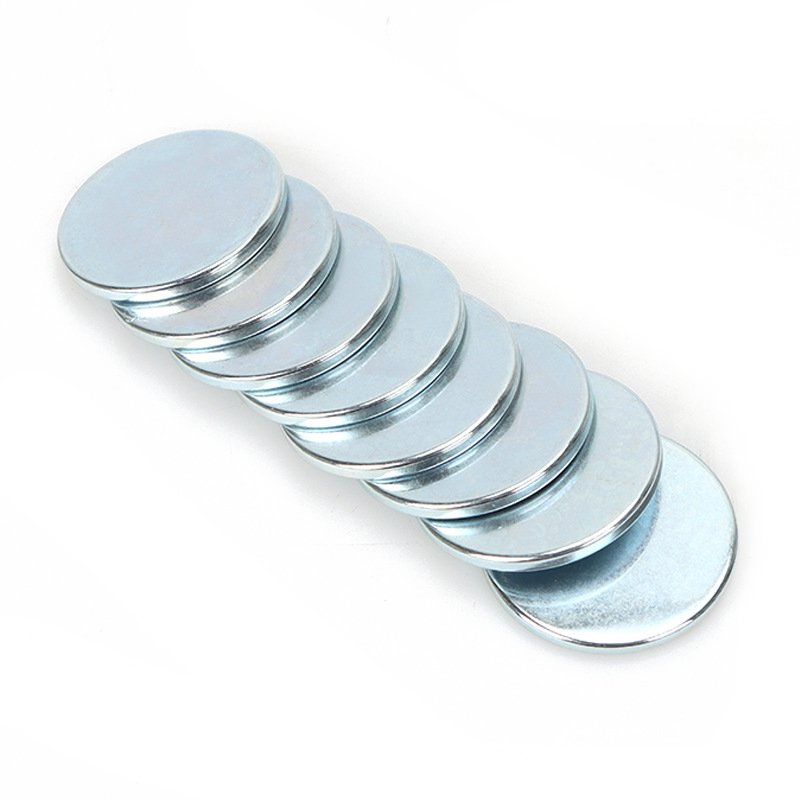
N35SH vs. Ultra-High Thermal NdFeB Grades (UH, EH, AH)
When temperatures push past 150°C, you must evaluate ultra-high thermal neodymium grades. The NdFeB family offers progressive solution categories for escalating heat. You can step up from SH (150°C) to UH (180°C). Beyond that, you find EH (200°C) and finally AH (230°C). Each step up the thermal ladder prevents demagnetization at higher extremes.
Let us look at how these grades compare dimensionally:
| NdFeB Grade suffix | Max Operating Temp (°C) | Minimum Hcj (kOe) | Typical Br Trend |
| SH (Super High) | 150°C | ≥ 20 | Baseline |
| UH (Ultra High) | 180°C | ≥ 25 | Slight Decrease |
| EH (Extra High) | 200°C | ≥ 30 | Moderate Decrease |
| AH (Abnormal High) | 230°C | ≥ 35 | Significant Decrease |
You must understand the chemical reality behind these ratings. Achieving UH, EH, or AH ratings requires distinct metallurgical adjustments. Manufacturers must dope the alloy with higher percentages of Heavy Rare Earth Elements (HREEs). Specifically, they add Dysprosium (Dy) and Terbium (Tb). These elements dramatically boost intrinsic coercivity (Hcj), locking the magnetic domains in place against thermal agitation. However, relying on Dysprosium and Terbium introduces steep penalties in material acquisition.
This creates a rigorous trade-off analysis. As thermal resistance increases in NdFeB, overall magnetic strength typically decreases. If you want maximum pull force, adding heavy rare earths physically dilutes the iron-boron matrix. Consequently, an N35EH magnet will cost exponentially more to produce while offering slightly lower raw remanence than a standard N35.
Apply a strict decision lens here. Does your application experience sustained heat above 150°C, or only brief spikes? This distinction dictates everything. If a motor only sees brief thermal spikes, a High-Temperature Resistant N35SH Magnet designed with a robust permeance coefficient might easily survive. You can often avoid the UH or EH premium simply by optimizing the magnet's physical geometry.
Crossing the NdFeB Threshold: N35SH vs. Samarium Cobalt (SmCo)
Sometimes, NdFeB technology simply cannot meet the environmental demands. When continuous temperatures exceed 200°C, you need an alternative approach. You also need a different approach if the environment demands extreme corrosion resistance alongside heat resistance. In these scenarios, engineers cross the threshold into Samarium Cobalt (SmCo) materials.
Comparing these two materials requires evaluating several critical dimensions:
- Thermal Limit: The baseline N35SH tops out at 150°C. In stark contrast, SmCo easily operates continuously between 300°C and 350°C. It exhibits incredibly stable temperature coefficients, meaning it loses very little flux as it heats up.
- Corrosion Resistance: Neodymium is highly reactive. N35SH requires protective plating like NiCuNi, zinc, or epoxy to prevent rapid oxidation. SmCo generally requires no coating at all. It contains almost no iron, making it naturally immune to rust in damp environments.
- Physical Properties: SmCo brings severe mechanical disadvantages. It is notoriously brittle. It chips and cracks far easier than NdFeB. This brittleness directly increases manufacturing and assembly scrap rates. You must handle SmCo components with extreme care during motor assembly.
- Market Volatility: Cobalt is a highly contested global resource. SmCo historically carries higher and far more volatile raw material costs than NdFeB. Relying on SmCo exposes supply chains to significant geopolitical fluctuations.
Choosing SmCo means accepting lower maximum energy products (BHmax) compared to top-tier neodymium. However, for aerospace actuators, motorsport sensors, and deep-well drilling tools, this compromise remains entirely necessary.
N35SH vs. Alnico and Ferrite (Ceramic) Magnets
Not all thermal challenges require rare earth solutions. Legacy materials and low-cost alternatives still dominate specific industrial sectors. Comparing N35SH against Alnico and Ferrite reveals distinct advantages and stark limitations.
Let us look at Alnico first. Alnico boasts excellent heat resistance. It comfortably withstands temperatures up to 500°C or more. However, it suffers from terrible intrinsic coercivity. It is highly susceptible to self-demagnetization. If you place two Alnico magnets in direct opposition, they can easily demagnetize each other. Using Alnico effectively requires specific, elongated motor redesigns to maintain a high permeance coefficient. You cannot simply drop an Alnico block into a slot designed for neodymium.
Ferrite (Ceramic) magnets represent the budget-friendly alternative. They are incredibly cheap and operate safely up to 250°C. They also resist corrosion naturally. The downside? Ferrite possesses only a fraction of the magnetic strength of NdFeB. You typically require five to ten times the volume and weight of Ferrite to match the output of an N35SH component.
Your shortlisting logic should remain rigid. Only downgrade to Ferrite if weight and size constraints are absolute zero. If you have infinite space and strict budgets, Ferrite works. Conversely, only utilize Alnico for ultra-extreme heat environments. Downhole oil drilling, aerospace engine sensors, and high-heat casting equipment remain the primary domains for Alnico.
Cost-to-Performance Evaluation and Procurement Matrix
Aligning supply chain teams with engineering teams guarantees successful product launches. A unified evaluation criteria matrix prevents costly miscommunications. Teams must agree on the final spec based on both technical survival and long-term viability.
You must actively manage the "over-engineering" risk. Engineers often feel tempted to specify EH or SmCo grades "just to be safe." This safety buffer carries massive budgetary impacts. Over-specifying thermal ratings forces the supply chain to acquire materials heavily doped with expensive elements. If your motor runs at 135°C, demanding a 200°C EH grade artificially inflates component spend without delivering measurable performance benefits to the end user.
Supply chain stability acts as a secondary evaluation metric. NdFeB production remains heavily reliant on specific global supply chains. You must track the current market stability of heavy rare earths like Dysprosium. When HREE markets constrict, UH and EH grades become difficult to source. Staying within the SH parameters often provides better lead-time security.
Finally, engineering must account for the Permeance Coefficient (Pc) factor. Material grade alone does not dictate thermal survival. A thin N35SH magnet will demagnetize at a significantly lower temperature than a thick N35SH magnet. Magnetic geometry directly impacts intrinsic coercivity in the real world. Design geometry is just as important as the selected material grade. A well-designed, thick SH magnet often outlasts a poorly designed, thin UH magnet in the same environment.
Implementation Risks, Testing, and Next Steps
Moving from a spec sheet to physical assembly introduces practical hurdles. Implementation realities often expose unforeseen weaknesses in motor design.
Coating degradation remains a primary failure point. At 150°C, standard NiCuNi (Nickel-Copper-Nickel) coatings hold up remarkably well. However, certain epoxy coatings may begin to soften, off-gas, or peel. Surface treatments must perfectly match the magnet's designated thermal grade. A high-temperature magnet wrapped in a low-temperature coating leads to rapid environmental failure.
Assembly methods also require strict review. High heat drastically affects industrial adhesives. Glues that bond perfectly at room temperature often lose sheer strength at 130°C. When operating near 150°C limits, you must reconsider retention strategies. Press-fitting, carbon fiber banding, or mechanical retention clips may be required over standard glue.
Validating your design demands rigorous testing protocols. We strongly recommend conducting Helmholtz coil testing post-thermal cycling. You must measure the exact difference between irreversible flux loss and reversible flux loss. Bake the assembled rotor, let it cool to room temperature, and measure the remaining field strength. This confirms if the domains survived the heat spike.
Your immediate next-step actions should focus on empirical data gathering. Request specific batch samples from your manufacturing partner. Conduct internal 1000-hour heat aging tests under real-world load conditions. Furthermore, consult directly with a magnetics engineer regarding geometric optimization. Tweaking the magnet's thickness might solve thermal issues without changing the chemical grade.
Conclusion
- The N35SH material represents the engineering "sweet spot" for industrial applications hovering below 150°C.
- It successfully balances strong magnetic flux yields with highly manageable procurement costs.
- It avoids the severe dependencies on Dysprosium required by higher thermal tiers.
- You must rely heavily on geometric design (Permeance Coefficient) to maximize its thermal resilience.
Your final verdict should prioritize empirical testing over hypothetical safety buffers. Reserve UH and EH grades, or SmCo alternatives, strictly for environments where continuous operating temperatures fundamentally prohibit SH materials. Upgrading unnecessarily introduces distinct cost multipliers and physical trade-offs that rarely justify the investment.
Stop guessing about your thermal thresholds. Contact your technical sales team today to initiate a comprehensive design review. Request a 3D magnetic thermal performance simulation to lock in the exact grade and geometry your system requires.
FAQ
Q: What happens if an N35SH magnet briefly exceeds 150°C?
A: It depends on the exact temperature and geometry. Usually, exceeding the max limit causes irreversible flux loss. The magnet loses a percentage of its strength that it will not recover upon cooling. If the spike is severe, it risks permanent, catastrophic demagnetization. Reversible loss, which recovers upon cooling, only applies when operating safely below the specified thermal ceiling. Once compromised, it requires factory remagnetization.
Q: Can I replace an N35SH magnet with an N52 magnet to get more strength?
A: No. While standard N52 offers superior magnetic strength at room temperature, it has a maximum operating temperature of only 80°C. If you place an N52 magnet into a 150°C environment, it will catastrophically demagnetize almost immediately. You trade thermal survival for raw strength, resulting in total system failure.
Q: Why is my high-temperature resistant N35SH magnet losing strength at 130°C?
A: This likely stems from a poor Permeance Coefficient (Pc). Magnets operating in an open circuit, or designed with a very thin geometry, possess lower practical thermal resistance than their theoretical maximum. A thin High-Temperature Resistant N35SH Magnet will begin demagnetizing much earlier than a thick one. Adjusting the shape usually solves this early degradation.