Engineering and procurement teams face mounting pressure as we navigate the 2026 manufacturing landscape. You must carefully balance strict magnetic performance requirements against highly volatile rare-earth supply chains. Finding dependable materials without overspending remains a critical daily challenge. The N40 grade has quickly emerged as the pragmatic sweet spot for modern industrial applications. It offers a significantly higher residual flux density (Br) than baseline N35 options. Simultaneously, it avoids the premium costs and mechanical fragility often associated with N52 components. Our goal is to provide a comprehensive technical and commercial evaluation framework for your next project. We will guide you on integrating an Industrial N40 Neodymium Magnet into upcoming 2026 production lines. You will learn how to successfully mitigate risks surrounding thermal stability, sourcing compliance, and long-term deployment viability.
Key Takeaways
- Strategic Positioning: N40 grades offer optimal cost-to-performance ratios for automation and sensor applications, offsetting 2026 rare-earth price fluctuations.
- Application Realities: Standard N40 is insufficient for high-heat environments (>80°C); evaluating temperature-rated variants (N40SH, N40UH) is mandatory for motor applications.
- Supply Chain Compliance: Imminent trade policies (e.g., US Section 232 tariffs) require strict vendor vetting for traceability and non-monopolized sourcing.
- Total Cost of Ownership: Coating durability and magnetic consistency hold more weight in 2026 procurement decisions than baseline unit price.
The 2026 Procurement Landscape: Why the Industrial N40 Neodymium Magnet?
Global manufacturing faces significant raw material constraints as we approach 2026. Rare-earth supply chain bottlenecks continue disrupting production schedules. Pure neodymium availability fluctuates wildly due to unpredictable mining outputs and geopolitical trade frictions. Procurement managers desperately need stable inputs. Securing reliable magnetic components demands a highly strategic approach. You cannot simply order default grades and expect optimal results. Industry leaders now prioritize materials offering strong performance metrics alongside supply chain predictability.
Evaluating cost versus yield reveals why previous default choices fail modern engineering standards. Over-specifying drains your engineering budgets rapidly. Defaulting to an N52 magnet introduces unnecessary mechanical brittleness into your assemblies. These ultra-high-grade magnets easily chip or crack during automated assembly. Conversely, under-specifying creates serious design limitations. Using standard N35 magnets leads to bulkier, heavier assemblies. Engineers must compensate for lower magnetic strength by increasing the magnet's physical volume. N40 bridges this frustrating gap perfectly. It delivers robust magnetic output while maintaining better structural integrity than top-tier grades.
Noticeable market shifts validate this changing preference. Major sectors standardizing on N40 grades include advanced robotics and secondary EV components. Standardizing simplifies global procurement strategies. Companies no longer need to manage a dozen different magnet grades across multiple factories. Maintaining a streamlined inventory reduces overhead. Production managers can swap components between different product lines more seamlessly. This standardization trend will likely accelerate throughout 2026. Forward-thinking organizations are already adjusting their material specifications accordingly.
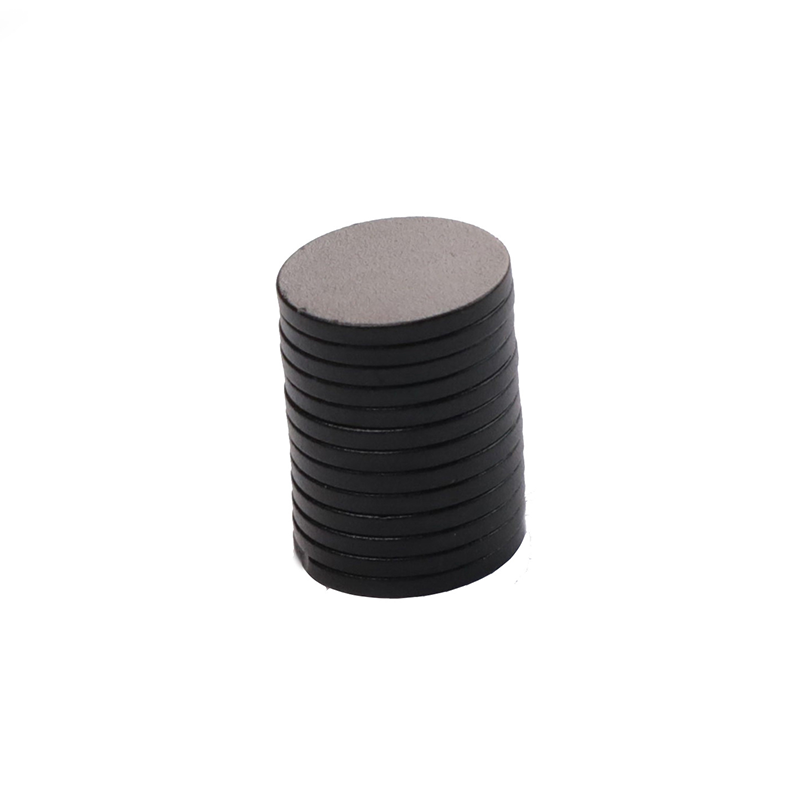
Technical Evaluation: N40 vs. Alternative Grades
Understanding magnetic strength metrics is essential for proper integration. We measure this strength primarily through residual flux density (Br) and maximum energy product (BHmax). The N40 grade provides roughly 10% to 15% more magnetic energy than an N35 baseline. This step-up creates highly tangible outcomes for hardware design. You can significantly reduce your allowable motor footprint. Shrinking the physical volume of your magnetic assemblies directly lowers overall product weight. Lighter products reduce shipping impacts and improve user handling dynamics.
We must also apply a skeptic’s lens regarding thermal limitations. Standard N40 magnets present strict operational boundaries. A standard N40 magnet loses reversible magnetization above 80°C (176°F). Exceeding this threshold causes permanent performance degradation. Industrial environments frequently generate excess heat through friction, electrical resistance, or ambient conditions. You must accurately map your maximum operating temperatures before finalizing material choices. Ignoring thermal realities leads to premature equipment failure.
Engineers solve this thermal challenge using specific temperature-rated variants. Manufacturers add trace amounts of heavy rare-earth elements like dysprosium to increase heat resistance. This creates a clear decision matrix for upgrading your components based on industrial operating environments.
| Magnet Grade Suffix | Maximum Operating Temperature | Typical Industrial Application Scenarios |
| Standard N40 (No Suffix) | 80°C (176°F) | Climate-controlled facilities, basic sensors, consumer electronics. |
| N40M (Medium) | 100°C (212°F) | Light industrial machinery, enclosed gearboxes running moderately warm. |
| N40H (High) | 120°C (248°F) | Standard servo motors, outdoor actuators exposed to direct sunlight. |
| N40SH (Super High) | 150°C (302°F) | Heavy-duty robotics, high-speed industrial motor assemblies. |
Coercivity (Hcj) considerations play an equally crucial role. Coercivity measures a material's resistance to demagnetization under opposing magnetic fields. High-vibration settings constantly threaten magnetic stability. Surrounding electrical currents can also generate opposing fields. The N40 grade performs exceptionally well in these environments. It maintains intrinsic magnetic alignment even when subjected to sudden mechanical shocks. Properly specifying the required Hcj prevents sudden demagnetization in critical automated systems.
High-Growth Industrial Applications for N40 in 2026
Several distinct industrial sectors are driving massive demand for this specific magnetic grade. Engineers constantly seek materials maximizing efficiency while keeping component weights minimal. The following sectors highlight where these magnets deliver maximum impact.
- Industrial Automation & Robotics: Agile manufacturing requires lightning-fast robotic movements. Heavy robotic arms consume excessive energy and suffer from mechanical inertia. Engineers integrate N40 magnets into servo motors and magnetic couplings. They also utilize them heavily in end-of-arm tooling. Every gram of weight reduction directly impacts robotic agility. A lighter tool head allows faster sweeping motions. This increases units processed per hour on factory floors.
- Sensors and Instrumentation: Modern factories rely heavily on precise data collection. Magnetic sensors monitor everything from conveyor belt speeds to fluid levels. Precision Hall-effect sensors demand highly stable magnetic fields to function accurately. Industrial flow meters use these magnets to track liquid volumes passing through pipes. The N40 provides the exact field strength necessary for reliable long-term readings. Fluctuating magnetic fields would trigger false alarms or incorrect data logging.
- Green Tech & Renewable Ancillaries: Primary wind turbine generators typically utilize ultra-high-temperature magnetic grades. However, massive renewable infrastructure requires countless secondary systems. Engineers increasingly utilize N40 for secondary control systems and positioning actuators. Magnetic filtration units inside turbine gearboxes also rely on this grade. These filters catch microscopic metal shavings floating in lubricating oils. Removing these particles prevents catastrophic gearbox failures.
Integrating an Industrial N40 Neodymium Magnet into these applications ensures consistent performance. Design teams appreciate the predictable nature of the magnetic field. Maintenance teams appreciate the reduced breakdown frequency.
Implementation Risks: Coatings, Compliance, and Lifecycle
Deploying neodymium inherently carries specific chemical risks. Neodymium remains highly susceptible to environmental degradation. Raw neodymium oxidizes rapidly upon contact with ambient moisture. Unprotected magnets will rust, flake, and eventually crumble into useless powder. You must carefully evaluate coating options based on strict 2026 industrial standards. Selecting the wrong surface treatment guarantees operational failure.
Coating Selection Chart for Industrial Environments | Coating Material | Primary Characteristics | Best Suited Environment |
| Ni-Cu-Ni (Nickel-Copper-Nickel) | Excellent aesthetic finish, basic scratch resistance, highly economical. | Standard baseline for dry, climate-controlled factory environments. |
| Epoxy Coating | Outstanding moisture barrier, strong chemical resistance, durable. | Required for chemical processing plants or high-humidity exposure. |
| Zinc / Everlube | Galvanic protection, withstands extreme salt-spray testing. | Specialized industrial applications, outdoor or marine settings. |
Regulatory and ESG (Environmental, Social, and Governance) compliance presents another major hurdle. Governments worldwide are tightening restrictions on material sourcing. You face a growing need for complete REACH and RoHS compliance. Material traceability is no longer optional. Imminent governmental supply-chain audits demand transparent sourcing documentation. Procurement teams must prove their materials avoid conflict zones and heavily sanctioned entities. Relying on unverified secondary markets exposes your entire production line to sudden legal embargoes.
Recyclability factors now influence initial engineering blueprints. Upcoming 2026 sustainability mandates force manufacturers to plan for active rare-earth recovery. End-of-life considerations require you to design assemblies allowing for relatively simple magnet extraction. Gluing magnets permanently inside sealed plastic housings complicates recycling efforts. Forward-thinking companies use mechanical fasteners or dissolvable adhesives. This proactive approach ensures valuable neodymium can re-enter the supply chain later.
Shortlisting Logic: Vetting Suppliers for N40 Magnets
Choosing a reliable supplier demands rigorous vetting processes. Catalog browsing is insufficient for enterprise-level manufacturing. You must verify actual production capabilities. Always advise your buyers to demand batch-specific Quality Assurance data. A generic specification sheet provides little comfort. Require suppliers to produce a Demagnetization Curve (B-H curve) report for your specific batch. This report verifies the intrinsic coercivity and guarantees flux consistency across thousands of units. A fluctuating flux density leads to erratic motor performance.
Mechanical tolerances and machining capabilities require equal scrutiny. Automated production lines cannot handle dimensional variations. If a magnet is a fraction of a millimeter too wide, it jams robotic insertion tools. Highlight the importance of strict mechanical tolerances, typically demanding ±0.05mm precision. Such exact measurements prevent assembly failures. Suppliers lacking advanced CNC grinding equipment cannot maintain these tolerances consistently. Inspect their facility certifications to ensure they possess modern machining centers.
Finally, evaluate supply chain resilience directly. Geopolitical trade friction can halt shipments overnight. Ask potential vendors how they manage their raw material buffers. A strong supplier maintains several months of raw neodymium inventory. Evaluate their geographic diversification. Do they rely on a single mining source? Demand clear lead-time guarantees written directly into your procurement contracts. Vendors holding diverse sourcing channels provide significantly better protection against unexpected market shocks.
Conclusion
- The N40 neodymium grade serves as a highly capable, cost-efficient solution when matched precisely to your thermal and environmental realities.
- Properly specifying temperature suffixes (like N40SH) prevents catastrophic demagnetization in high-heat automated environments.
- Coating selection directly dictates component longevity; matching epoxy or nickel coatings to specific humidity levels is non-negotiable.
- Strict supplier vetting based on B-H curve reports and tolerance capabilities eliminates production line jams and hardware failures.
Take decisive action today by moving beyond basic catalog browsing. We strongly encourage engineers and procurement teams to request custom prototypes for rigorous lab testing. Ask your shortlisted vendors for specific coating samples. Schedule a technical consultation to thoroughly audit your current magnetic assemblies. Upgrading your specifications now secures your manufacturing pipeline well into 2026 and beyond.
FAQ
Q: What is the maximum operating temperature for a standard industrial N40 neodymium magnet?
A: Standard N40 is rated for 80°C (176°F). Exceeding this limit causes irreversible flux loss. You must evaluate high-temperature variants like N40SH or N40UH for harsher thermal conditions.
Q: Is the price of N40 magnets expected to stabilize in 2026?
A: Market forecasts indicate ongoing fluctuations based on mining outputs and tariffs. However, N40 remains a highly cost-predictable baseline compared to N52. It requires significantly lower dysprosium and terbium additives, insulating it slightly from extreme price spikes.
Q: How do I test the quality of an N40 magnet upon delivery?
A: We recommend conducting Gauss meter surface testing alongside pull-force verification. Additionally, you should review the supplier's provided hysteresis graph. This documentation ensures the delivered batch strictly meets the minimum 40 MGOe specification.
Q: Can N40 replace N52 in my current industrial design?
A: Yes, you can replace N52. However, your physical design must accommodate a slight increase in overall magnet volume, roughly 15-20%. This volume increase compensates for the lower maximum energy product, assuming your weight constraints permit the adjustment.