High operating temperatures remain the primary failure point for standard neodymium (NdFeB) magnets in continuous-duty industrial applications. As components generate heat during operation, standard magnetic fields rapidly degrade and weaken. Engineers and procurement teams must constantly balance magnetic strength, thermal stability, and material budget as a strict operational requirement. Selecting an inadequate grade often leads to catastrophic motor failure in the field. Conversely, over-specifying inflates project budgets unnecessarily.
This review strictly breaks down the High-Temperature Resistant N35SH Magnet, evaluating its baseline specifications and mechanical implementation risks. We explore practical applications ranging from permanent magnet synchronous motors (PMSM) to critical commercial sensors. Finally, we cover vital supply chain considerations to help you determine if it perfectly fits your specific engineering requirements.
Key Takeaways
- Thermal Thresholds: N35SH is engineered to operate reliably up to 150°C (302°F), preventing the irreversible flux loss commonly seen in standard N35 grades above 80°C.
- Cost-to-Performance: It offers a pragmatic middle ground—delivering standard magnetic strength (35 MGOe) combined with high coercivity (SH rating) without the steep premium of SmCo (Samarium Cobalt) magnets.
- Application Fit: Optimal for permanent magnet synchronous motors (PMSM), automotive sensors, and industrial actuators where heat generation is inevitable but space is limited.
- Sourcing Reality: Procurement viability relies heavily on verified batch-to-batch consistency, accurate testing (demagnetization curves), and appropriate surface treatments (e.g., Zinc or NiCuNi) to prevent oxidation.
The Engineering Problem: Why Standard Grades Fail Under Heat
Standard neodymium magnets degrade quickly under thermal stress. When ambient temperatures rise, their internal magnetic domains lose alignment. This physical change causes a phenomenon known as reversible flux loss. If the component cools down, the magnetic strength fully returns. However, pushing the material past its maximum operating threshold changes everything. Irreversible flux loss occurs. The component permanently loses its holding force. You cannot restore this lost performance without completely remagnetizing the raw material.
Many engineering teams face a tough balancing act. You must align project budgets and performance capabilities perfectly. Over-specifying grades inflates your manufacturing costs. You might select an EH or AH grade unnecessarily for a moderately warm environment. Conversely, under-specifying causes catastrophic component failure later. A standard N35 grade simply cannot survive internal motor heat.
Decision-makers need highly verifiable success criteria. You should always evaluate magnetic solutions based on three core factors:
- Verifiable maximum operating temperature limits based on thermal test data.
- Sufficient intrinsic coercivity designed specifically for your intended application.
- Reliable supply chain availability capable of supporting volume manufacturing schedules.
Understanding these thermal mechanics ensures you select the correct material. You avoid expensive redesigns and eliminate the risk of unexpected field failures.
Technical Specifications of the High-Temperature Resistant N35SH Magnet
Evaluating magnetic specifications requires a detailed look at core performance metrics. The N35SH grade provides a unique balance of strength and durability. You must review three primary indicators to understand its capability.
| Property | Value Range | Engineering Impact |
| Residual Flux Density (Br) | 11.7 – 12.1 kG | Provides the baseline holding or driving force in an application. |
| Intrinsic Coercivity (Hcj) | ≥ 20 kOe | The critical metric resisting demagnetization in high-heat and active fields. |
| Maximum Energy Product (BHmax) | 33 – 36 MGOe | Determines the overall energy density and physical size requirements. |
The "SH" designation stands for Super High. This specific rating confirms a 150°C maximum operating temperature. It features a highly specialized temperature coefficient for both Br and Hcj. When the magnet heats up, the flux density drops at a predictable, controlled rate. You can design motor gaps and sensor tolerances around this exact decay curve.
Engineers should adopt strict verification practices. Always request specific BH curve (demagnetization) reports from your manufacturing partners. You need these reports plotted at 20°C, 100°C, and 150°C. Reviewing these thermal dynamics validates the supplier claims. It also guarantees your High-Temperature Resistant N35SH Magnet will perform reliably during peak operational cycles.
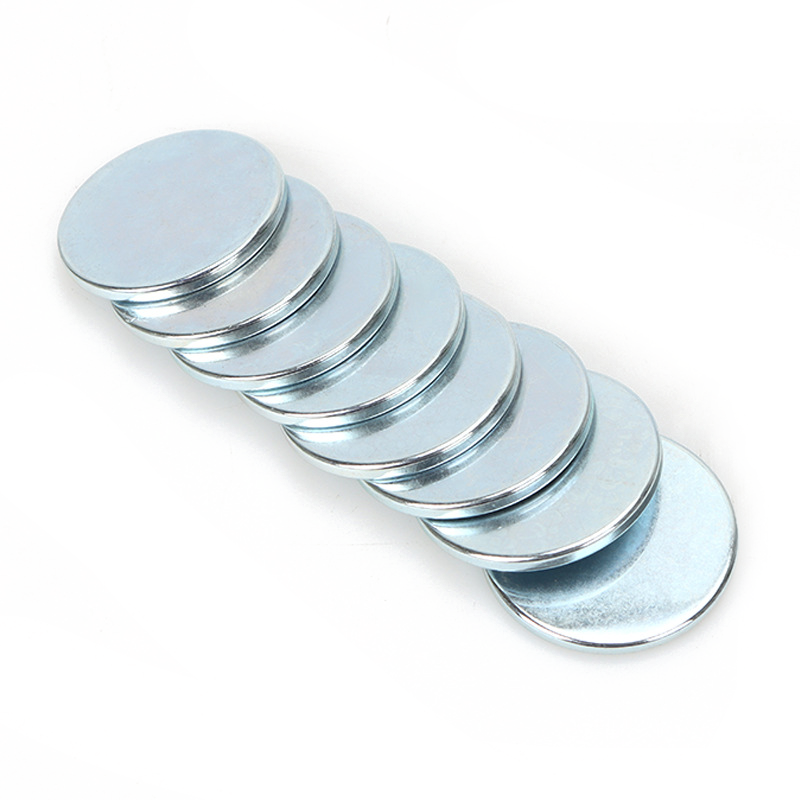
N35SH vs. Standard N35 and Alternative Grades
Comparing grades directly highlights why the N35SH designation exists. A standard N35 magnet and an N35SH magnet share identical pulling power at room temperature. Both deliver roughly 35 MGOe. However, the standard N35 degrades rapidly once it passes 80°C. For any thermal environment, you strictly need the SH variant to maintain operational integrity.
You might wonder why you should choose N35SH over higher-strength SH grades like N38SH or N40SH. Shortlisting relies on practical logic. N35SH offers better raw material availability globally. It also presents lower manufacturing costs. If 35 MGOe provides sufficient torque and holding force, upgrading to N40SH wastes budget.
Applications exceeding 150°C consistently require a completely different chemistry. You must use Samarium Cobalt (SmCo) for extreme heat. However, SmCo is expensive and mechanically brittle. For the 100°C to 150°C range, N35SH provides superior physical strength. It offers better structural integrity and significantly lower procurement costs.
| Material Grade | Max Temp Limit | Relative Cost | Ideal Use Case |
| Standard N35 | 80°C | Low | Consumer electronics, basic holding assemblies at room temp. |
| N35SH | 150°C | Moderate | Industrial motors, hot engine bays, heavy friction areas. |
| N40SH | 150°C | High | High-torque motors requiring smaller physical dimensions. |
| SmCo (Standard) | 250°C - 350°C | Very High | Aerospace turbines, deep-hole drilling equipment. |
Primary Industrial and Commercial Applications
Implementing the correct magnetic grade transforms product reliability across several sectors. The unique thermal stability of this specific material makes it a core component in modern engineering.
- Electric Motors & Generators: Permanent Magnet Synchronous Motors (PMSM) rely heavily on N35SH arc and segment shapes. During heavy load, stator heat transfers directly to the rotor. The SH coercivity rating ensures the rotor magnets survive this constant thermal soaking. EV drivetrains and industrial servos utilize these components to maintain consistent torque curves.
- Automotive & Aerospace Sensors: Modern engine bays generate intense ambient heat. Automotive engineers integrate these magnets into ABS sensors and camshaft position sensors. Exhaust system actuators also benefit from them. They maintain accurate magnetic fields required for precise sensor readings despite extreme local temperatures.
- Commercial Magnetic Assemblies: Industrial environments expose tools to heavy friction. You will find N35SH blocks integrated into custom magnetic holding systems. Heavy-duty fluid filtration systems use them to catch metallic debris in hot oil streams. Custom stepped blocks perform reliably even when exposed to high ambient factory heat.
Using this grade ensures equipment longevity. Manufacturers can confidently offer longer warranties. You avoid the hidden costs of early component fatigue.
Customization, Tolerances, and Implementation Risks
Designing around neodymium requires careful attention to physical vulnerabilities. Form factor complexities introduce significant manufacturing realities. Machining arc, stepped, or custom block geometries takes precision. Intricate shapes dramatically increase the risk of edge chipping. Chipped edges expose the raw neodymium to moisture, leading to rapid subsequent oxidation.
Surface treatments play a crucial role in preventing this corrosion. You must evaluate coating longevity based on your operating environment:
- Zinc (Zn): Cost-effective and highly suitable for moderate indoor environments. It acts as a basic sacrificial barrier.
- Nickel-Copper-Nickel (NiCuNi): The recognized industry standard. It provides exceptional corrosion resistance and a durable, smooth finish for mechanical pressing.
- Epoxy: Strictly required for environments featuring high humidity, salt spray, or direct chemical exposure.
Assembly risks require proactive planning. Handling these components presents distinct challenges because they are inherently brittle. Automated assembly lines require exceptionally tight dimensional tolerances, typically +/- 0.05mm. Without these tolerances, press-fitting causes mechanical stress fracturing. We recommend designing generous chamfers on all custom blocks. Chamfers reduce corner stress during automated insertions.
A common mistake involves using basic adhesives in high-heat assemblies. You must pair the magnet with a thermally rated industrial epoxy. Standard glues degrade at 100°C, causing the magnet to detach long before it loses its magnetic charge.
Procurement Compliance and Supplier Vetting
Securing a reliable supply chain demands rigorous supplier vetting. Batch consistency represents the number one risk when importing industrial magnetic materials. You might receive one excellent batch, followed by a completely inadequate second delivery. Intrinsic coercivity (Hcj) variance between batches causes unpredictable motor performance. Outline the absolute necessity of requesting ongoing statistical process control (SPC) data from your factory partners.
Regulatory compliance is non-negotiable for global distribution. Ensure your selected supplier provides verifiable RoHS and REACH certifications. These documents prove the materials lack hazardous heavy metals. They keep your end-products compliant for sale in European and North American markets.
Export and import logistics require specialized knowledge. You must address magnetic shielding requirements for all air freight shipments. Unshielded magnets interfere with aircraft navigation systems and will face immediate customs rejection. Additionally, plan your production schedules carefully. Custom high-temperature tooling typically demands longer lead times. Factor in at least four to six weeks for custom molds and initial slicing setups.
Conclusion
The N35SH grade is not a universal fix for every engineering challenge, but it stands as the most economically viable neodymium solution for applications operating strictly in the 80°C to 150°C window. It balances raw holding power with critical thermal resilience.
To move forward effectively, your engineering teams should take the following action steps:
- Finalize your spatial constraints, confirming the exact size and shape required for your assembly.
- Confirm the peak ambient temperatures your product will experience during worst-case scenarios.
- Request physical prototypes from verified suppliers alongside matching BH thermal curves for localized testing.
- Evaluate different coating options based on your expected environmental exposure.
FAQ
Q: Does the "SH" rating mean the magnet will never lose its charge?
A: No. It means the magnet resists irreversible flux loss up to 150°C. If exposed to temperatures beyond this limit, or subjected to strong opposing magnetic fields at peak temperatures, permanent degradation will inevitably occur.
Q: Can I replace an N52 magnet with an N35SH for better heat resistance?
A: Yes, but only if your mechanical design can accommodate a roughly 30% reduction in overall magnetic strength (Br). Standard N52 grades are significantly stronger at room temperature but cannot survive high thermal environments.
Q: What is the minimum order quantity (MOQ) for custom-shaped N35SH magnets?
A: While volume order quantities vary by manufacturer, custom arc or stepped geometries typically require higher initial orders. Suppliers often request 1,000 or more units to absorb the baseline cost of custom slicing and specialized magnetization tooling.
Q: How does a Zinc coating impact the performance of an N35SH magnet?
A: Zinc does not alter the actual magnetic output. It simply provides a sacrificial barrier against ambient oxidation. It is slightly thicker and considerably less durable against salt spray when compared directly to NiCuNi or Epoxy coatings.