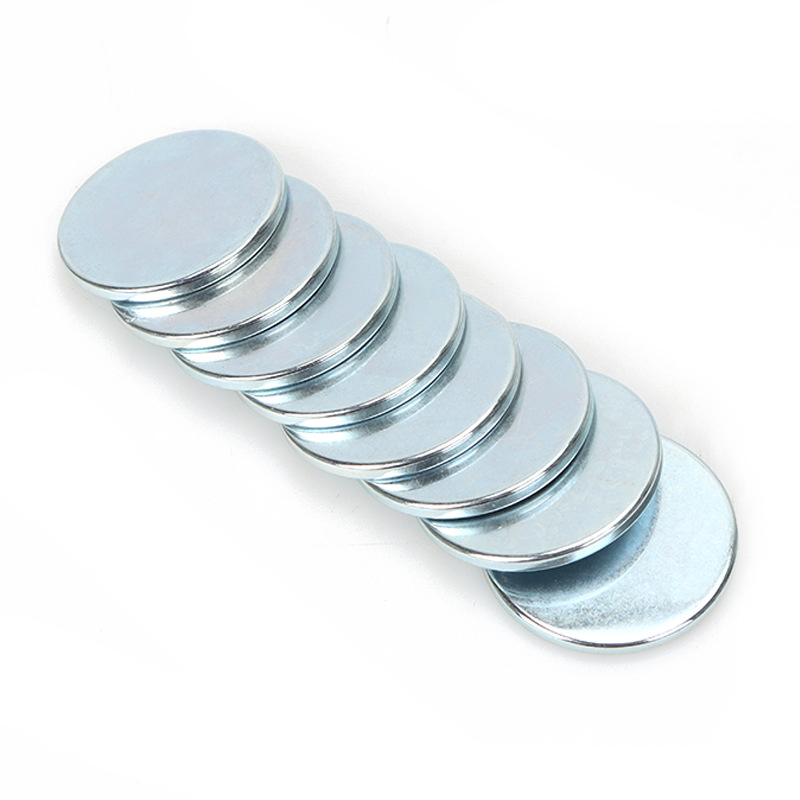
Engineering projects in 2026 face escalating thermal demands across multiple demanding sectors. Trends like electric vehicle miniaturization and high-load factory automation generate intense internal heat. Designers constantly push the physical limits of compact system architectures. Standard NdFeB magnets suffer irreversible demagnetization once ambient temperatures climb above 80°C. Engineers desperately need a reliable middle ground. They must bridge the performance gap between standard neodymium alloys and highly expensive Samarium Cobalt alternatives. This article provides a transparent, technical breakdown of current industrial applications for these essential components. You will learn how to evaluate operational limits precisely in your own motor or sensor designs. We also cover how to source a reliable High-Temperature Resistant N35SH Magnet without risking sudden mechanical failure. By understanding thermal thresholds and structural geometry, you can optimize both performance and longevity in challenging high-heat environments.
Key Takeaways
Thermal Ceiling: N35SH is engineered with high intrinsic coercivity (Hcj) to resist irreversible demagnetization up to 150°C (302°F), contingent on proper permeance coefficients.
Optimal Use Cases: Currently dominates in compact servo motors, automotive sensors, and industrial magnetic couplings where moderate heat generation is constant.
Cost-to-Performance: Offers significantly higher magnetic strength (MGOe) than SmCo at a lower price point, provided operating temperatures strictly remain under the 150°C threshold.
Sourcing Risk: Reliance on generic spec sheets without requesting temperature-specific demagnetization (BH) curves is the leading cause of N35SH implementation failure.
Understanding the High-Temperature Resistant N35SH Magnet: Capabilities and Limits
Decoding the Grade
Engineers often misunderstand magnetic naming conventions. We must break down the exact meaning behind the grade. The "N" designates a Neodymium base material. The "35" represents the Maximum Energy Product (BHmax). This specific value hovers around 35 MGOe. It guarantees a very strong baseline magnetic force. The "SH" stands for Super High. Manufacturers enhance this specific alloy using Heavy Rare Earth elements. They typically blend Dysprosium (Dy) or Terbium (Tb) into the base mixture. These vital additives boost the intrinsic coercivity (Hcj) significantly. The Hcj reliably reaches 20 kOe or higher. This enhancement prevents the magnetic domain walls from slipping under thermal stress.
Curie Temperature vs. Max Operating Temperature
We must clarify a vital engineering distinction here. Many designers confuse the Curie temperature and the maximum operating temperature. This common mistake leads to catastrophic system failures. The Curie temperature sits around 340°C. At this extreme point, the material loses all magnetization entirely. However, functional stability ends much earlier. Irreversible flux loss begins if you push the ambient environment past 150°C. The magnetic field strength drops sharply. You cannot rely on these components above this functional limit. Engineering frameworks demand strict adherence to the functional operating ceiling.
The Geometry Factor (Permeance Coefficient)
Geometry changes everything in magnetic circuit design. We state transparently here: thin magnets demagnetize much faster than thick ones. A thin magnetic disc will fail at lower temperatures compared to a robust cylinder. The 150°C rating assumes an optimal shape factor. Engineers call this the Permeance Coefficient (Pc). A low Pc increases thermal vulnerability dramatically. You must evaluate the operational load line carefully. If your design features a very flat magnet, the actual thermal ceiling drops. It might fail at 130°C instead of 150°C.
Parameter
Standard N35 Grade
N35SH Grade
Key Engineering Impact
Maximum Energy Product (BHmax)
33-36 MGOe
33-36 MGOe
Provides identical baseline pull force and torque output.
Intrinsic Coercivity (Hcj)
≥ 12 kOe
≥ 20 kOe
Prevents domain wall movement during elevated thermal exposure.
Max Operating Temperature
80°C (176°F)
150°C (302°F)
Defines the absolute safe functional limit before permanent loss.
Curie Temperature
~310°C
~340°C
Marks the point of complete structural depolarization.
Top 4 Commercial Applications for N35SH Magnets in 2026
The modern industrial landscape relies heavily on optimal thermal management. Certain sectors demand extreme reliability. Here are the top four commercial applications dominating the 2026 market.
High-Efficiency Servo and BLDC Motors: Continuous operation generates intense internal heat. Rapid start-stop cycles create sudden thermal spikes inside the motor housing. A reliable High-Temperature Resistant N35SH Magnet prevents torque degradation. It maintains vital field strength during peak load demands. Engineers prefer them for precise robotic joints and CNC machinery.
Automotive and EV Components: Electric vehicles heavily rely on stable sensor arrays. You will find these components in EPS (Electric Power Steering) systems. ABS modules also depend on them heavily. Auxiliary cooling pumps utilize them for fluid transfer. Under-hood temperatures routinely exceed 100°C during peak summer driving. Standard grades fail quickly here. SH grades deliver absolute reliability over the vehicle lifespan.
Industrial Magnetic Couplings & Pumps: Sealed chemical processing pumps face immense operational stress. Friction and fluid heat transfer create sustained thermal loads. These pumps require flawless magnetic synchronization across containment barriers. Any magnetic slip causes severe efficiency drops. SH grades hold up perfectly against continuous heat exposure. They eliminate the need for direct mechanical shafts.
Wind Turbine Generators: Scale models and auxiliary systems face harsh conditions constantly. Variable-weather environments limit active cooling options. High reliability remains a strict requirement for remote installations. Maintenance access is often heavily restricted. The SH grade provides consistent power generation over long lifecycles. It resists ambient temperature swings effortlessly.
Evaluating N35SH vs. Alternative High-Heat Magnetic Materials
N35SH vs. UH/EH Grades
Engineers must evaluate materials based on strict objective criteria. Budget constraints and actual thermal peaks dictate your final choice. We must compare the SH grade against higher-tier options. UH grades handle ambient environments up to 180°C. EH grades survive prolonged exposure up to 200°C. They contain progressively higher amounts of Dysprosium. This specific rare earth addition increases production expenses considerably. Do not over-spec your design arbitrarily. If your system ceiling strictly sits at 130°C, the SH grade is perfect. Upgrading to EH wastes valuable resources unnecessarily.
N35SH vs. Samarium Cobalt (SmCo)
Let us look closely at the performance matrix. NdFeB technology delivers stronger baseline pull and rotational torque. SmCo excels purely in extreme heat environments. It thrives above 250°C without breaking a sweat. It also offers absolute natural corrosion resistance. However, SmCo is notably brittle. It easily chips during automated assembly processes. Choose the SH grade for a superior torque-to-size ratio. It maximizes efficiency in highly compact spaces. Choose SmCo only if your application faces both extreme heat and high oxidation risks simultaneously.
You must actively mitigate adoption risks during the procurement phase. Relying solely on basic spec sheets leads directly to failure. Follow these critical evaluation steps to protect your engineering designs.
Validating Thermal Performance
Demand elevated-temperature Demagnetization Curves from your prospective suppliers. Ask for B-H curves specifically mapped at 100°C, 120°C, and 150°C. Do this before shortlisting any vendor. You need undeniable proof of high-heat stability. Examine the second quadrant of the B-H curve carefully. Look for a straight line before the "knee" point at your target temperature. A premature curve indicates poor intrinsic coercivity.
Surface Treatment and Corrosion Compliance
NdFeB material remains highly susceptible to aggressive oxidation. Heat accelerates this degradation process significantly. You must evaluate protective coatings carefully.
Ni-Cu-Ni Plating: This triple-layer coating works perfectly for general industrial use. It provides excellent baseline protection against ambient humidity.
Epoxy Coating: This treatment suits high-humidity environments perfectly. It also resists chemical exposure in industrial pumps.
Ensure your chosen coating tolerates high-heat expansion safely. Mismatched thermal expansion coefficients cause coatings to crack over time. A cracked coating exposes the core material to instant oxidation.
Supply Chain and Heavy Rare Earth Dependency
SH grades depend heavily on specific Rare Earth elements. Dysprosium (Dy) and Terbium (Tb) experience frequent market volatility. Mining extraction constraints cause sudden supply bottlenecks. We strongly advise securing long-term volume agreements. This proactive strategy stabilizes unit economics over extended production cycles. Discuss strategic stockpiling options with your selected manufacturer.
How to Shortlist Suppliers and Finalize Your N35SH Order
Prototyping Protocol
Follow a strict prototyping protocol to ensure complete safety. Start with rigorous thermal cycling tests. Run these stress tests on small sample batches first. Elevate the samples to 150°C for 100 hours. Measure the open-circuit flux before and after the test. You should observe minimal irreversible flux loss. Complete this vital validation step before moving to full assembly integration.
Customization Specs to Provide
When you contact a manufacturer, provide comprehensive details. Vague requests yield inconsistent products. Include these crucial specifications:
Exact Dimensions: Provide accurate CAD models. Specify required tolerances down to +/- 0.05mm.
Magnetization Direction: Specify the orientation clearly. Is it axial, diametrical, or multipole? Multipole configurations require specialized tooling.
Maximum Operational Temperature: State your system ceiling plainly. Detail any anticipated environmental exposure or chemical contact.
Coating Requirements: Specify salt spray test duration requirements if applicable.
Next-Step Action
We highly recommend consulting an experienced applications engineer. Ask them for a formal Permeance Coefficient review. Provide them with your specific structural geometry. Do this before finalizing your purchase order. Proper geometry validation prevents unexpected demagnetization. It acts as your final safety check.
Conclusion
The N35SH grade remains a vital workhorse in the 2026 market landscape. It perfectly fits moderate-to-high heat industrial applications. It bridges the gap between weak standard grades and costly extreme-heat alternatives. You must remember a few critical takeaways. First, successful deployment relies entirely on accurate geometric design. You must align your shape factor with real-world thermal ceilings. Second, never assume a magnet survives 150°C simply because the label says "SH". Always demand temperature-specific B-H curves from your supplier.
Take proactive steps today to secure your supply chain. Contact technical sales or engineering support immediately. Schedule a custom project review to verify your design parameters. Proper validation ensures your automated systems run smoothly for years.
FAQ
Q: Will an N35SH magnet permanently lose its strength if it reaches 160°C?
A: Yes. Reaching 160°C causes irreversible flux loss. Passing the 150°C threshold permanently damages the internal magnetic domain alignment. The magnet will not recover its full strength upon cooling. You must remagnetize it completely to restore baseline performance.
Q: How does the physical shape of N35SH affect its heat resistance?
A: Shape plays a massive role. A low Permeance Coefficient lowers the threshold for thermal demagnetization. For example, a very thin disc demagnetizes much faster than a thick cylinder. You must factor geometry into your maximum temperature calculations.
Q: Can N35SH be used without a protective coating in high temperatures?
A: No. Heat accelerates oxidation in neodymium materials rapidly. A stable coating is absolutely mandatory. We highly recommend standard Nickel-Copper-Nickel plating or a specialized high-temp epoxy to prevent catastrophic internal rusting.
Q: Why is N35SH significantly more expensive than standard N35?
A: The added cost comes directly from Heavy Rare Earth elements. Manufacturers must add costly Dysprosium or Terbium into the alloy. These crucial elements increase the intrinsic coercivity drastically. They enable heat resistance without sacrificing the 35 MGOe magnetic strength.