Electric motors and high-performance sensors operate in harsh environments. Excessive heat acts as an invisible enemy here. Engineers constantly face a challenging balancing act. They must mitigate thermal degradation risks without unnecessarily driving up component expenses. Internal temperatures often soar during peak operation. Underspecified permanent magnets suffer irreversible magnetic flux loss in these scenarios. This loss causes catastrophic system failure.
You need a targeted, reliable material solution. We introduce the N35SH grade as an ideal candidate. It serves as a highly capable mid-tier strength option. It delivers an energy product of 35 MGOe. More importantly, it offers a robust high-tier thermal threshold. Engineers rate it for up to 150°C. This article explores how N35SH compares directly to standard, High, and Ultra-High grades. We examine these materials specifically for applications requiring complex geometries. You will learn actionable evaluation criteria. These guidelines protect your rotor designs while optimizing your engineering budget.
Key Takeaways
- Thermal Threshold: N35SH resists demagnetization up to 150°C, filling the gap between standard N35 (80°C) and N35UH (180°C).
- Cost-to-Performance: SH grades require Heavy Rare Earth Elements (HREE) like Dysprosium, significantly impacting BOM costs compared to standard grades.
- Topology Advantage: A radial magnetization N35SH magnet eliminates the need for multi-segment arc assemblies in rotors, reducing manufacturing complexity.
- Evaluation Focus: Selection must be based on intrinsic coercivity (Hcj) requirements at peak operating temperatures, not just room-temperature Br (remanence).
The Engineering Problem: Thermal Demagnetization vs. Material Cost
Electric motors generate significant eddy currents during normal operation. High-speed rotors create intense heat inside confined spaces. You risk irreversible flux loss if you underspecify the magnet grade. Operating above the specific magnetic threshold causes permanent damage. It degrades overall system efficiency rapidly. The motor loses torque. The sensor loses accuracy. You must address this fundamental business problem early in the design phase.
Your success criteria involve precise material selection. You must achieve sustained magnetic flux density. You need to maintain this performance at the maximum continuous operating temperature. However, you cannot overspend on unnecessary coercivity. Excess coercivity wastes your engineering budget. Choosing a grade rated for 200°C makes no sense if your application never exceeds 120°C. Finding the exact middle ground dictates long-term project viability.
The "SH" designation signifies superior high-temperature resistance. Achieving this specific thermal rating requires modifying the alloy. Manufacturers add expensive Heavy Rare Earth Elements. They commonly use Dysprosium or Terbium. These heavy elements increase the intrinsic coercivity substantially. They prevent the magnetic domains from flipping at 150°C. They lock the alignment securely in place. Unfortunately, these elements also drive up raw material expenses. The global supply chain for Dysprosium remains highly constrained. This adds a cost premium over standard neodymium materials.
N35SH vs. Alternative Neodymium Grade Categories
Understanding the broader spectrum of neodymium grades is essential. You must weigh the capabilities of each category. Different applications demand vastly different thermal tolerances. We can break down the primary alternative categories below.
Standard Grades (N35 - N52)
These grades provide high potential energy products. They reach up to an impressive 52 MGOe. Unfortunately, they max out at just 80°C. High heat destroys their magnetic alignment quickly. You should reject them for enclosed motor applications. They fail rapidly in unventilated spaces. However, you should approve them for consumer electronics. Smartphones and headphones rarely exceed room temperatures safely.
Mid-Temp Grades (N35M, N35H)
These grades handle moderate heat environments well. They offer maximum operating temperatures of 100°C and 120°C respectively. They represent a highly cost-effective choice. They utilize fewer heavy rare earth elements. You should select them for applications using reliable active cooling. Liquid-cooled assemblies often utilize "H" grades successfully.
Ultra-High Temp Grades (N35UH, N35EH, N35AH)
These specialized grades withstand truly extreme environments. They operate safely from 180°C up to 230°C. Heavy industrial applications require them constantly. Automotive EV traction motors often depend on these specific grades. However, they carry a steep financial premium. They cost significantly more than SH variants. You only use them when absolutely necessary.
Comparison Chart: Neodymium Grade Classifications
| Grade Category | Max Operating Temp (°C) | Typical Application | HREE Content |
| Standard (N) | 80°C | Consumer Electronics | Negligible |
| Mid-Temp (M, H) | 100°C - 120°C | Actively Cooled Devices | Low |
| High-Temp (SH) | 150°C | Industrial Motors, Sensors | Moderate |
| Ultra-High (UH, EH, AH) | 180°C - 230°C | EV Traction, Heavy Machinery | Very High |
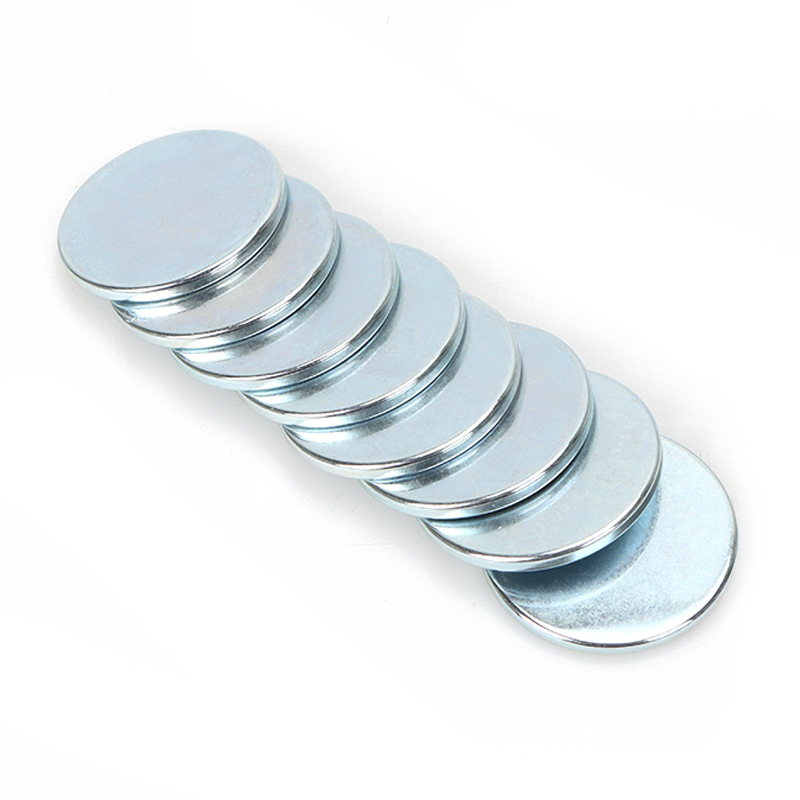
Evaluating the Radial Magnetization N35SH Magnet for Rotor Design
Modern engineering continually seeks efficiency improvements. Moving away from discrete magnet segments is one major leap. You can transition to a single continuous ring. Integrating a Radial Magnetization N35SH Magnet transforms traditional rotor design. It streamlines the entire assembly phase entirely. You no longer need to glue tiny arc segments together manually.
The performance outcomes justify the transition. A continuous ring reduces flux leakage significantly. Discrete segments always create tiny air gaps between adjacent pieces. These gaps bleed magnetic energy. A single ring eliminates them completely. It minimizes cogging torque compared to glued arc-segment assemblies. Your motor runs much smoother. Furthermore, it maintains consistent air gap flux density. It performs exceptionally well under harsh 150°C operating conditions.
You must consider the implementation realities carefully. The manufacturing process requires custom orientation tooling during pressing. Engineers use specialized electromagnetic coils for this precise step. This creates higher upfront Non-Recurring Engineering (NRE) expenses. Fortunately, it dramatically lowers downstream assembly labor. You save money during mass production.
Step-by-Step Implementation Approach
- Analyze the existing multi-segment rotor layout carefully.
- Calculate the required internal and external ring diameters.
- Design custom magnetization fixtures to achieve proper radial alignment.
- Press the N35SH powder inside the specialized orientation field.
- Sinter the resulting ring in a high-temperature vacuum furnace.
- Apply protective coatings before final full magnetization occurs.
Shortlisting Logic: When to Finalize N35SH over N42SH or N45SH
Engineers frequently debate between different strength tiers within the SH category. You must map features directly to outcomes. N35SH offers a remanence (Br) around 1.17 to 1.22 Tesla. By contrast, N45SH pushes this Br value to roughly 1.32 to 1.38 Tesla. N45SH clearly delivers more magnetic strength per unit volume. It seems like the obvious choice initially. However, greater strength requires a more complex manufacturing yield.
Space constraints ultimately dictate your practical choice. Sometimes your design permits a slightly thicker magnet. You have extra millimeters in the rotor housing. If so, N35SH can achieve the exact same total flux output. It effortlessly replaces a thinner, much more expensive N45SH component. You trade a tiny amount of space for a massive budget reduction. This dimensional trade-off wins in many industrial scenarios.
Budgetary assumptions require strict discipline. Never base your grade selection solely on room-temperature spec sheets. Those numbers deceive you. Always evaluate dynamic BH-curve data precisely at 150°C. This reveals the true operational performance. It shows how the coercivity curve bends under intense heat. Relying on high-temperature demagnetization curves prevents expensive over-specification errors.
Best Practices for Grade Shortlisting
- Request detailed demagnetization curves mapped strictly at 150°C.
- Compare the physical volume differences required to match total flux.
- Calculate the thermal expansion coefficient variations between differing grades.
- Verify the availability of specific block sizes before finalizing your choice.
Implementation Risks, Tooling, and Supply Chain Compliance
You face several practical hurdles during the deployment phase. Coating considerations remain paramount. SH grades operate in highly demanding environments. These conditions often require advanced plating solutions. Standard zinc coatings might fail under sustained high temperatures. You should specify Epoxy plating. Alternatively, you can use Ni-Cu-Ni combined plus an Epoxy topcoat. These prevent severe oxidation at elevated temperatures. Raw neodymium oxidizes rapidly if exposed.
Tooling lead times demand careful project management. Radially oriented rings need specialized fixture fabrication. Tooling takes considerable time to build and test. It typically extends initial prototyping timelines by four to six weeks. You cannot rush the orientation coil design. Plan your engineering sprints accordingly. Communicate these timeline extensions to your stakeholders early.
Compliance verification ensures long-term manufacturing stability. Supply chain transparency remains critical today. Ensure your suppliers provide certified demagnetization curves. They must map these at your exact application temperatures. You must also verify strict compliance with RoHS and REACH standards. This guarantees ethical Heavy Rare Earth Element (HREE) sourcing. Regulatory bodies strictly monitor dysprosium imports. Non-compliance shuts down your entire production line instantly.
Common Mistakes to Avoid
- Ignoring the thermal expansion mismatch between the magnet and the rotor shaft.
- Assuming a standard zinc coating survives 150°C continuous operation.
- Forgetting to factor tooling lead times into the final product launch schedule.
- Relying on generic supplier data sheets instead of application-specific testing.
Conclusion
Choosing the right neodymium grade determines your operational success. The decision matrix ultimately remains straightforward. You should choose N35SH when 150°C thermal stability is non-negotiable. It works perfectly when radial geometry can streamline your complex assembly processes. It provides excellent mid-tier strength without breaking your material budget.
You can optimize your engineering approach today. We recommend engineers request specific 150°C B-H demagnetization curves immediately. You should analyze this data against your internal heat dissipation models. Next, order a first-article tooling sample. Use this specific sample for empirical thermal testing in your lab. Real-world validation always outperforms theoretical models. Secure your supply chain and protect your next-generation rotor designs.
FAQ
Q: What does "SH" stand for in neodymium magnet grades?
A: "SH" stands for "Super High" intrinsic coercivity. It indicates the material can withstand a maximum continuous operating temperature of approximately 150°C (302°F). This rating ensures the magnet maintains its magnetic field without suffering irreversible losses in high-heat environments. Manufacturers achieve this by adding specific heavy rare earth elements to the alloy.
Q: Can a radial magnetization N35SH magnet be machined after magnetization?
A: No. Neodymium material is highly brittle. Machining it post-magnetization risks destructive heat generation. This excessive friction heat can immediately destroy the complex magnetic orientation. Any shaping, drilling, or cutting must occur before the final magnetization process. Trying to modify a finished magnet usually cracks the protective coating.
Q: Is N35SH more expensive than N52?
A: Often, yes. N35SH has a lower overall magnetic strength (35 MGOe) than N52 (52 MGOe). However, the SH temperature rating requires adding heavy rare earth elements like dysprosium. This raw material cost typically drives the final price higher than standard N52 grades. Thermal stability costs more than pure magnetic strength.