Neodymium N52 magnets represent the highest commercially available grade of permanent rare-earth magnets. They deliver maximum magnetic energy density, known as BHmax, engineered specifically for extreme space-constrained applications. Procuring these components in 2026 presents unique operational challenges. Buyers must carefully navigate a highly saturated supplier market often clouded by exaggerated pull-force claims. Furthermore, fluctuating raw material availability demands strict vigilance regarding authentic specification standards. This article serves as a skeptical, evidence-based guide to evaluating these powerful components. We will help you match specific form factors to precise industrial and prototyping use cases. You will also discover actionable methods to mitigate critical implementation risks before assembly. Proper evaluation requires ignoring flashy marketplace metrics. We focus entirely on verifiable physics and material science. You can protect your engineering projects by following these established verification frameworks.
Key Takeaways
- N52 offers roughly 10-15% more magnetic pull than N45, but at a premium cost; it is only strictly necessary when weight-to-power ratios are critical.
- Standard Neodymium N52 magnets lose magnetization at lower temperatures (max operating temp ~80°C/176°F) unless specified with high-heat suffixes (e.g., N52M, N52H).
- Vendor credibility should be evaluated on verifiable pull-test data, batch consistency, and RoHS/REACH compliance, rather than marketplace star ratings.
- Proper surface plating (Nickel-Copper-Nickel vs. Epoxy) is a primary differentiator for longevity in humid or corrosive industrial environments.
Baseline Criteria for Evaluating Neodymium N52 Magnets
Evaluating premium magnet grades requires moving beyond simple strength claims. You must rigorously analyze technical parameters to justify the higher investment. Standard grades often suffice for generic uses. However, aerospace actuators, micro-motors, and high-end consumer electronics strictly demand maximum flux density. These advanced applications rely on absolute space optimization. If you have extra physical room, you rarely need the absolute highest grade.
When assessing performance, look beyond generic pull strength. Engineers rigorously evaluate Magnetic Remanence (Br) and Coercivity (Hcj). Magnetic Remanence indicates the residual magnetic flux density remaining after removing an external magnetic field. Higher Br values mean a stronger static magnetic field. Coercivity measures the material's resistance to demagnetization. High coercivity ensures the component maintains its charge under severe external stress.
Let us examine pull force validation. Suppliers love to publish vertical pull-force charts. You must read these charts skeptically. They typically represent ideal, impossible scenarios. An ideal scenario involves pulling the magnet straight up from a thick, perfectly flat, unpainted steel plate. Real-world applications rarely mimic this laboratory environment. Often, you apply these parts in shear configurations. Shear force acts parallel to the mounting surface. In shear configurations, you lose substantial holding capacity. The actual holding strength generally drops to 20% or 30% of the advertised vertical pull. You must calculate this severe reduction during your initial design phase.
Surface plating directly determines operational lifespan. Environmental exposure destroys unprotected rare-earth materials quickly. Consider these standard protective coatings during your evaluation:
- Nickel-Copper-Nickel (Ni-Cu-Ni): The standard triple-layer protection. It offers excellent indoor durability and a clean, metallic aesthetic finish.
- Zinc: A low-cost alternative. It provides minimal corrosion resistance and suits basic prototyping environments perfectly.
- Epoxy: A robust, dark coating. It performs exceptionally well outdoors and resists moisture penetration highly effectively.
- Parylene: A specialized, ultra-thin polymer. Medical device manufacturers rely on it heavily for complete biocompatibility.
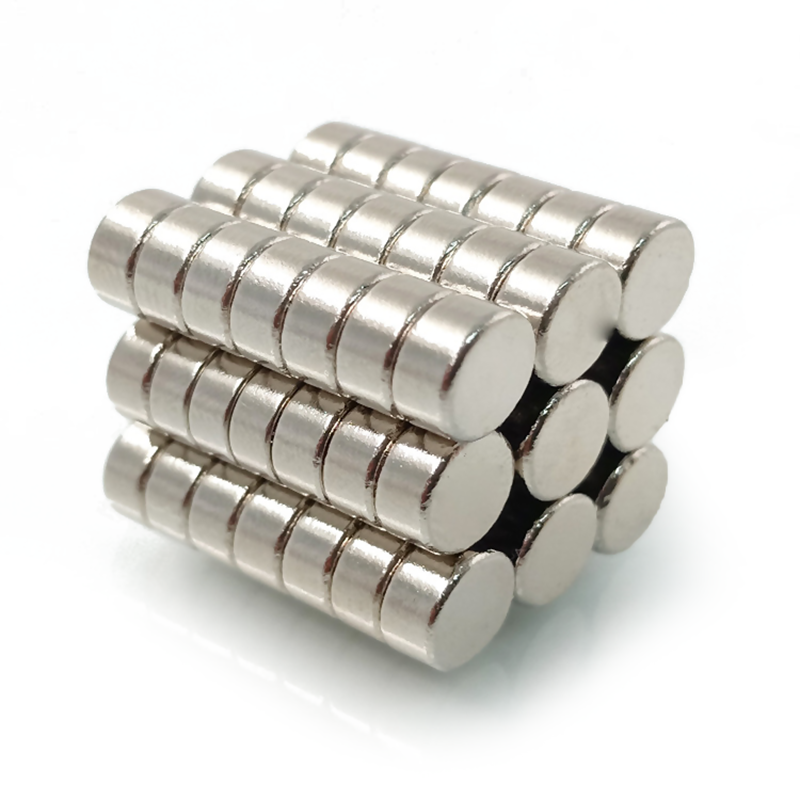
N45 vs. N52: Validating the Need for Maximum Magnetic Strength
Many engineering teams automatically specify the highest grade available. This habit wastes engineering budgets unnecessarily. You must carefully analyze the actual performance delta between N45 and the maximum grade. A significant cost premium accompanies the strongest materials. However, the marginal gain in Gauss or Tesla remains relatively small.
You should only select maximum grades under strict volume and weight constraints. Sometimes, you must minimize the physical footprint absolutely. You cannot sacrifice holding power. In these specific cases, the premium grade becomes the optimal choice. Drone motors, micro-robotics, and wearable tech represent perfect examples. These advanced devices require immense magnetic energy squeezed into microscopic dimensional tolerances.
Conversely, static holding fixtures demonstrate a clear point of diminishing returns. Large industrial clamps rarely face strict space restrictions. If your assembly provides ample physical room, substituting an N45 or N50 component proves significantly more practical. You simply use a slightly larger N45 component to achieve the exact same pull force.
Consider the following simplified performance comparison chart:
| Grade | Relative Pull Force | Cost Premium Context | Optimal Use Case |
| N45 | Baseline (100%) | Standard Market Rate | Large static holding fixtures |
| N50 | Approx. +8% | Moderate Increase | General industrial motors |
| N52 | Approx. +15% | Significant Premium | Miniaturized aerospace technology |
Top N52 Magnet Configurations: Industrial vs. Hobbyist Applications
Form factor dictates functional success just as heavily as the raw grade. Selecting the correct geometric shape optimizes the underlying magnetic circuit for your specific application.
Heavy-Duty Industrial Discs and Blocks
Large-scale operations rely heavily on standard disc and block geometries. You will encounter these configurations frequently inside magnetic separators. Wind turbine generators and brushless DC motors also utilize them extensively. When sourcing these fundamental shapes, you must focus entirely on tolerance precision. High-speed motor rotors demand strict dimensional tolerances, often requiring ±0.05mm accuracy.
Furthermore, you must rigorously verify batch-to-batch flux density consistency. Inconsistent flux causes critical imbalances within rapidly rotating machinery. We consider it an industry best practice to demand statistical process control documentation. This data proves lot uniformity across massive production runs.
Countersunk and Mounting Magnets
Fastening these parts directly to hard surfaces introduces unique mechanical challenges. Custom cabinetry, retail display units, and complex tooling jigs utilize countersunk variations extensively. Unfortunately, applying standard screw torque creates a severe hazard. The material frequently fractures right at the screw head.
NdFeB material exhibits incredible brittleness. To solve this recurring issue, experienced engineers utilize steel cup housings. We call these assemblies pot magnets. The outer steel housing deliberately redirects the magnetic field strictly to one active face. It simultaneously shields the brittle internal material from destructive crushing forces.
Prototyping and Hobbyist Kits
Small-scale makers utilize widely varying dimensions for distinct, one-off projects. Popular use cases include 3D printing integration and custom packaging closures. Tabletop gaming enthusiasts also use tiny discs for interchangeable miniatures. When procuring assorted kits, you must evaluate packaging safety first. Improperly shielded bulk kits pose severe pinching hazards upon opening.
Additionally, prioritize verified retail suppliers over generic marketplace sellers. Generic storefronts frequently mislabel inferior grades as top-tier materials. You simply cannot trust unverified star ratings.
Implementation Risks: Thermal Degradation and Material Brittleness
Deploying incredibly strong components introduces significant physical risks during final assembly. You must actively design around three primary failure modes. Failing to address these vulnerabilities ruins product longevity.
Temperature Limitations
Heat violently destroys permanent magnetism. Every design engineer must understand the crucial difference between maximum operating temperature and Curie temperature. Standard components degrade permanently when exposed to temperatures exceeding 80°C (176°F). The internal magnetic alignment literally unravels. If your operating environment generates substantial ambient heat, you must alter your material specification immediately. Reliable suppliers offer specific high-heat suffixes. You should specify the N52M variant for environments reaching up to 100°C. For severely hot applications, require the N52H variant. This specialized material withstands temperatures up to 120°C without permanent flux loss.
Mechanical Fragility
These components undergo a complex sintered metallurgical production process. They ultimately behave much like fragile ceramics. They certainly are not solid blocks of indestructible metal. You face an exceptionally high risk of chipping upon sudden impact. Letting two strong pieces snap together freely will almost certainly shatter both.
Assembly line safety requires implementing strict handling protocols:
- Mandate the continuous use of non-magnetic spacing jigs during complex assembly stages.
- Require all floor workers to wear heavy-duty protective gloves to eliminate pinch injuries.
- Implement mandatory slide-apart techniques rather than attempting direct-pull separation.
Corrosion Vulnerability
Exposed NdFeB material oxidizes remarkably fast in ambient humidity. Specialized surface coatings exist primarily to prevent this rapid structural decay. However, high-impact industrial applications often cause microscopic coating fractures. Once the protective nickel or epoxy layer breaches, ambient moisture penetrates immediately. The underlying base material begins to rust internally. It will expand outward and eventually crumble into useless powder. You must evaluate your impact risk carefully before finalizing your design.
Vendor Selection Framework: How to Shortlist N52 Suppliers
Selecting a highly reliable manufacturing partner largely determines your final project success. The massive market saturation of generic suppliers requires implementing a rigorous vetting process.
Data Transparency
Never accept theoretical pull weights as undeniable proof of manufacturing quality. Require all shortlisted suppliers to provide comprehensive demagnetization curves. You should also demand accurate hysteresis loop data calculated for your exact operating temperatures. Honest, capable manufacturers share these technical documents willingly. They welcome deep technical scrutiny.
Quality Assurance & Compliance
Global manufacturing standards ultimately protect your final product liability. Screen every potential vendor for active, verifiable ISO 9001 certification. Furthermore, international environmental regulations demand strict material compliance. You must ensure all incoming components meet current RoHS and REACH directives. Strict compliance prevents costly customs seizures during international transit.
Supply Chain Stability
The global rare-earth market experiences frequent, unpredictable volatility. Evaluate vendors based heavily on their raw material sourcing strategies. Suppliers relying exclusively on single-source mining locations pose a massive fulfillment risk. Prioritize manufacturers utilizing diversified geographic sourcing. Companies integrating recycled supply chains offer much higher resilience against sudden market shocks.
Next-Step Action
Before committing heavily to a high-volume procurement contract, execute a controlled testing phase. We strongly recommend ordering limited prototype batches. Start with 10 to 50 units. Conduct rigorous in-house shear testing. Perform your own vertical pull evaluations. Verify all dimensional tolerances against your original engineering drawings. This relatively small initial step prevents catastrophic assembly failures down the line.
Conclusion
Sourcing maximum-strength magnetic components requires a highly calculated, balanced approach. You must weigh the strong appeal of absolute strength against critical environmental vulnerabilities. Severe space restrictions remain the primary justification for selecting the highest commercial grade. Standard, lower-grade options often fulfill fundamental engineering requirements just as effectively when space permits.
We strongly advise buyers to prioritize holistic supplier capabilities. Choose transparent manufacturing partners offering verifiable testing data. Insist on appropriate environmental surface coatings. Avoid vendors who simply market the strongest available piece without offering deep technical backing. True engineering quality lies in verifiable consistency and appropriate form-factor selection.
Take a highly systematic approach to your next product rollout. Encourage your internal design team to consult directly with a dedicated magnetic engineer. Always request comprehensive sample data sheets tailored to your specific application environment. Secure this verifiable data before finalizing any major purchase agreements.
FAQ
Q: What is the actual difference in strength between N50 and N52?
A: The theoretical difference in magnetic pull force between N50 and N52 is roughly 4%. In practical, everyday applications, this minimal margin rarely impacts standard performance. Unless you operate under extreme micro-volume constraints, such as miniature drone manufacturing or advanced micro-robotics, the extra cost remains generally unwarranted. You can usually achieve identical results by using a marginally larger N50 component.
Q: Can Neodymium N52 magnets lose their charge over time?
A: Yes, but the natural degradation process is incredibly slow. Under normal operating conditions, they lose less than 1% of their total magnetization every 10 years. However, exposure to extreme heat exceeding their specified maximum operating temperature will cause immediate demagnetization. Placing them within immensely strong opposing magnetic fields also causes permanent, irreversible flux loss.
Q: Are there shipping restrictions for N52 magnets?
A: Yes, air freight regulations heavily restrict powerful magnetic shipments. IATA regulations require specialized magnetic shielding packaging to prevent dangerous interference with aircraft navigation systems. Packages must pass a strict compass deflection test before loading. Ground and sea freight face fewer regulatory restrictions but still require highly secure, isolated packaging to prevent transit damage.
Q: Why do my N52 magnets chip so easily?
A: NdFeB magnets feature a highly complex sintered metallurgical structure. They are fundamentally similar to rigid ceramics, making them exceptionally brittle. High-speed impacts easily cause severe chipping or catastrophic shattering. They are not solid metal. For high-impact industrial environments, engineers highly recommend utilizing steel cup housings, commonly known as pot magnets, to protect the fragile material.