Standard neodymium magnets offer incredible strength but suffer irreversible flux loss at temperatures above 80°C. This thermal limitation poses a major engineering challenge. High-heat environments demand a reliable solution to prevent catastrophic system failures. We introduce the N35SH grade as the standard answer. It handles applications requiring moderate magnetic strength combined with elevated thermal stability. This guide serves as a practical technical resource for procurement managers and engineers. You will learn how to evaluate a High-Temperature Resistant N35SH Magnet for motors, sensors, and industrial actuators. We unpack the essential engineering specifications and metallurgical differences. You will discover exactly where these magnets excel and when alternative grades make more sense. By understanding permeance coefficients and demagnetization curves, you can avoid common design failures. Specify the right material for your next demanding project today.
Key Takeaways
- Nomenclature breakdown: "35" denotes a Maximum Energy Product (BHmax) of ~35 MGOe; "SH" (Super High) indicates high intrinsic coercivity capable of withstanding operating temperatures up to 150°C.
- Cost vs. Performance: N35SH carries a premium over standard N35 due to the addition of heavy rare earth elements (like Dysprosium or Terbium) to boost thermal resistance.
- Application limits: While rated for 150°C, the actual maximum operating temperature strictly depends on the magnet's geometry (permeance coefficient) and operating circuit.
- Testing necessity: Validating the demagnetization curve at high temperatures is critical to avoid sub-standard material masquerading as SH-grade.
Decoding the Technical Specifications of N35SH NdFeB
Engineers must understand the specific numeric thresholds defining the N35SH grade. We evaluate magnetic properties using standardized metrics. These metrics determine how a magnet performs under mechanical load and thermal stress. Below is a detailed technical reference table outlining the typical ranges for N35SH neodymium magnets.
| Specification Category | Parameter | Typical Range / Value | Engineering Significance |
| Magnetic Properties | Remanence (Br) | 11.7 – 12.2 kGs (1.17 – 1.22 T) | Indicates the maximum baseline magnetic flux density. |
| Coercivity (Hcb) | ≥ 10.9 kOe (≥ 868 kA/m) | Measures resistance to external demagnetizing forces. |
| Intrinsic Coercivity (Hcj) | ≥ 20.0 kOe (≥ 1592 kA/m) | The critical metric for the SH designation and thermal stability. |
| Max Energy Product (BHmax) | 33 – 36 MGOe | Represents the overall strength and energy density. |
| Thermal Characteristics | Max Operating Temperature (Tw) | ~150°C (302°F) | The upper limit for continuous use before permanent loss occurs. |
| Curie Temperature (Tc) | ~340°C (644°F) | The point where the material loses all magnetic properties. |
| Rev. Temp Coefficient of Br (α) | Approx. -0.12 %/°C | Calculates temporary flux loss per degree of heating. |
Understanding Intrinsic Coercivity
Intrinsic Coercivity (Hcj) represents the true barrier against magnetic domain reversal. Standard N35 magnets offer an Hcj of roughly 12.0 kOe. The SH grade pushes this value to a minimum of 20.0 kOe. This massive increase provides the foundation for high-temperature stability. When evaluating lab reports according to IEC 60404 testing standards, you must verify this specific metric. A high Br value means nothing if the Hcj falls below 20.0 kOe.
The "Shape" Caveat
Many engineers wrongly assume every N35SH magnet survives 150°C unconditionally. This is a dangerous common mistake. The maximum operating temperature relies entirely on the magnet's geometry. We measure this using the permeance coefficient (Pc). Thin magnets possess a low Pc. They will demagnetize well below 150°C. Magnets operating in a repelling circuit face similar risks. You must calculate the exact permeance coefficient of your assembly before finalizing the material grade. Always plot your load line against the demagnetization curve at your target temperature.
N35 vs. N35SH: Evaluating the High-Temperature Upgrade
Upgrading a magnetic system involves careful consideration of technical failures and material costs. You cannot swap grades blindly. We must analyze the metallurgical differences driving this transition.
The Engineering Problem
Using standard N35 magnets in environments exceeding 80°C leads to severe system degradation. Motor applications suffer from permanent torque loss. Sensors experience calibration failure and signal drift. Once a standard magnet crosses its thermal threshold, the flux loss becomes irreversible. You cannot recover the lost magnetism simply by cooling the system down. The assembly requires complete remagnetization or replacement. We upgrade to SH grades strictly to prevent this irreversible damage.
The Metallurgical Difference
How does N35SH achieve superior heat resistance? Manufacturers alter the internal microstructure. They use grain boundary diffusion or direct alloying. They introduce heavy rare earth elements like Dysprosium (Dy) or Terbium (Tb) into the NdFeB matrix. These elements wrap around the individual magnetic grains. They create a hardened shell. This shell prevents the magnetic domains from flipping when exposed to heat or external opposing fields. Grain boundary diffusion represents the most advanced method today. It maximizes coercivity while preserving the baseline remanence.
Cost Implications and Redesign Framework
Heavy rare earth elements are scarce. Their supply chain experiences significant price volatility. Consequently, N35SH carries a material premium over standard N35. You must justify this premium during the design phase. Consider a simple framework. Can you redesign the assembly space? Sometimes, using a thicker standard-grade magnet is more cost-effective. A thicker geometry increases the permeance coefficient. This artificially boosts the thermal resistance of a cheaper grade. However, if space is highly constrained, paying the SH premium remains your only viable option.
Solution Fit: Where N35SH Magnets Excel (and Where They Don't)
Selecting the right magnet requires matching the material profile to the specific environment. N35SH occupies a distinct technical niche. It balances moderate power output with reliable thermal endurance.
Primary Engineering Applications
We see this specific grade deployed across several demanding industrial sectors. It performs exceptionally well in enclosed spaces where heat dissipation remains difficult.
- Electric Vehicle (EV) components: Auxiliary motors, coolant pumps, and Electric Power Steering (EPS) systems rely heavily on SH grades.
- Industrial motion control: High-performance servo motors and enclosed stepper motors require thermal stability during continuous operation.
- Fluid handling: Magnetic couplings for chemical pumps use these magnets to transfer torque safely through sealed barriers.
- Automotive sensors: Gearbox speed sensors and ABS modules face constant engine heat. They demand stable flux outputs to maintain accurate calibration.
When to Look Elsewhere (Shortlisting Logic)
N35SH is not a universal solution. Certain extreme environments push this material beyond its breaking point. Use the following logic to determine when to abandon the SH grade.
- Temperatures consistently exceed 150°C: If your baseline operating environment sits at 160°C, N35SH will fail. You must evaluate UH (180°C), EH (200°C), or AH (220°C) grades. For extreme sustained heat, transition entirely to Samarium Cobalt (SmCo) materials.
- Severe space constraints require maximum torque: N35SH offers a maximum energy product of ~35 MGOe. If your motor requires significantly higher torque in the same physical footprint, you need stronger materials. Evaluate N42SH or N45SH grades. They provide higher remanence while maintaining the 150°C threshold.
- Corrosive chemical exposure: Neodymium degrades rapidly in acidic environments. If protective coatings cannot guarantee survival, switch to inherently corrosion-resistant materials like SmCo or Ferrite.
Environmental Protection and Coating Considerations
Thermal stability solves only half the engineering equation. High-temperature environments often introduce moisture, oil, and harsh chemicals. NdFeB materials are highly susceptible to oxidation. An uncoated high-temperature magnet will rust and disintegrate just as fast as a standard grade.
Corrosion Risks
The iron content within the NdFeB matrix oxidizes rapidly upon exposure to humidity. Heat accelerates this chemical reaction. Rust physically expands the magnet's volume. This expansion crushes tight motor gaps and destroys the assembly. Protective coatings are absolutely mandatory.
Evaluating Coating Options for Heat
We must select coatings capable of surviving the 150°C environment. The chart below summarizes standard protective finishes and their thermal viability.
| Coating Type | Visual Appearance | Primary Benefit | Thermal Consideration |
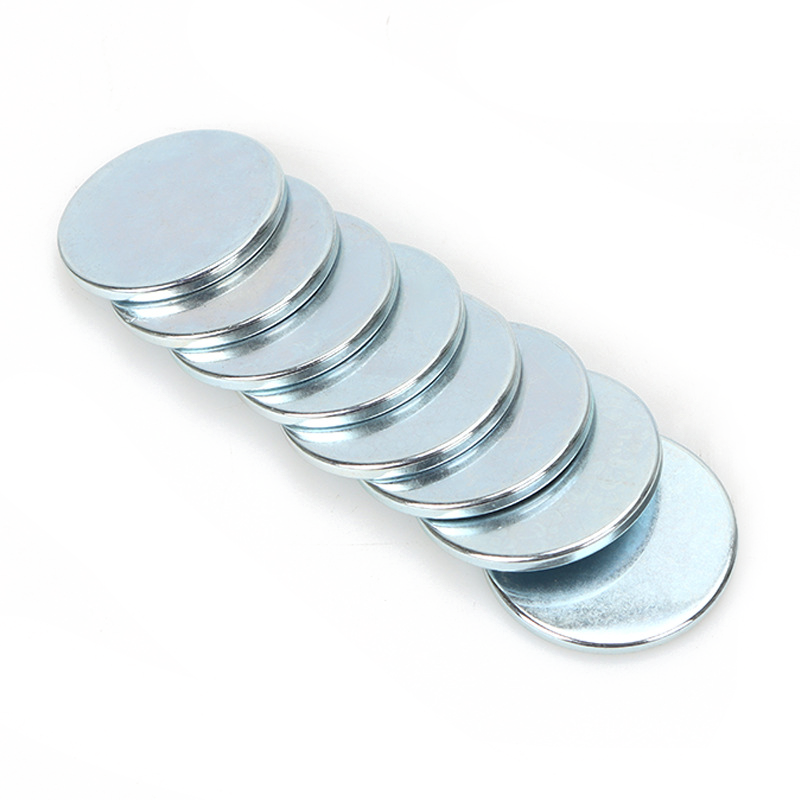
| Ni-Cu-Ni (Nickel) | Shiny Metallic | Standard robust protection against atmospheric moisture. | Reliable up to the magnet's core thermal limit. Excellent structural integrity. |
| Epoxy Resin | Matte Black / Grey | Superior resistance to salt spray and corrosive chemicals. | Must specify high-temp epoxy formulations. Standard epoxy degrades below 150°C. |
| Phosphating / Passivation | Dull Grey | Prevents immediate flash rusting during transport and assembly. | Offers zero long-term protection. Used only when magnets are fully sealed in a rotor. |
Thermal Expansion Compatibility
Engineers often overlook thermal expansion compatibility. Magnets, metallic coatings, and industrial adhesives expand at different rates. When a motor reaches 150°C, these differing thermal expansion coefficients create massive shear stress. This stress causes coating delamination. A flaking nickel coating inside a high-speed rotor gap causes catastrophic mechanical failure. You must test your chosen adhesive and coating combination under rigorous thermal cycling to ensure structural integrity.
Sourcing and Supply Chain Risks for SH-Grade Magnets
Procuring raw magnetic materials introduces specific quality control risks. The visual appearance of a standard N35 magnet is identical to an N35SH magnet. You cannot verify the grade through physical inspection alone. Rigorous documentation and testing protocols are essential.
Supplier Verification
Unscrupulous manufacturers sometimes substitute lower grades to improve their profit margins. You might receive N35H (rated for 120°C) or N35M (rated for 100°C). If deployed in a 150°C application, these substitutes will fail immediately. Establish a strict vetting process. Require ISO 9001 and IATF 16949 certifications for automotive applications.
Required RFQ Documentation
Your Request for Quotation (RFQ) must contain explicit technical demands. Vague requests invite poor quality. Include the following requirements in your purchase orders:
- Demand Demagnetization Curves: Request actual BH curves measured at 20°C, 100°C, and 150°C. Do not accept theoretical charts. You need batch-specific data.
- Specify Intrinsic Coercivity Minimums: State clearly that the Hcj must exceed 20.0 kOe. Make this a condition for batch acceptance.
- Define Strict Dimensional Tolerances: Heat causes mechanical expansion. If your assembly tolerances are too tight, the expanding magnet will crack. Define acceptable dimensional variations at peak operating temperatures.
Prototyping Next Steps
Never move directly to mass production based on a datasheet. We strongly recommend ordering a small prototype batch. Conduct rigorous thermal cycling tests. Measure the initial open-circuit flux using a Gauss meter or Helmholtz coil. Install the magnets into your application. Heat the system to 150°C under full load. Allow the assembly to cool back to room temperature. Measure the flux again. Any measurable drop indicates irreversible loss and proves the material is not a genuine SH grade.
Conclusion
The N35SH grade successfully bridges the gap between raw magnetic power and environmental durability. It provides the baseline magnetic strength of traditional neodymium but introduces the critical thermal stability required for industrial and automotive applications. It prevents catastrophic torque loss in motors and ensures reliable sensor calibration.
Take the following actionable steps for your next design phase:
- Calculate the exact permeance coefficient of your planned magnetic geometry.
- Run magnetic simulation software utilizing specific N35SH material parameters at your target temperature.
- Contact your magnet manufacturer to confirm grade suitability based on your specific operating circuit.
- Establish rigorous thermal testing protocols before approving any mass production purchase orders.
FAQ
Q: Can a High-Temperature Resistant N35SH Magnet survive above 150°C?
A: Generally no. Sustained exposure above 150°C, or even below 150°C if the magnet is very thin (possesses a low permeance coefficient), will cause irreversible demagnetization. The magnetic domains lose their alignment, resulting in permanent structural flux loss.
Q: Why is N35SH more expensive than N35 if the magnetic strength is the same?
A: The cost difference comes entirely from the addition of Dysprosium (Dy) or Terbium (Tb). These are rare and expensive elements required to increase the intrinsic coercivity (Hcj). They alter the microstructure to provide heat resistance, driving up raw material costs.
Q: Is N35SH stronger than SmCo (Samarium Cobalt)?
A: Yes, in terms of maximum energy product. N35SH provides ~35 MGOe versus typical SmCo at 26-30 MGOe. However, SmCo offers vastly superior thermal stability, operating up to 300°C or more. SmCo also provides extreme corrosion resistance without needing external protective coatings.
Q: How do I measure if an N35SH magnet has been heat-damaged?
A: Measure the open-circuit flux using a Gauss meter or Helmholtz coil at room temperature. Heat the magnet to the operating temperature, then let it cool completely back to room temperature. Measure the flux again. Any drop indicates irreversible thermal damage.