Industrial component sourcing carries incredibly high stakes for modern manufacturing. Over-speccing wastes precious budget on unnecessary power reserves. Conversely, under-speccing risks catastrophic product failure during critical field operations. You must find the exact balance between structural performance and strict expenditure limits. The N40 grade sits perfectly in the middle of the neodymium (NdFeB) spectrum. It acts as the ultimate sweet spot, balancing high magnetic energy against rigid cost-efficiency boundaries when compared directly to standard N35 or premium N52 grades. Making the wrong choice here compromises entire production runs instantly. This article provides a comprehensive, technical decision-making framework. Engineers and procurement managers will learn exactly how to evaluate an Industrial N40 Neodymium Magnet for demanding mass production needs. You will discover practical methods for specialized applications, protective coating selections, and absolute thermal limits to ensure total project success.
Key Takeaways
- Performance Balance: N40 delivers roughly 10-15% more magnetic pull force than baseline N35 grades without the premium cost and extreme brittleness of N52.
- Thermal Reality Check: Standard N40 degrades rapidly above 80°C; industrial applications involving heat require high-temperature variants (N40M, N40H, N40SH).
- Environmental Dependency: The operational lifespan of an N40 magnet relies entirely on matching the correct protective coating (Nickel, Zinc, Epoxy) to the specific environmental exposure.
- Sourcing Strategy: Vendor selection must be based on documented batch-to-batch consistency (flux density tolerances) and compliance certifications (RoHS/REACH).
Evaluating if N40 is the Right Grade for Your Success Criteria
Engineers frequently face tough choices regarding permanent magnetic materials. You must balance strict structural constraints against required magnetic flux. N40 serves as the ideal middle ground for these daily engineering challenges. It provides exceptional pull force when internal space remains slightly restricted. It outpaces standard N35 baseline models easily in direct performance tests. However, it completely avoids the massive budget demands of N52 grades. We often see project teams struggle to define their exact success criteria early on. Setting clear performance parameters prevents wasteful spending later in the development cycle. Miniaturization trends force designers to pack more power into smaller housings. N40 solves this distinct spatial problem perfectly.
Let us look at common industrial applications in the field. An Industrial N40 Neodymium Magnet excels across multiple demanding manufacturing sectors. verified use cases include:
- Mid-sized servo motors: They deliver consistent torque required for high-speed automated assembly lines.
- Magnetic separators: They extract dangerous ferrous contaminants from fast-moving bulk material streams effectively.
- Heavy-duty sensor arrays: They provide reliable hall-effect triggering at much greater operational distances.
- Industrial automation robotics: They act as highly reliable end-of-arm tooling components across factory floors.
Next, you must consider the dangerous over-speccing trap. Many novice designers default immediately to the strongest available magnet. They assume N52 solves all structural engineering challenges automatically. This remains a common but costly mistake across the industry. N52 introduces extreme mechanical fragility directly into your assembly process. It chips easily under minor impacts during normal handling. This unnecessary structural strength also complicates robotic sorting lines immensely. You increase material waste and assembly time simultaneously. N40 gives you robust performance minus these extreme handling liabilities.
Core Technical Dimensions for N40 Specification
Magnetic Flux and Pull Force Calculations
Specifying magnetic strength requires highly precise calculation models. You must differentiate between theoretical and functional pull force during the design phase. Theoretical pull force assumes completely ideal laboratory conditions. It relies upon a perfectly flat, incredibly thick steel testing plate. It assumes zero air gap exists between the two mating surfaces. Real-world applications rarely match these perfect scenarios. Functional pull force accounts for practical, everyday variables. You must calculate for specific air gaps introduced by plastic housings. You have to measure the varying thicknesses of your target steel components. Paint layers, surface rust, or dust buildup alter these pull calculations significantly.
Designing efficient magnetic circuits requires close attention to specific numerical metrics. Gauss measures the actual magnetic field density at the physical surface. Remanence (Br) indicates the internal magnetic flux remaining after initial magnetization. You need these exact specifications to predict real-world dynamic behavior accurately. If you ignore Remanence data, your circuit design will likely fail under load. We highly recommend mapping the exact flux lines during your initial CAD phase. This ensures the magnetic field penetrates your target material effectively.
Factoring in Thermal Thresholds (The Letter Suffixes)
Temperature ruins permanent magnets much faster than intense physical impacts. Neodymium materials possess incredibly strict thermal operating limits. Heat causes internal magnetic domains to misalign permanently. Standard N40 degrades rapidly above 80°C (176°F). You lose magnetic strength completely if ambient temperatures exceed this strict threshold. Once lost, this energy never returns to the material.
You must map specific industrial environments to appropriate thermal variants carefully. Manufacturers use suffix letters to indicate these critical heat tolerances clearly. Ignoring these suffixes leads to immediate product failure.
| Magnet Grade | Max Operating Temp (°C) | Max Operating Temp (°F) | Typical Industrial Application |
| Standard N40 | 80°C | 176°F | Ambient factory floor assemblies |
| N40M (Medium) | 100°C | 212°F | Light duty motor housings |
| N40H (High) | 120°C | 248°F | Enclosed industrial sensor arrays |
| N40SH (Super High) | 150°C | 302°F | High-speed servo applications |
| N40UH (Ultra High) | 180°C | 356°F | Heavy industrial power generators |
Risk Warning: You face irreversible demagnetization if you ignore these thermal thresholds entirely. Continuous operation near the maximum stated limit accelerates this degradation process. Always engineer a safe thermal buffer into your initial heat dissipation calculations.
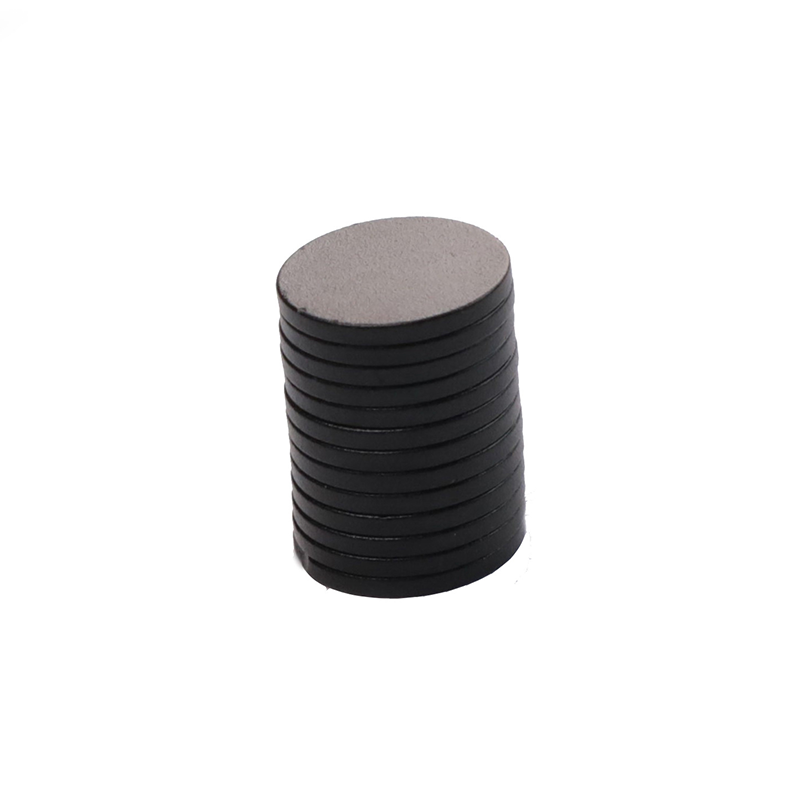
Selecting Coatings to Prevent Corrosion and Degradation
Sintered NdFeB magnets harbor a very critical physical vulnerability. Raw neodymium oxidizes rapidly upon brief exposure to normal atmospheric moisture. It turns into a crumbling, completely useless powder eventually. Therefore, applying a robust protective coating remains an absolute necessity for survival. It serves as a non-negotiable failure point in harsh manufacturing environments. You cannot deploy raw neodymium on a factory floor under any circumstances. Moisture penetrates the porous sintered structure quickly, destroying the magnetic alignment from within.
You must rely on a solid coating decision matrix for component longevity. Matching the protective layer to your exact environment guarantees reliable operational lifespan. Let us examine the three primary protective options available to engineers.
Coating Decision Matrix Chart | Coating Type | Environmental Suitability | Key Advantages |
| Ni-Cu-Ni (Nickel-Copper-Nickel) | Standard manufacturing spaces | The universal industrial standard. Provides a shiny, highly durable finish. Best for general motor assemblies. |
| Epoxy Resin | Marine or highly humid areas | Superior moisture block. Required for exposure to mild chemicals. Highly resistant to salt spray environments. |
| Zinc | Low-humidity, dry operations | Highly cost-effective alternative. Suits environments requiring lower surface friction perfectly. |
Your final coating choice dictates your project outcome directly. Tie this critical decision closely to your expected lifecycle return on investment. Better coatings mean far fewer maintenance cycles later in the product lifespan. It actively prevents premature field failures and massively expensive product recalls down the line.
Implementation Risks: Assembly, Handling, and Compliance
Bringing permanent magnets onto a busy factory floor introduces very specific hazards. Mechanical fragility tops this list of daily operational concerns. Sintered NdFeB magnets act much like fragile ceramics under physical stress. They are incredibly brittle by their very nature. You risk severe surface chipping or complete shattering during automated assembly stages. Never allow two loose magnets to snap together freely over short distances. The extreme impact force easily destroys both components instantly. It also creates dangerous high-speed shrapnel, endangering your assembly workers. You must design custom non-magnetic fixtures to control their movement safely. Guide them slowly into their final resting positions using controlled pneumatic presses.
Adhesive compatibility forms another critical implementation hurdle for engineers. Industrial adhesives must bond effectively to smooth Nickel or Epoxy outer coatings. The chemical bond must endure constant magnetic pulling forces over many years. We recommend testing various industrial epoxies or advanced cyanoacrylates thoroughly beforehand. Ensure the chosen adhesive does not degrade the protective coating chemically over time.
Regulatory and safety compliance requires strict adherence across global markets. You must ensure your raw materials meet stringent international legal standards.
- Ensure the selected material meets RoHS (Restriction of Hazardous Substances) directives completely.
- Confirm strict REACH compliance regarding chemical exposure limits during manufacturing.
- Implement proper magnetic shielding protocols for all upcoming air freight logistics.
Airlines strictly regulate active magnetic fields during standard transport operations. Unshielded pallets interfere directly with highly sensitive aircraft navigation equipment. Plan your logistics carefully to avoid unexpected shipping delays or massive customs fines.
Shortlisting Suppliers and Defining the RFQ
Selecting the right global manufacturing partner determines your ultimate project success. Your Request for Quotation (RFQ) must specify exact technical requirements clearly. Begin by defining your required machining tolerances immediately. The general industry standard typically hovers around ±0.1mm for basic shapes. However, high-precision industrial applications might require much tighter ±0.05mm dimensional tolerances. State these expectations early to filter out incapable vendors quickly.
Evaluating vendor trustworthiness requires thorough objective data review. Do not rely on flashy marketing claims alone during procurement. Demand specific demagnetization curves, commonly known as B-H curves, from the factory. You need these curves specifically for the N40 grade you intend to purchase. They prove the vendor actually understands high-level magnetic performance metrics. Furthermore, require heavily documented quality control processes before signing contracts. Look for official ISO 9001 certifications as a strict baseline standard. Demand TS 16949 compliance explicitly if you operate within the highly regulated automotive sector.
Next-step actions involve direct physical verification on your end. We highly recommend ordering a limited sample batch first. Conduct rigorous in-house thermal testing immediately upon arrival. Verify the actual functional pull force against your original engineering CAD models. Complete this physical testing thoroughly before you commit to large volume production runs.
Conclusion
Specifying an N40 magnet requires careful strategic balancing from your engineering team. You must weigh raw magnetic strength against strict thermal limits constantly. You also must ensure proper environmental protection through optimal coating selections. Making these critical choices correctly prevents catastrophic system failures later. When engineered correctly, N40 offers immense overall value. It provides one of the most reliable cost-to-performance ratios available today. It dominates the NdFeB family entirely for mid-tier power requirements. It delivers dependable holding strength without introducing unnecessary mechanical fragility into your designs. Take decisive action now to secure your next project success. We encourage you to consult directly with a specialized magnetic systems engineer. Request a custom B-H curve analysis for your specific operating temperatures today. Submit your current CAD drawings for a comprehensive technical design review immediately.
FAQ
Q: What is the exact difference between an N35 and an N40 neodymium magnet?
A: The difference lies entirely in the Maximum Energy Product (MGOe). N40 possesses roughly 40 MGOe, while N35 contains 35 MGOe. This yields a measurable increase in functional holding force. You gain stronger magnetic pull using the exact same physical footprint. It allows engineers to maintain tight spatial constraints while upgrading system power.
Q: Can an industrial N40 neodymium magnet be machined or drilled?
A: We strongly advise against any post-production machining. Drilling generates immense friction and rapid heat buildup. This localized heat causes immediate and irreversible demagnetization. Furthermore, drilling permanently breaches the vital anti-corrosion coating. All necessary shaping, drilling, and slicing must occur during the initial manufacturing stage before final magnetization.
Q: How long will an N40 magnet retain its magnetic strength?
A: Neodymium magnets boast an incredibly long operational lifespan. You must keep the magnet strictly below its maximum operating temperature. You also must ensure the protective coating remains perfectly intact. Under these ideal conditions, the material loses only a tiny fraction of one percent of its overall magnetism over 100 years.
Q: Does the shape of the N40 magnet affect its pull force?
A: Yes, physical geometry alters magnetic performance significantly. Total surface area and material thickness dictate the active magnetic circuit. The specific direction of magnetization, whether axial or diametrical, changes how flux lines interact with surrounding metals. You must calculate these geometric variables carefully to determine functional pull force accurately.