Neodymium N52 magnets represent the strongest commercially available permanent magnets today. They offer unmatched size-to-strength ratios for complex engineering challenges. However, this extreme magnetic yield introduces significant handling and structural risks during integration. Engineers, product designers, and serious fabricators constantly balance spatial constraints against required pull force. Finalizing project specifications means integrating these components without compromising safety or overall product integrity. Failing to respect the physical limits of the NdFeB alloy often leads to catastrophic part failure.
Successful implementation requires strict adherence to specialized handling protocols and appropriate installation methods. You must also develop a clear understanding of their operational and environmental limitations. This guide explores exactly how to navigate these challenges for a secure, effective design.
Key Takeaways
- Extreme Pull Force: N52 offers the highest magnetic yield but is inherently brittle; impact collisions cause shattering and hazardous shrapnel.
- Thermal Limits: Standard N52 degrades permanently at temperatures exceeding 80°C (176°F), requiring thermal evaluation before specification.
- Installation Reality: Machining or drilling neodymium destroys the protective plating and poses a fire hazard; rely on pre-cast countersunk magnets, structural housings, or industrial adhesives.
- Safety Compliance: Strict isolation protocols are required to prevent pinch injuries, electronic interference, and severe medical risks (e.g., accidental ingestion).
Framing Your Project: When to Specify Neodymium N52 Magnets
Defining your core business problem determines whether you actually need the N52 grade. Many projects function perfectly using lower grades like N35 or N42. You should specify N52 strictly when your success criteria demand maximizing holding force inside severe spatial constraints. If your design has ample physical room, using a larger N35 magnet often achieves the identical holding force safely.
The size-to-strength calculation dictates your design parameters. N52 allows you to specify a significantly smaller, lighter magnet profile. You achieve the exact same pull force as a much bulkier, lower-grade alternative. This characteristic proves invaluable for compact sensors, lightweight drone assemblies, and miniaturized mechanical latches. It frees up critical weight and space for other components.
However, you must balance cost against performance. The N52 grade commands a distinct cost premium over standard grades. Over-engineering a solution by selecting N52 introduces unnecessary financial overhead. More importantly, it drastically heightens your handling liabilities. Extra magnetic power means a higher risk of injury during assembly. We highly recommend mapping your exact force requirements before defaulting to the strongest available option.
To illustrate the performance scaling, review this baseline comparison chart evaluating relative magnetic yield:
| Magnet Grade | Relative Pull Force (Volume Adjusted) | Ideal Application Scenario |
| N35 | Baseline (100%) | Large assemblies where space is unlimited. |
| N42 | Approx. 120% of N35 | General-purpose engineering and consumer goods. |
| N52 | Approx. 145% of N35 | High-performance systems restricted by extreme spatial limits. |
Critical Safety and Handling Protocols for N52 Grades
Physical injury prevention must dictate your assembly workflow. The attraction force between two Neodymium N52 magnets increases exponentially as they approach each other. This creates a severe pinch hazard. Operators routinely underestimate the closing speed. We mandate using non-magnetic wedges, such as hardwood or high-density plastic, to separate them. You must also enforce the use of heavy-duty leather gloves when handling any piece exceeding one inch in diameter.
Shatter and shrapnel risks represent another major vulnerability. The underlying NdFeB alloy behaves like a ceramic. It remains incredibly brittle. Allowing two N52 pieces to jump across a table and collide causes violent impact forces. This kinetic energy splinters the protective plating. It often results in catastrophic shattering. Flying metallic shrapnel easily causes severe eye and skin injuries. Always secure loose pieces instantly.
Medical and compliance warnings require strict communication across your team. Strong magnetic fields directly interfere with cardiac pacemakers and implanted defibrillators. Maintain a minimum safe distance of 12 inches for personnel carrying medical implants. Additionally, accidental ingestion creates a severe medical emergency. Swallowed magnets attract across intestinal walls. This causes tissue necrosis and requires immediate surgical intervention. Keep them strictly away from children and unmonitored environments.
Establishing proper storage best practices extends product lifespan and protects your facility. Implement the following guidelines:
- Use Keeper Plates: Always attach thick iron strips across the poles. This contains the magnetic flux safely.
- Electronic Isolation: Store inventory far away from sensitive electronic measurement tools and unshielded hard drives.
- Hazard Zoning: Clearly mark your workspace. Use high-visibility tape to designate magnetic field hazard zones during active assembly.
- Climate Control: Keep the storage room dry to prevent microscopic moisture from penetrating scratched coatings.
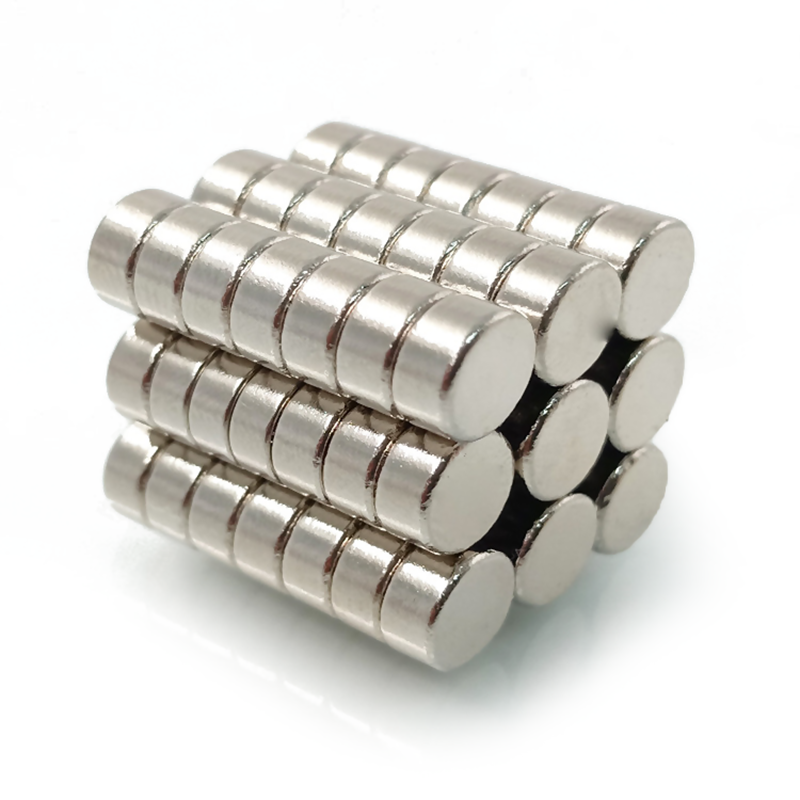
Engineering and Installation Best Practices
Choosing between adhesives and mechanical fastening depends heavily on your sheer load requirements. For surface mounting, industrial-grade epoxy and specialized cyanoacrylates perform exceptionally well. However, you must prep the surface correctly. Lightly clean the plating using isopropyl alcohol to remove factory oils. Never sand the surface heavily. Removing the coating exposes the raw alloy to immediate oxidation.
Mechanical fastening offers superior reliability for high-stress applications. We strongly recommend specifying pre-manufactured countersunk N52 magnets. These allow you to secure the piece using standard screws. You must exclusively use non-magnetic fasteners. Brass or 316 stainless steel screws work perfectly. Using standard iron screws alters the magnetic field. Iron fasteners can also attract the magnet during installation, causing sudden impacts.
Protecting the magnet from direct impact requires robust enclosures and coverings. Repeated mechanical strikes degrade the internal structure over time. Engineers utilize several effective housing techniques:
- Friction-Fit 3D Printed Housings: Print a precise cavity using ABS or PETG plastic. Press-fit the piece inside to absorb external shocks.
- Woodworking Embedment: Mill a shallow recess. Drop the piece inside and cover it entirely using wood filler or a thin veneer layer.
- Over-Molding: Encapsulate the assembly within a rubber or polyurethane casting to provide ultimate environmental and impact protection.
You must strictly heed the machining warning. Never attempt to drill, saw, or tap a finished neodymium piece. Machining destroys the anti-corrosion coating entirely. More critically, it generates fine neodymium dust. This dust is highly pyrophoric. It ignites spontaneously at relatively low temperatures. Machining accidents routinely cause severe workshop fires. If you need a specific hole, you must order it manufactured that way directly from the factory.
Mitigating Environmental and Operational Risks
Thermal demagnetization destroys more projects than physical breakage. Every magnetic material possesses a strict operating temperature ceiling. Standard N52 degrades permanently when temperatures exceed 80°C (176°F). Once the internal domain structure collapses from heat, it never recovers its original strength. You cannot reverse thermal damage by simply cooling it down.
You must evaluate your high-heat environments rigorously. Electric motors, exhaust sensors, and enclosed industrial electronics routinely surpass the 80°C threshold. If your thermal evaluation indicates elevated temperatures, you must pivot away from standard N52. Instead, specify High-Temp grades. An N42SH sacrifices a small amount of raw pull force but survives operational temperatures up to 150°C (302°F).
Corrosion poses the second greatest environmental threat. Raw NdFeB rusts rapidly when exposed to ambient moisture. Proper coating selection dictates the lifespan of your installation. Manufacturers apply various protective layers depending on the final application.
Evaluate these standard coatings based on your project environment:
| Coating Type | Primary Characteristics | Best Application Environment |
| Ni-Cu-Ni (Nickel) | Smooth, metallic finish. Good mechanical durability. | Standard indoor use and enclosed mechanical assemblies. |
| Epoxy (Black/Grey) | Superior salt and moisture resistance. Slightly softer. | High humidity zones, marine components, or mild outdoor exposure. |
| Plastic / Rubber Coated | Excellent impact absorption. Prevents slipping. | Whiteboard use, fragile mounting surfaces, or rough handling scenarios. |
A common mistake involves ignoring the coating thickness. Rubber coatings add physical distance between the magnetic pole and the target surface. Because magnetic force drops exponentially over distance, a thick rubber coat noticeably reduces the effective holding power. Calculate this air-gap penalty during your initial design phase.
Sourcing and Shortlisting N52 Magnets for Your Project
Evaluating supplier transparency ensures you receive genuine performance. Counterfeit or mislabeled grades flood the market. You must learn how to spot exaggerated pull-force claims. Reliable suppliers always provide objective pull-force data based on standardized testing. They measure vertical pull against a half-inch thick, flat 1018 steel plate. If a supplier promises unrealistic numbers without detailing their testing methodology, seek an alternative vendor.
Precision engineering demands strict dimensional control. Outline the importance of checking manufacturing tolerances before ordering bulk quantities. The industry standard tolerance sits typically around ±0.002 inches or ±0.05 millimeters. If your design relies on a tight press-fit inside a machined aluminum housing, a slight deviation causes either a loose rattle or a shattered component during insertion.
Your next-step actions should focus on empirical validation. We strongly encourage buyers to order a small prototype batch first. Validate the installation method and test the real-world sheer force. Direct pull force measures straight vertical resistance. However, most real-world applications fail via sheer force (sliding sideways). Sheer force typically equals only 20% to 30% of the stated direct pull force. Testing a prototype prevents you from discovering this fundamental physics limitation during full-scale production.
Conclusion
Leveraging the immense power of Neodymium N52 magnets requires a careful balancing act. You harness extreme holding force while continuously designing around their physical brittleness and thermal limits. Success demands strict handling protocols and smart, impact-resistant enclosures. Ignoring these physical realities leads to shattered components or demagnetized products.
Take actionable steps today to secure your design. Consult directly with a magnet specialist to discuss custom shapes or specialized coatings. Verify your sheer load requirements through physical prototyping. Browse a vetted catalog of N52 options to order your first test batch and build your assembly right the first time.
FAQ
Q: Can you drill a hole in an N52 neodymium magnet?
A: No. Drilling destroys the protective coating, leading to rapid corrosion. The underlying alloy is extremely brittle and will likely shatter under the drill bit. Furthermore, the drilling process generates highly flammable neodymium dust, posing a severe workshop fire hazard. Always purchase pre-drilled or countersunk variants directly from the manufacturer.
Q: How do you safely separate two stuck N52 magnets?
A: Never try to pull them straight apart. Use the "slide, don't pull" method. Place the bottom piece against the firm edge of a sturdy table. Press down on the top piece and forcefully slide it sideways until it clears the edge. Use a wooden wedge to prevent them from snapping back together.
Q: Why is my N52 magnet losing its strength?
A: The most common culprit is thermal demagnetization. If the ambient temperature exceeded 80°C (176°F), the internal magnetic domains suffered permanent collapse. Severe physical impact also disrupts magnetic alignment. Finally, check for a breached coating; internal corrosion degrades performance over time.
Q: What is the difference in pull force between N42 and N52?
A: When comparing two magnets of the exact same size, the N52 grade provides approximately 15% to 20% more pull force than the N42. This allows you to use a physically smaller N52 piece to achieve the same strength, saving vital space in compact assemblies.