Designing robust mechanical systems requires exact component matching. Defaulting to the cheapest magnet grade risks catastrophic performance failures under heavy operational loads. Conversely, over-specifying premium grades needlessly inflates your material expenses. It also introduces severe thermal instability into your engineering design.
Engineers face a constant dilemma balancing magnetic density against structural reliability. A slight miscalculation in grade selection dictates motor efficiency. It directly impacts sensor accuracy and determines overall product lifespan. Missing the mark leads to unusually bulky assemblies. It practically guarantees unreliable field operations when machinery encounters mechanical stress.
The N40 grade frequently emerges as the ultimate engineering sweet spot for heavy applications. It offers a calculated equilibrium of flux density, thermal resilience, and manufacturing efficiency. We present a rigorous framework for evaluating these components. You will learn exactly when to specify an Industrial N40 Neodymium Magnet over alternative neodymium grades.
Key Takeaways
- The N40 Baseline: Yields a Maximum Energy Product (BHmax) of 38-41 MGOe, ideal for reducing component size without absorbing premium grade costs.
- Cost vs. Performance: N40 delivers approximately 14% more magnetic strength than N35, often allowing engineers to miniaturize assemblies with minimal cost impact.
- Thermal Realities: Standard N40 degrades at 80°C; industrial applications frequently require high-temperature suffixes (N40H, N40SH, N40UH) to prevent irreversible demagnetization.
- Over-Engineering Risks: Specifying N50+ grades for rugged industrial use often introduces brittleness and thermal vulnerability that N40 avoids.
The Business Case for Precise Magnet Grade Selection
Magnet selection directly dictates motor efficiency, sensor accuracy, and overall product lifespan. You cannot afford to guess during the prototyping phase. Success criteria demand evaluating grades based on lifecycle performance and supply chain availability. You must also consider specific operational thresholds. These critical thresholds include ambient temperature, mechanical vibration, and moisture exposure. Ignoring these factors leads to rapid component degradation.
The risk of miscalculation remains incredibly high in modern manufacturing. Marginal savings on lower grades usually necessitate larger form factors. This forces your engineering team to redesign housings. They must add unnecessary weight to accommodate weaker magnetic fields. A weaker magnet also requires more copper windings in motors to achieve target torque. This creates a cascading weight problem.
Meanwhile, premium grades cause frustrating supply chain bottlenecks. They also invite catastrophic thermal failures in harsh operating environments. Relying on an Industrial N40 Neodymium Magnet often solves these compounding variables entirely. It bridges the gap between raw power and dependable availability. You secure a reliable component that fits within strict physical and financial boundaries.
Defining the Industrial N40 Neodymium Magnet
We must establish the material science baseline first. The number "40" represents the Maximum Energy Product. It signifies roughly 40 MegaGauss-Oersteds (MGOe). This specific metric indicates the overall magnetic energy stored within the sintered material. It serves as the primary indicator of absolute strength. The performance characteristics reveal why this specific grade stands out among alternatives.
- Remanence (Br): Ranges from 12.5 to 12.8 KGs. This dictates the residual magnetic field strength remaining after magnetization.
- Coercivity (Hcb): Measures around 11.4 KOe. It offers high resistance to demagnetization under normal physical conditions.
- Intrinsic Coercivity (Hcj): Ensures the magnetic field stays completely stable against external opposing fields.
Typical applications rely heavily on this balanced profile. You will find them inside precision servo motors and massive magnetic separators. Wind turbine generators use them to maximize energy conversion. Heavy-duty magnetic couplings also use them extensively. In these scenarios, internal space remains tightly constrained. However, the extreme, brittle strength of an N52 grade proves entirely unnecessary.
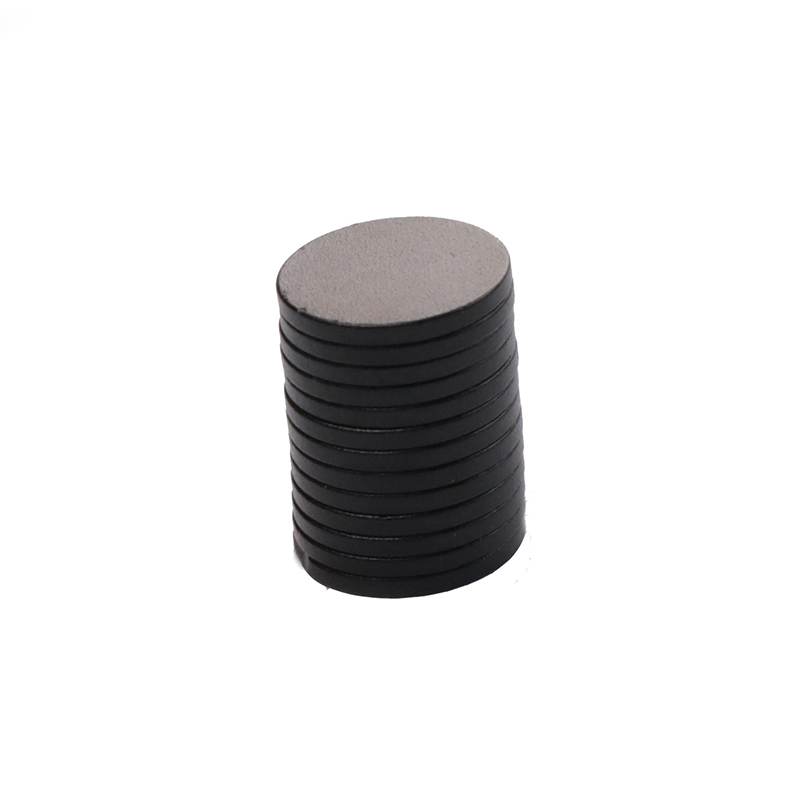
N40 vs. Lower Grades (N35, N38): When to Upgrade
The footprint factor drives many critical engineering decisions today. Upgrading to an Industrial N40 Neodymium Magnet allows for a noticeably smaller volume. You achieve the exact same holding force as a larger N35 counterpart. When evaluating overall assembly weight and space, upgrading makes perfect sense. We highly recommend N40 when industrial tooling requires a tighter spatial footprint.
Modern motor designs simply cannot accommodate bulky, inefficient components. The cost differential reality surprises many procurement teams. The price gap between N35 and N40 continues narrowing globally. You gain a massive 10-15% performance boost in magnetic flux. This structural gain easily justifies the fractional material increase. High-volume production runs benefit the most from this streamlined approach.
| Magnet Grade | Maximum Energy Product (BHmax) | Remanence (Br) | Relative Volume Required |
| Grade N35 | 33 - 35 MGOe | 11.7 - 12.1 KGs | 100% (Baseline Size) |
| Grade N38 | 36 - 38 MGOe | 12.2 - 12.5 KGs | ~92% of Baseline |
| Grade N40 | 38 - 41 MGOe | 12.5 - 12.8 KGs | ~86% of Baseline |
As the table demonstrates, shifting to N40 cuts physical volume requirements significantly. This volume reduction allows you to shrink motor housings. You use less steel, less copper, and less packaging material. The slight upgrade in magnet grade pays dividends across the entire manufacturing bill of materials.
N40 vs. High-End Grades (N45, N48, N52): Avoiding Over-Engineering
Engineers often fall into the dangerous N52 trap. A common misconception insists stronger always equals better. This ignores practical physics entirely. Grade N52 is highly susceptible to heat degradation. It also proves much more physically brittle than lower grades. The dense sintering process required for N52 compromises its structural integrity under physical shock.
Machinability and durability matter heavily on the assembly line. An N40 block or disc is marginally more stable. It actively resists micro-fractures during automated industrial assembly. Robotic arms handle these components at high speeds. Fast insertion causes impacts. Ultra-high grades often chip or shatter under this mechanical stress. Minor chips compromise the protective coating, leading to rapid oxidation.
Diminishing returns define the leap to high-end grades. Moving from N40 to N52 dramatically increases unit expense. Yet, the practical performance gains in standard motors remain negligible. Your stator core may reach magnetic saturation before utilizing the extra flux. You pay a massive premium for unnecessary power. We advise avoiding this over-engineering trap whenever possible.
Temperature Tolerance and Environmental Survival (The Suffix Matters)
A massive blind spot exists in raw material sourcing. A standard neodymium block loses permanent magnetism past 80°C (176°F). This temperature is easily reached inside enclosed motor housings. You must decipher industrial suffixes to guarantee survival. Suffixes denote specialized trace elements like Dysprosium. These elements increase heat resistance.
- N40M (Medium): Operational safely up to 100°C. Ideal for well-ventilated electronics.
- N40H (High): Operational safely up to 120°C. Common in standard industrial motors.
- N40SH (Super High): Operational safely up to 150°C. Used in high-speed rotors.
- N40UH / N40EH: Extreme heat applications spanning 180°C to 200°C. Reserved for heavy automotive and aerospace use.
Coating and compliance ensure long-term functionality. Industrial environments require specific plating options to prevent rapid oxidation. Nickel-Copper-Nickel (Ni-Cu-Ni) serves as the standard defense for dry environments. Epoxy coatings excel in humid or highly corrosive environments. They prevent oxidation and mechanical degradation over time. You must factor coating thickness into your air gap calculations.
Procurement Framework: Shortlisting and Validation Strategy
Proper sourcing demands a strict, repeatable methodology. Relying solely on supplier datasheets invites inconsistency. You need a validation framework to protect your production line.
- Determine the Operational Ceiling: Map exact continuous operating temperatures. Identify peak thermal spikes before selecting a grade suffix. Heat is the ultimate enemy of permanent magnets.
- Prototype with N40: Use it as your primary testing baseline. Scale up to N45 if field strength fails your benchmarks. Scale down to N35 if surplus strength is recorded.
- Supplier Transparency: Demand complete second-quadrant BH curve reports. Request demagnetization curves at your specific operating temperatures. Room-temperature specifications tell an incomplete story.
- Tolerance Mapping: Ensure the supplier consistently meets strict dimensional tolerances. Automated insertion requires precise geometries to prevent chipping. Specify tolerances of +/- 0.05mm for critical fits.
By following this framework, teams avoid costly tooling revisions. You lock in predictable performance metrics early in the cycle. Prototyping properly saves months of engineering rework later.
Conclusion
The precise selection of magnetic components dictates system viability. An Industrial N40 Neodymium Magnet represents an optimal intersection for modern design. It seamlessly balances raw holding force, thermal flexibility, and budget predictability. You achieve this flexibility through appropriate temperature suffixes and smart coating choices.
- Do not select grades in a vacuum; always cross-reference mechanical constraints with thermal loads.
- Prioritize N40 as your primary prototyping baseline to gauge actual flux requirements.
- Verify supplier data beyond standard room-temperature BH curves to prevent heat failures.
- Account for coating thickness when calculating the physical air gap in motors.
Contact engineering support today. Request a custom magnetic circuit analysis for your next project. Secure N40 sample kits to begin your prototype testing phase immediately. Precise validation now guarantees flawless performance later.
FAQ
Q: Is an N40 magnet significantly stronger than an N35?
A: Yes. It delivers roughly a 14% increase in the maximum energy product. This translates directly to higher practical pull force. It also generates increased motor torque within the exact same physical dimensions. Engineers use this extra strength to downsize components without sacrificing mechanical output.
Q: Can I replace an N52 magnet with an N40 to save costs?
A: Yes, but you must account for the size-to-strength ratio. An N40 produces less flux density per cubic millimeter. To match the exact output of an N52, you must increase the physical volume of the N40 magnet. If your assembly space allows for a larger magnet, this swap saves considerable money.
Q: What happens if an N40 magnet exceeds its maximum operating temperature?
A: It depends on the heat exposure. A reversible loss means the magnet weakens temporarily but recovers fully upon cooling. If it crosses the critical threshold, irreversible demagnetization occurs. The magnet permanently loses strength. You would need to physically remagnetize the material to restore its original field.
Q: Which coating is best for N40 magnets in industrial automation?
A: Standard Nickel-Copper-Nickel (Ni-Cu-Ni) works best for dry, indoor automation machinery. If your equipment operates in wet, humid, or washdown environments, choose an Epoxy coating. Epoxy provides superior moisture resistance. Zinc plating offers a budget-friendly option for basic, low-humidity applications with minimal exposure risks.