Standard neodymium magnets suffer irreversible flux loss above 80°C. This specific thermal degradation causes catastrophic failure in advanced motors. Industrial sensors also fail rapidly when exposed to extreme heat. You can solve this complex engineering challenge using the High-Temperature Resistant N35SH Magnet. This material perfectly balances moderate magnetic strength (N35) and elevated thermal stability. The SH grade safely operates in environments reaching up to 150°C. We designed this guide to provide procurement managers and engineers an evidence-based framework. You will learn how to evaluate suppliers and validate technical claims accurately. We will also show you how to mitigate critical supply chain risks effectively. Choosing the correct thermal grade prevents severe application failures down the line.
Key Takeaways
- Thermal Threshold: N35SH magnets offer a maximum operating temperature of 150°C (302°F) due to a higher Intrinsic Coercivity (Hcj ≥ 20 kOe).
- Supplier Verification: Credible suppliers must provide elevated-temperature demagnetization curves and verifiable thermal shock test reports.
- Coating Durability: High-temperature applications require coatings evaluated for thermal expansion compatibility (e.g., specific Epoxy or specialized NiCuNi).
- Procurement Strategy: Sourcing should follow a strict prototype-to-production path, utilizing initial sample testing to validate magnetic consistency across batches.
1. The Business Case for the High-Temperature Resistant N35SH Magnet
Engineers often specify standard N35 grades for initial designs. These baseline components quickly demagnetize in high-heat environments. Automotive stators and heavy machinery generate immense thermal loads during continuous operation. Standard grades fail entirely under these extreme conditions. These failures lead directly to massive product recalls. Manufacturers subsequently face severe warranty claims when motors lose efficiency. You must avoid these reliability traps by specifying the correct material.
The SH grade offers a distinct operational advantage for demanding applications. Producers chemically modify the neodymium matrix during the manufacturing process. They add heavy rare earth elements like Dysprosium or Terbium into the alloy. This specific addition drastically increases the Intrinsic Coercivity (Hcj) of the material. High coercivity secures continuous magnetic performance up to 150°C. It prevents the internal magnetic domains from shifting under thermal stress.
You must evaluate the N35SH grade against available market alternatives. When evaluated against standard N35, the SH variant provides exponentially better thermal stability. Standard grades simply cannot survive automotive engine bays or industrial ovens. You might consider UH or EH grades for even higher heat applications. However, the SH grade remains highly effective when temperatures stay below 150°C. It prevents unnecessary over-engineering. You could also evaluate Samarium Cobalt (SmCo) magnets for high-heat environments. A High-Temperature Resistant N35SH Magnet yields a much higher maximum energy product (BHmax). It performs better mechanically, assuming 150°C is your absolute ceiling.
| Magnet Grade | Max Operating Temp | Intrinsic Coercivity (Hcj) | Application Suitability |
| Standard N35 | 80°C (176°F) | ≥ 12 kOe | Consumer electronics, basic sensors |
| N35SH | 150°C (302°F) | ≥ 20 kOe | Automotive motors, industrial machinery |
| N35UH | 180°C (356°F) | ≥ 25 kOe | Extreme heat environments, heavy generators |
| SmCo (Typical) | 250°C - 350°C | Varies greatly | Aerospace, military applications |
2. Key Technical Evaluation Criteria for Sourcing
You need strict parameters when evaluating potential manufacturing partners. Verifying magnetic specifications requires exact and reliable data. Do not accept generic room-temperature testing documents from any supplier. You must request batch-specific Demagnetization Curves (B-H curves) for your shipments. Ensure they conduct these specific tests exactly at 150°C. Standard 20°C curves hide severe high-temperature vulnerabilities.
You must also check the expected Irreversible Flux Loss percentages carefully. Acceptable industry limits typically fall below 5% after thermal exposure. If the flux loss exceeds this threshold, the motor will underperform permanently.
Tolerances and machining capabilities separate basic providers from expert manufacturers. Assess their ability to maintain strict dimensional tolerances consistently. High-performance rotors usually require ±0.05mm physical precision. The machining process must never compromise the underlying grain structure. Poor grinding techniques generate excessive localized heat. This friction degrades magnetic performance before assembly even begins.
Coating and surface treatment suitability also demands careful evaluation. You must match coating options strictly to your operating environments. Corrosive environments require different protections than dry, hot spaces. High-temperature applications cause significant thermal expansion cycles. We recommend following these verification steps:
- Require specific Salt Spray Test (SST) documentation covering at least 72 hours.
- Demand Pressure Cooker Test (PCT) raw data to verify deep environmental resistance.
- Verify the coating does not peel or blister under intense heat stress.
- Confirm structural compatibility between epoxy layers and the underlying neodymium matrix.
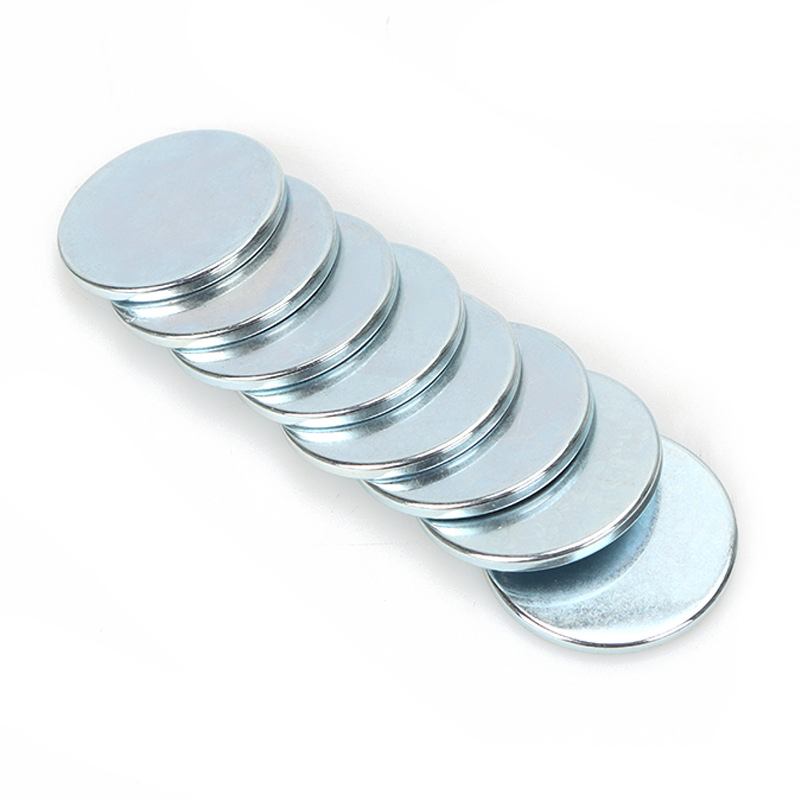
3. How to Audit and Shortlist Magnet Suppliers
You must verify actual manufacturing capabilities during the initial audit phase. Differentiate genuine manufacturers from standard trading companies immediately. Look for direct factory control over raw material mixing. They must manage their own pressing and sintering operations entirely in-house. Outsourced sintering introduces severe quality variations across production batches.
Quality management and compliance systems are completely non-negotiable for serious engineering projects. You should evaluate their certifications using the following criteria:
- Verify mandatory ISO 9001 certifications to ensure basic quality control foundations.
- Check for strict RoHS and REACH compliance to meet global environmental standards.
- Demand IATF 16949 certification for any automotive or aerospace projects.
- Review past internal audit logs to confirm ongoing operational transparency.
In-house testing infrastructure determines a supplier's true reliability. Shortlist only those vendors equipped with advanced laboratory tools. They need in-house Helmholtz coils to measure magnetic moments accurately. Hysteresisgraphs are absolutely mandatory for generating accurate elevated-temperature B-H curves. Climate-controlled aging ovens simulate long-term thermal degradation over thousands of hours. If they outsource these tests, you risk catastrophic shipping delays and forged data.
Traceability ensures full accountability across the entire supply chain. The supplier must utilize a robust ERP (Enterprise Resource Planning) system. They should track raw rare-earth material lots diligently. You need a clear data link from raw powders to the finished magnet batch. This traceability allows rapid root-cause analysis if field failures occur.
4. Implementation Risks and Quality Control Pitfalls
High-temperature grades require specific heavy rare earth elements to function properly. Dysprosium pricing introduces significant market volatility into your supply chain. You must carefully navigate this raw material fluctuation during contract negotiations. Transparent suppliers index their quotes directly to raw material markets. This practice protects both parties from sudden economic shifts.
Thermal shock failures present another hidden danger for complex systems. Magnets surviving static heat may still fail under rapid temperature cycling. Sudden drops or spikes cause micro-fractures inside the brittle material. These fractures propagate rapidly under mechanical stress. Ensure their thermal shock testing matches your specific operational profile exactly.
Complex mechanical assemblies require precise magnetization alignment. Multi-pole rotors and Halbach arrays depend on flawless directional charging. Magnetization direction errors destroy motor efficiency entirely. Specify your exact angle requirements on all engineering drawings clearly. Verify these critical angles carefully during the first article inspection phase.
Finally, adhesive degradation ruins perfect magnetic selections constantly. Sourcing the right magnet is only half the battle. Your bonding adhesives must also withstand continuous 150°C exposure without degrading. Standard epoxies turn brittle and crack under high heat. High-speed rotors will violently eject loose magnets into the stator housing. Always test your complete assembly under maximum load.
5. Strategic Sourcing and Sampling Framework
A structured sampling framework minimizes production risks drastically. Follow these precise steps for optimal procurement results.
Step 1: Technical Qualification. Submit comprehensive 2D and 3D drawings to your shortlisted vendors. Include exact operational temperatures and minimum flux requirements. Detail all acceptable dimensional tolerances clearly on the schematics. Provide environmental exposure details to assist in coating selection.
Step 2: Prototyping and First Article Inspection (FAI). Order a small initial sample batch before committing further. Conduct independent thermal aging tests inside your own laboratory facility. Compare your results directly against the supplier’s Certificate of Analysis (CoA). If the data deviates, halt the qualification process immediately.
Step 3: Pilot Run (Low Volume). Order a limited production run to test manufacturing scalability. Test thoroughly for batch-to-batch magnetic consistency. Assess the supplier's lead-time adherence rigorously during this phase. Check their packaging quality carefully upon arrival. Air freight requires proper magnetic shielding to meet strict aviation safety regulations.
Step 4: Mass Production. Establish a comprehensive Service Level Agreement (SLA). Lock in tolerance margins and specific packaging standards legally. Define raw material indexing formulas to stabilize long-term agreements. Regular audits should continue even after mass production begins.
Conclusion
Sourcing reliable high-temperature resistant components requires moving beyond basic stated specifications. You must verify actual thermal degradation data through rigorous testing. Assessing the supplier's internal testing infrastructure ensures your long-term success. Selecting the right manufacturing partner actively mitigates severe application failure risks. Do not compromise on traceability or dimensional tolerances. We encourage engineers and procurement specialists to act proactively. Submit your technical drawings and temperature requirements to qualified suppliers today. Request a targeted capability review and secure your initial sample batch.
FAQ
Q: What is the maximum operating temperature of an N35SH magnet?
A: The N35SH grade supports a maximum operating temperature of 150°C (302°F). However, the exact shape of the magnet alters this threshold slightly. The Permeance Coefficient (Pc) dictates actual thermal limits in real-world applications. Thin magnets may demagnetize at slightly lower temperatures than thick ones.
Q: How does N35SH differ from standard N35?
A: The SH grade features a significantly higher Intrinsic Coercivity (Hcj) than the standard grade. Standard N35 magnets suffer permanent demagnetization when temperatures exceed 80°C. The SH grade utilizes specific chemical modifications to resist thermal stress up to 150°C securely.
Q: Can an N35SH magnet regain its strength if it overheats?
A: It depends on the heat exposure. Reversible losses recover naturally upon cooling. However, exceeding the 150°C threshold causes irreversible flux loss. You cannot recover irreversible losses by simply cooling the magnet. The component requires complete remagnetization in a specialized facility to restore its original strength.
Q: Why is the N35SH grade more expensive than standard N35?
A: Manufacturers must add heavy rare earth elements to the alloy to elevate the coercivity. Elements like Dysprosium and Terbium are scarce and expensive. These specific additives are mandatory to withstand high temperatures without losing magnetic strength.
Q: What is the minimum order quantity (MOQ) for custom N35SH magnets?
A: Minimum order quantities vary widely based on production methods. Block slicing requires lower MOQs, while custom pressing demands larger runs. A realistic baseline often starts around 1,000 units. Buyers should negotiate small prototype batches prior to making full production commitments.