Specifying permanent magnets for thermal environments requires balancing magnetic strength, temperature thresholds, and overall production efficiency. Engineers constantly face complex thermal challenges in modern electro-mechanical systems. You need robust magnetic fields to drive system performance forward. However, extreme heat degrades most common magnetic alloys rapidly, causing sudden system failures. Enter the N35SH neodymium magnet. It serves as an excellent middle-ground solution across various industries. You can deploy it safely in applications operating near 150°C (302°F). It delivers high energy density while avoiding the extreme constraints of exotic alloys. This comprehensive guide provides an objective, data-backed evaluation. We explore exactly where the High-Temperature Resistant N35SH Magnet succeeds. We also highlight where it fails under severe thermal stress. You will learn when to specify this material confidently. We also explain when you must pivot to alternative options like SmCo or UH-grade NdFeB. Expect clear, actionable insights to optimize your next motor or sensor design project.
Key Takeaways
- Thermal Ceiling: The "SH" (Super High) designation caps safe continuous operation at roughly 150°C, with irreversible demagnetization occurring beyond this threshold.
- Cost-to-Performance: N35SH offers a strong economic advantage over Samarium Cobalt (SmCo) and UH/EH neodymium grades, provided environmental variables are strictly controlled.
- Risk Factors: Thermal cycling, peak temperature spikes, and temperature coefficients of Br (remanence) must be accounted for in the initial motor or sensor design phase.
- Ideal Use Cases: Best suited for industrial servomotors, automotive sensors, and magnetic couplings where temperatures are elevated but predictably capped.
Defining the Baseline: What Makes N35SH a "High-Temperature" Grade?
Decoding the Spec
Engineers rely on standardized nomenclature to understand fundamental magnetic limits. The "N35" portion indicates a Maximum Energy Product (BHmax). This specific value sits roughly at 35 MGOe. It defines the overall magnetic strength and energy density available for work. The "SH" designation stands for Super High. It indicates an Intrinsic Coercivity (Hcj) of 20 kOe or greater. High intrinsic coercivity allows the crystalline structure to resist demagnetization under severe stress. Standard N, M, or H grades lose magnetic flux much earlier in the heating cycle. You get a much tougher thermal profile from SH materials. This robust coercivity acts as an invisible shield against thermal degradation. It ensures long-term stability in demanding industrial environments.
Operational Thresholds
We must define the hard limits clearly to prevent catastrophic failures. The maximum operating temperature stops strictly at 150°C. You cannot exceed this continuous exposure limit without risking permanent damage. Conversely, the Curie Temperature sits much higher, generally around 340°C. At the Curie point, the metallurgical alloy loses all magnetic properties entirely. Do not confuse these two critical figures during the design phase. The operational maximum represents your practical engineering ceiling. The Curie temperature merely serves as a theoretical absolute limit. Operating anywhere near the Curie point guarantees immediate failure for NdFeB alloys.
Success Criteria
A successful implementation depends heavily on strict environmental controls. You must maintain the operating temperature safely below the 150°C threshold at all times. Localized eddy current heating adds hidden thermal loads to your system. Rapid switching frequencies create significant internal heat within the rotor. Engineers must calculate these internal losses carefully. Keeping the internal core below the critical thermal cliff ensures long-term reliability. Advanced cooling jackets or forced air ventilation often prove necessary. Proper thermal management guarantees the magnetic circuit performs as simulated.
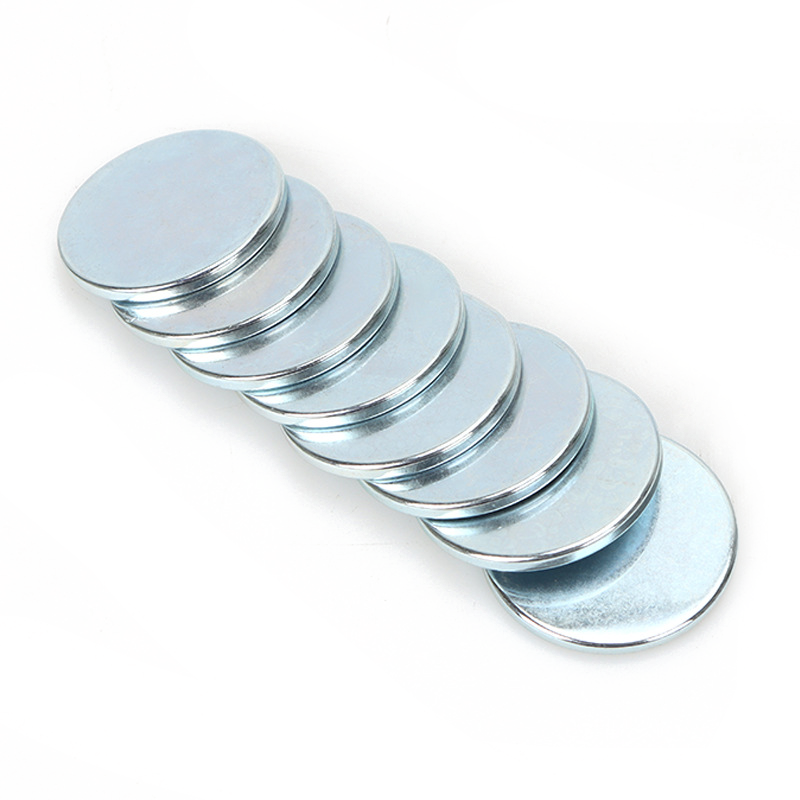
Pros of Selecting a High-Temperature Resistant N35SH Magnet
Cost-Efficiency in the 150°C Window
This specific grade provides incredibly strong economic advantages for large-scale production. Raw material processing requires fewer heavy rare earth elements to achieve the SH rating. It avoids the heavy-rare-earth (HRE) dependency typical of UH, EH, or AH grades. Dysprosium and Terbium remain notoriously scarce and subject to market volatility. Samarium Cobalt (SmCo) relies on highly constrained global supply chains and costly refining methods. You save significant material resources by utilizing SH neodymium instead. The cost-to-performance ratio peaks perfectly right around the 150°C operational window. Selecting this grade keeps project budgets manageable while satisfying technical demands.
Superior Energy Density vs. Legacy Alternatives
Mechanical engineers love neodymium alloys for their sheer volumetric strength. It delivers significantly higher magnetic output per cubic centimeter than older technologies. Legacy Alnico and Ferrite materials fall far behind in sheer energy density. You can achieve highly aggressive miniaturization in your new designs. Smaller rotors directly reduce overall system weight and mechanical inertia. Actuator designs become more compact, efficient, and highly responsive to control signals. You extract maximum holding torque from an absolute minimum physical footprint. This density advantage enables sleek, modern robotic joints and streamlined automotive sensors.
Reliable Supply Chain
Manufacturing availability matters greatly when locking in long-term production schedules. N35SH operates as a widely standardized industrial specification worldwide. Global material suppliers produce it continuously in massive commercial volumes. This broad market availability reduces raw material lead times significantly. Procurement teams face far fewer sourcing bottlenecks compared to exotic aerospace alloys. You can scale smoothly from initial prototype runs to full mass production. Predictable delivery schedules keep factory assembly lines moving without costly interruptions.
Predictable Machinability
The manufacturing phase involves slicing, shaping, and coating the raw magnetic alloy. Standard NdFeB alloys respond predictably to modern industrial machining techniques. We find it much easier to slice and grind into complex geometries. Highly brittle alternative materials like SmCo chip, flake, or fracture easily during handling. Predictable machining properties directly reduce costly factory scrap rates. Coating adhesion processes also work consistently well on these prepared surfaces. You ultimately achieve higher production yields during the final motor assembly stages.
Cons and Engineering Risks in Thermal Applications
Strict 150°C Demagnetization Cliff
Pushing material limits carries significant danger in dynamic environments. Exposure to temperatures exceeding the operational limit causes immediate, hidden harm. The material experiences irreversible flux loss at the microscopic level. It will not recover its original strength once cooled back down to room temperature. This silent failure requires complete assembly remagnetization or physical component replacement. You must map internal thermal peaks carefully using advanced sensors. A single severe overheat event completely destroys system calibration and positional accuracy.
Negative Temperature Coefficient of Remanence (α)
Magnetic field strength decreases temporarily as ambient heat rises in the system. This reversible performance drop happens predictably, even well below the 150°C mark. Engineers use the Temperature Coefficient of Remanence (α) to calculate this temporary degradation. You must intentionally over-spec the magnet's strength at room temperature. A stronger initial field guarantees you maintain sufficient torque at peak heat. Failing to account for this coefficient leaves high-temperature sensors weak and unresponsive. Always plan for reduced signal output and lower holding force at operating temperatures.
Thermal Cycling Fatigue
Harsh industrial environments rarely hold perfectly steady ambient temperatures. Repeated, rapid shifts cause compounding physical stress over time. Moving quickly from freezing ambient conditions to peak operational heat strains the exterior surface. Protective metallic layers like Ni-Cu-Ni expand at different rates than the inner core. This thermal expansion mismatch potentially leads to microscopic surface cracking. Micro-cracks easily allow atmospheric moisture to reach the vulnerable NdFeB core. Subsequent rapid oxidation degrades the core material and weakens the entire assembly.
Vulnerability to Opposing Magnetic Fields
Extreme heat heavily compromises the alloy's intrinsic coercivity. At elevated temperatures, the material struggles against external demagnetizing fields. Electrical stator coils generate incredibly strong opposing forces during heavy motor operation. High internal heat drastically reduces the magnet's baseline resistance to these external fields. Room-temperature specification sheets often look deceptively safe to inexperienced designers. You must simulate these opposing electromagnetic fields at maximum operating heat. Overlooking this complex interaction leads to unexpected motor stalling or permanent power loss.
Shortlisting Logic: N35SH vs. SmCo and UH/EH Grades
When to Stick with N35SH
You should select this baseline grade confidently under the following specific conditions:
- Your application consistently maxes out between 120°C and 140°C.
- You have robust, active thermal management systems actively cooling the assembly.
- Strict economic constraints completely rule out premium, exotic materials.
- Volumetric miniaturization remains a critical priority for the mechanical design.
- The environment does not expose the components to highly corrosive chemicals.
When to Upgrade to N35UH or N35EH
Sometimes, the standard "SH" rating falls just short of safety margins. You must upgrade for tougher, more volatile environments:
- Operating temperatures frequently spike to 180°C (UH grade) or 200°C (EH grade).
- Your motor system requires much higher tolerance for internal eddy current heating.
- You want to improve safety margins without transitioning to a completely different alloy family.
- You need high baseline energy density alongside greatly extended thermal limits.
- High-frequency switching drives massive internal thermal loads.
When to Pivot to Samarium Cobalt (SmCo)
Certain extremes demand entirely different material sciences to guarantee safety:
- Continuous heavy operation easily exceeds 200°C and pushes up to 350°C.
- Absolute corrosion resistance stands as a mandatory, non-negotiable requirement.
- Your chemical environment prevents the use of plated components. SmCo contains no reactive iron.
- Sensitive aerospace or advanced medical instrumentation requires exceptional temperature stability.
- Radiation exposure might degrade standard neodymium performance over time.
Material Comparison Summary Chart
| Material Grade | Max Operating Temp (°C) | Relative Energy Density | Corrosion Resistance |
| N35SH | 150 | Very High | Low (Needs Coating) |
| N35UH / EH | 180 - 200 | Very High | Low (Needs Coating) |
| Samarium Cobalt (SmCo) | 300 - 350 | Moderate | Excellent (No Iron) |
| Ferrite | 250 | Low | Excellent |
Implementation Checklist for Procurement and Engineering
Integrating a High-Temperature Resistant N35SH Magnet demands rigorous validation from both procurement and engineering teams. We recommend following a strict sequence to guarantee success.
- Verify Thermal Profiling: Ensure the entire motor design accounts for peak localized heating. Measuring the ambient operating temperature only tells half the thermal story. Map internal hotspots accurately using thermal imaging or embedded thermocouples. Understand exactly how heat flows away from the magnetic components.
- Specify Coating Requirements: Match the external plating precisely to your exact environmental threats. Use high-temp epoxy, heavy zinc, or specialized nickel-copper-nickel layers. The chosen coating must handle extreme thermal expansion rates without fracturing. It must also decisively resist atmospheric moisture and chemical exposure.
- Request Thermal Aging Test Data: Mandate thorough irreversible flux loss testing data from all suppliers. They must physically test samples at 150°C for over 1,000 continuous hours. This rigorous process validates the true SH grade authenticity. Do not accept untested batches or generic specification sheets.
- Calculate the Working Point (Permeance Coefficient): Determine your magnetic load line very carefully. Physical magnet geometry plays a massive role in thermal survival. Thin, flat components demagnetize at much lower temperatures. Thick, blocky components of the exact same grade survive much longer. Optimize your length versus diameter ratio to push the working point higher.
Best Practices: Always run comprehensive finite element analysis (FEA) on complex magnetic circuits. Include extreme thermal inputs directly in your software simulation to spot weaknesses.
Common Mistakes: Ignoring the load line entirely. An extremely poor permeance coefficient ruins even the absolute best SH-grade material instantly under load.
Conclusion
Final Verdict
The N35SH specification represents a highly capable engineering compromise. It successfully bridges the difficult gap between standard operating environments and extreme industrial heat. You get an optimal, highly commercialized solution ready for scale. It works perfectly when systems engineers strictly respect the 150°C continuous limit. It provides the exact torque density required for modern automation and robotics. It also cleanly avoids the severe supply chain risks associated with exotic alternative alloys.
Next Steps
We highly recommend requesting a detailed magnetic simulation (FEA) first. Validate all your physical design parameters virtually before cutting steel. Ask your material suppliers for thermal-tested physical samples. Test these specific samples within your actual physical assembly under peak mechanical load. Carefully measure the actual irreversible flux loss after a full thermal cycle. Confirm operational stability completely before committing to mass production. Proactive physical testing prevents extremely expensive field failures later.
FAQ
Q: What happens if an N35SH magnet hits 160°C for a short period?
A: Pushing past 150°C causes irreversible demagnetization. The material suffers a permanent loss of magnetic strength. While reversible flux loss recovers once cooled, the irreversible portion does not return. You must remagnetize or replace the component entirely. Short spikes are highly destructive to the internal magnetic alignment.
Q: Does the shape of the N35SH magnet affect its temperature resistance?
A: Yes. The physical geometry directly affects the Permeance Coefficient (Pc), also known as the load line. Thinner shapes demagnetize much more easily under heat. Thicker shapes maintain their internal alignment better. You must optimize the length-to-diameter ratio to maximize thermal resistance.
Q: Is N35SH better than N52 for high temperatures?
A: Yes. N52 offers higher maximum energy at room temperature but poor thermal stability. Standard N52 usually caps safe operation around 80°C. It will fail rapidly in hotter environments. The SH grade sacrifices some baseline strength to survive continuous exposure up to 150°C.
Q: Do high-temperature N35SH magnets require special coatings?
A: Like all NdFeB alloys, they require protective coatings to prevent rapid oxidation. The coating must do more than block moisture. It must also withstand thermal expansion and contraction without cracking. Common choices include specialized Ni-Cu-Ni plating or high-temperature epoxies tailored for heat cycling.