Hardware engineers, motor designers, and procurement managers constantly face a strict balancing act. You must align magnetic field strength, thermal stability, and assembly efficiency seamlessly. Missing the mark on any variable often compromises final product reliability. Balancing these three engineering demands frequently creates significant design bottlenecks. Traditional magnet assemblies can easily fail under high thermal stress or severe mechanical load. These structural failures often cause catastrophic system shutdowns. We introduce the Radial Magnetization N35SH Magnet as a specialized solution for these exact environments. It provides highly continuous radial fields while withstanding sustained operation up to 150°C. This guide intentionally skips basic neodymium definitions. We focus strictly on what matters for your advanced projects. You will learn about technical viability, specific performance trade-offs, and critical procurement realities. We will explore exact dimensional tolerances, surface coatings, and how to evaluate suppliers properly to ensure long-term manufacturing success.
Key Takeaways
- Thermal Ceiling: N35SH safely operates up to 150°C (302°F) without irreversible flux loss, critical for high-speed rotors and industrial sensors.
- Assembly Efficiency: Radial magnetization eliminates the need to glue multiple discrete arc segments, reducing assembly time and mechanical failure risks.
- Cost vs. Performance: While N35 offers moderate magnetic strength (approx. 35 MGOe), the "SH" rating and radial tooling add premium costs compared to standard N35 or axially magnetized alternatives.
- Custom Tooling Requirement: Radial magnetization almost always requires custom magnetizing fixtures, impacting lead times and minimum viable order volumes.
Technical Specifications of the N35SH Grade
Start by examining the baseline magnetic data. The "N35" designation indicates a maximum energy product of approximately 35 MGOe. The "SH" suffix signifies a super-high intrinsic coercivity. This high coercivity allows the material to resist demagnetization at elevated temperatures. Understanding these core properties helps you design highly robust rotating machinery.
We summarize the primary magnetic properties in the table below.
| Magnetic Property | Symbol | Standard Range |
| Residual Flux Density | Br | 11.7 – 12.2 kGs (1.17 – 1.22 T) |
| Coercive Force | Hcb | ≥ 10.9 kOe (≥ 868 kA/m) |
| Intrinsic Coercivity | Hcj | ≥ 20.0 kOe (≥ 1592 kA/m) |
| Maximum Energy Product | BHmax | 33 – 36 MGOe (263 – 287 kJ/m³) |
Intrinsic Coercivity (Hcj) acts as the primary metric here. It ensures absolute resistance to demagnetization during high-temperature operations. An Hcj value of ≥ 20.0 kOe gives engineers a comfortable safety margin. You can push motor designs to higher limits without fearing immediate magnetic degradation under sudden loads.
Thermal characteristics require careful attention. The absolute maximum operating temperature reaches 150°C (302°F). However, you must look closely at the specific BH (Demagnetization) curve. As internal temperatures approach the 150°C ceiling, the "knee" of the curve begins to shift. This critical shift moves into the second quadrant. If the operating point of your magnetic circuit falls below this shifting knee, irreversible demagnetization occurs. Engineers must calculate operating margins diligently. You should analyze your specific permeance coefficient (Pc). Ensure it remains high enough to keep the operating point safely above the curve's knee at maximum thermal load.
Why Specify Radial Magnetization for N35SH?
Let us frame the common engineering problem first. Traditional motor and sensor designs rely heavily on multiple diametrically or axially magnetized segments. Workers manually glue these individual segments directly to a rotor hub. This multi-piece approach introduces critical weak points. Adhesives can degrade rapidly under extreme heat. Assembly labor increases significantly. You also face uneven magnetic fields due to microscopic air gaps between segments.
The radial solution changes this paradigm completely. We use a single isotropic or anisotropic ring. Manufacturers magnetize this solid ring radially. They can configure it easily for multipole or uni-pole applications. This unified structure solves multiple mechanical and magnetic issues simultaneously.
Engineering advantages quickly become obvious when reviewing the performance data. A unified Radial Magnetization N35SH Magnet delivers perfectly continuous magnetic sine wave transitions. Precise Hall effect sensors require this smooth transition for accurate position reading. Smooth motor commutation also depends heavily on uninterrupted magnetic flux lines. Furthermore, a solid ring guarantees much higher mechanical integrity at high rotational speeds.
Consider the specific assembly steps you save by switching to a radial ring:
- Eradicates the need for manual segment sorting and pole matching.
- Removes complex, time-consuming adhesive curing cycles from production.
- Eliminates precision balancing usually required after gluing uneven segments.
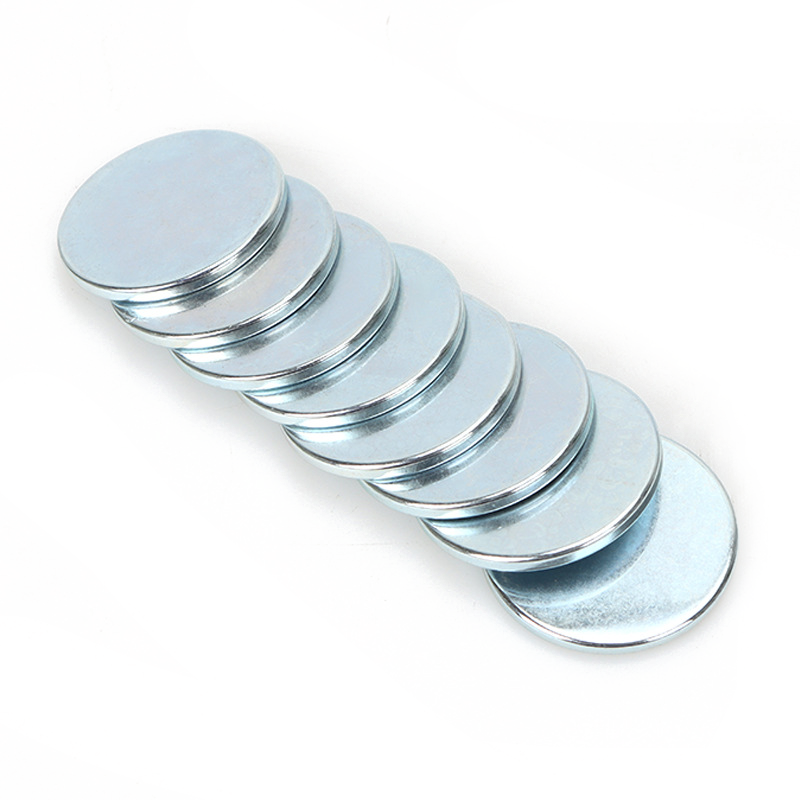
We must also examine the implementation reality through a skeptical lens. Radial magnetization requires complex, dimension-specific magnetizing coils. Manufacturers must build custom fixtures for your exact ring dimensions. Tooling setups make this approach highly impractical for rapid, low-budget prototyping. You should only consider custom radial rings for scaled production runs. If you need quick prototypes, try using off-the-shelf sizes first. Standard D8mm x 8mm sensor disks offer a practical starting point for initial bench testing. Once you validate the concept, you can confidently invest in custom fixture development.
N35SH vs. Alternative Grades: A Decision Framework
Selecting the right material requires a structured decision process. You must weigh thermal stability against magnetic strength and physical material characteristics. We provide a clear framework below to help you navigate these complex choices.
| Material Comparison | Key Characteristic Differences | Decision Rule |
| N35 vs. N35SH | Standard N35 is strictly capped at 80°C. N35SH handles 150°C safely. | Only specify SH if sustained ambient or internal heat generation exceeds 80°C and approaches 120°C–150°C. |
| N35SH vs. N45SH | N45SH offers ~25% more magnetic pull/torque for the exact same volume. | Choose N35SH if space is not aggressively constrained. It prioritizes efficiency at scale. |
| SmCo vs. N35SH | SmCo handles 250°C+ and boasts high corrosion resistance, but is highly brittle. | Stick to N35SH if temperatures remain strictly under 150°C and structural durability is required. |
Let us detail the N35 against N35SH comparison further. Standard N35 cannot survive high-temperature automotive applications. Exceeding its limit causes permanent flux loss. You should only specify the SH variant under demanding conditions. Do not over-specify if your application remains continuously cool. Over-specification drains project resources unnecessarily.
Next, we evaluate N35SH against N45SH. The N45SH grade sounds appealing for high-performance motors. However, it requires a significantly higher raw material investment. You should follow a simple decision rule here. Choose the N35SH variant if your physical space allows slightly larger magnet volumes. Only upgrade to N45SH when extreme miniaturization forces you to maximize flux density per cubic millimeter.
Finally, consider Samarium Cobalt (SmCo). SmCo handles extreme temperatures exceeding 250°C effortlessly. It also boasts exceptional natural corrosion resistance. However, SmCo is highly brittle and notoriously difficult to machine. It chips easily during automated assembly. The neodymium option provides far better structural durability for high-speed rotating assemblies.
Coatings, Tolerances, and Implementation Risks
Neodymium materials oxidize rapidly when exposed to ambient moisture. Proper surface protection prevents catastrophic corrosion. You must specify appropriate coatings based precisely on your operating environment.
NiCuNi (Nickel-Copper-Nickel) serves as the undisputed industry standard. We highly recommend this triple-layer plating for internal motor environments. It prevents oxidation effectively while providing a durable, hard exterior. It resists minor mechanical scratches during the assembly process seamlessly.
Epoxy coatings offer a distinctly different set of protective benefits. Choose epoxy for environments experiencing high humidity or direct chemical exposure. Automotive fluid sensors frequently utilize epoxy-coated rings. The coating acts as a robust barrier against harsh automotive oils and transmission fluids.
Dimensional tolerances dictate the final assembly success. Standard sintered NdFeB manufacturing yields typical tolerances around ±0.1mm. This baseline tolerance works well for basic sensor applications. However, high-speed rotors introduce a severe risk factor. Rotors demand strict concentricity and precise runout tolerances. You must specify aggressive tolerances, often around ±0.05mm. Failing to tighten these specifications causes severe mechanical vibration. Vibration destroys bearings and degrades overall motor lifespan rapidly.
Handling and assembly risks demand serious attention. Radially magnetized rings can be exceptionally dangerous to handle. Multi-pole configurations aggressively attract metallic assembly tools. Operators can easily pinch their fingers between the magnet and a steel workbench.
- Best Practices: Design non-magnetic assembly jigs using aluminum or durable polymers. Train your assembly staff on specific neodymium handling protocols. Implement strict distance rules between unfinished magnet batches on the factory floor.
- Common Mistakes: Using standard steel tweezers or screwdrivers near multipole rings. Failing to account for coating thickness when calculating final press-fit dimensions. Ignoring ambient humidity levels in the final assembly facility.
Vendor Evaluation and Shortlisting Logic
Not all suppliers possess the capability to produce true radial magnetization. You must assess manufacturer capabilities rigorously. Look closely for vendors who design custom magnetizing fixtures in-house. Outsourcing fixture design often leads to poor magnetic pole alignment and extended lead times. A skilled vendor will understand exactly how to shape the magnetizing coil to achieve your required flux density profile.
Quality assurance and strict compliance separate reliable partners from risky suppliers. Demand highly traceable BH curves for your specific production batch. Request thermal demagnetization test reports before accepting any shipments. These critical documents prove the material actually meets the designated SH temperature rating. You must also check for RoHS and REACH compliance. Automotive and consumer electronics sectors strictly enforce these environmental regulations. Non-compliant materials will stall your entire production line immediately.
Taking structured next-step actions ensures a smooth procurement process. Always provide comprehensive CAD drawings when requesting a quote. State your maximum operating temperature requirements clearly on every document. Request detailed tooling feasibility estimates upfront. This helps you plan your initial production run properly without unexpected workflow surprises. Evaluating these variables early guarantees a stable, long-term manufacturing partnership.
Conclusion
The Radial Magnetization N35SH Magnet is the optimal choice for mid-strength applications. It excels where ambient or operational temperatures reach up to 150°C. Assembly efficiency and precise field transitions far outweigh the initial tooling requirements. Moving away from glued segments ensures long-term mechanical reliability under severe stress.
Consider these final next steps for your project integration:
- Consult directly with a dedicated magnetics engineer to review your operational parameters.
- Submit your exact dimensional requirements to verify manufacturing feasibility.
- Request a sample of standard radial sizes for immediate bench testing.
- Validate the continuous magnetic sine wave in your specific sensor or motor assembly before scaling production.
FAQ
Q: Can a Radial Magnetization N35SH Magnet be cut or machined after magnetization?
A: No. Machining destroys the magnetic field, removes the protective coating, and poses a severe fire hazard due to highly reactive neodymium dust.
Q: Does radial magnetization cost more than axial?
A: Yes, due to the specialized magnetizing fixtures and slightly more complex pressing processes required to align the magnetic domains radially.
Q: How many poles can be radially magnetized on an N35SH ring?
A: It depends heavily on the outer diameter and the capabilities of the specific magnetizing fixture, ranging seamlessly from uni-pole to complex multi-pole configurations.
Q: Will an N35SH magnet permanently lose strength at 150°C?
A: If kept at or strictly below 150°C, flux loss remains temporary and recovers fully upon cooling. Exceeding 150°C risks irreversible demagnetization.