For engineers and procurement managers, specifying a neodymium magnet requires a careful balance. You must weigh magnetic output against thermal stability. Component consistency matters greatly for ongoing production lines. The N40 grade hits a critical sweet spot for many industrial applications. It serves everything from precision servo motors to heavy-duty magnetic separators. You get excellent remanence. You avoid the steep premium associated with N52 grades.
However, the long-term reliability of an Industrial N40 Neodymium Magnet depends entirely on its manufacturing process. You must understand how facilities forge, sinter, and coat these components. This knowledge helps you evaluate supplier quality accurately. It ensures lot-to-lot consistency across large orders. It ultimately mitigates catastrophic failure risks in the field. Let us explore the exact steps manufacturers use to create these essential magnetic components.
Key Takeaways
- Process Dictates Performance: Strict atmospheric controls during milling and sintering prevent oxidation, which is the primary cause of premature magnetic degradation.
- Coating is Non-Negotiable: Because N40 magnets are highly susceptible to corrosion, industrial evaluation must heavily weigh the quality of surface treatments (e.g., Ni-Cu-Ni, Epoxy).
- Traceability Matters: Reliable suppliers can provide BH curve reports and dimensional tolerance data for every batch to verify exact N40 specifications.
The Business Case for the Industrial N40 Neodymium Magnet
Why specify N40 over N35 or N45? Engineers consistently choose N40 because it provides a reliable Remanence (Br) of 1.25–1.28 Tesla. This high output proves highly efficient for standard industrial motors. Sensor arrays also benefit greatly from this magnetic flux. Extreme miniaturization strictly requires N52 grades. Most standard machinery assemblies do not need this extreme footprint reduction. Therefore, N40 delivers optimal magnetic force without over-engineering the solution.
Thermal thresholds require careful attention during the design phase. Standard N40 magnets feature a maximum operating temperature of 80°C. You must evaluate the operating environment before finalizing your specification. If your equipment generates excessive heat, standard N40 will permanently lose magnetic strength. High-heat environments demand specialized temperature variants. Manufacturers add trace amounts of Dysprosium to increase heat resistance. You should specify N40M, N40H, or N40SH if your thermal limits exceed standard parameters.
This grade acts as the baseline standard for high-yield industrial production lines. Manufacturers enjoy a stable raw material supply for this specific chemical composition. The predictable magnetic yields make it an ideal choice for mass production. You minimize supply chain bottlenecks by standardizing around this widely produced grade.
| N40 Grade Variant | Maximum Operating Temperature | Typical Industrial Application |
| Standard N40 | 80°C (176°F) | Indoor sensors, standard actuators |
| N40M (Medium) | 100°C (212°F) | Enclosed servo motors |
| N40H (High) | 120°C (248°F) | Industrial automation equipment |
| N40SH (Super High) | 150°C (302°F) | Heavy-duty generators, high-speed rotors |
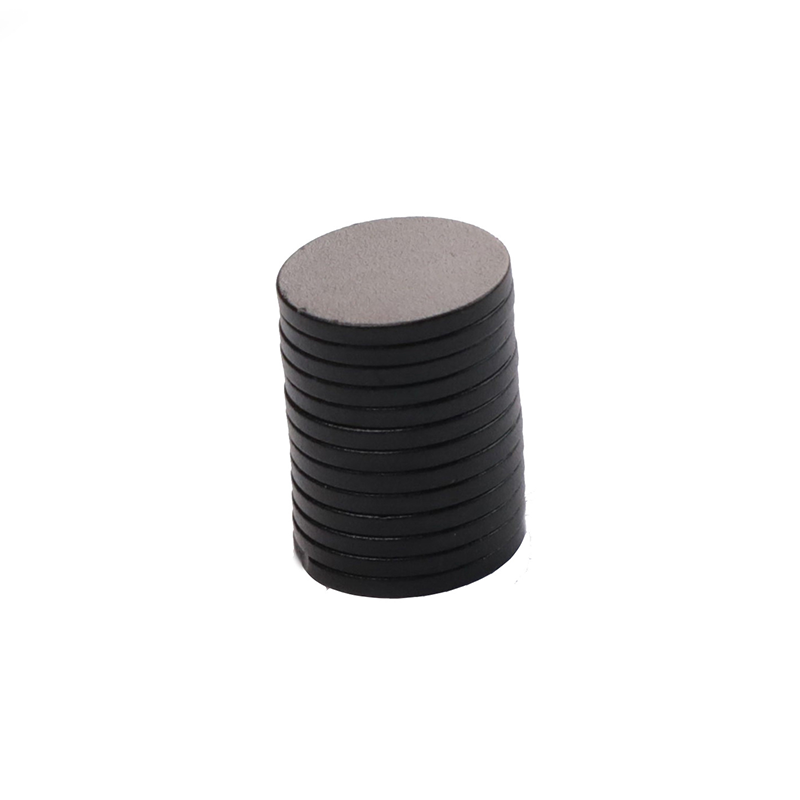
Core Manufacturing Stages: From Raw Earth to Sintered Block
Transforming raw earth into a powerful magnetic block requires immense precision. Every single stage impacts the final coercivity and remanence. Here is the step-by-step process advanced manufacturers use.
- Melting & Strip Casting: Facilities melt Neodymium, Iron, Boron, and minor transition metals inside a vacuum furnace. You should look for suppliers utilizing advanced strip casting. This technique rapid-cools the molten alloy over a chilled wheel. It creates ultra-fine grain structures within the metal. Finer grains directly improve the component's coercivity. This boosts its resistance to accidental demagnetization.
- Hydrogen Decrepitation (HD) & Jet Milling: The alloy undergoes hydrogen gas exposure. This gas permeates the metal lattice and embrittles the solid flakes. Next, high-pressure jet milling grinds the material into a fine powder. The target particle size sits around 3 microns. Oxygen exposure here ruins the entire batch completely. High-tier manufacturers execute this step entirely within inert nitrogen or argon environments.
- Pressing & Alignment: Machines press the fine powder into solid blocks. During pressing, a powerful external magnetic field aligns the internal magnetic domains. This alignment determines the final polarization direction. Isostatic pressing yields superior density. It provides better magnetic uniformity compared to standard axial pressing techniques.
- Sintering & Annealing: The blocks enter a specialized vacuum furnace for baking. Operators raise the heat to near-melting temperatures. This solidifies the internal crystalline structure. Precise temperature control during annealing determines final structural integrity. Careful thermal management eliminates internal mechanical stress. It ensures the blocks will not crack during later machining.
Machining and Industrial Surface Protection
Sintered neodymium blocks emerge from the furnace extremely brittle. They require precise cutting to form usable final shapes. Facilities use diamond-wire saws to slice the large blocks. They grind the material into discs, blocks, rings, or complex cylinders. Coolant flows continuously during cutting. This prevents heat buildup from demagnetizing the freshly baked material.
You must rigorously assess the supplier's machining tolerances. The standard industrial tolerance is ±0.1mm. Some precision applications require much tighter tolerances of ±0.05mm. Poor machining leads directly to assembly failure. It causes dangerous imbalances in high-speed rotary equipment. It also prevents proper seating in tight motor housings.
Surface protection plays an equally critical role. Bare neodymium rusts incredibly fast. Ambient humidity alone will degrade an unprotected block into useless powder. You must specify the correct coating for your intended environment. Do not skip this evaluation phase.
| Surface Coating Type | Characteristics & Best Use Cases | Validation Testing Required |
| Ni-Cu-Ni (Nickel-Copper-Nickel) | The undisputed industrial standard. Offers excellent durability for general indoor machinery and electronics. Highly scratch resistant. | Salt Spray Test (SST) for at least 24-48 hours. |
| Zinc Plating | Cost-effective alternative. Suitable for dry, low-corrosion environments. Offers a slightly lower dimensional profile. | Visual inspection, basic adhesion testing. |
| Epoxy Coating | Essential for marine, humid, or highly corrosive industrial environments. Provides a thick, waterproof barrier. | Highly Accelerated Stress Test (HAST), 96+ hours SST. |
Evaluating Supplier Quality Control and Compliance
You need hard data to verify an Industrial N40 Neodymium Magnet. Trustworthy manufacturers test sample blocks in a permeameter. They generate a detailed BH Curve report for every batch. This report verifies the Remanence (Br), Coercivity (Hcb/Hcj), and Max Energy Product (BHmax). These exact metrics must strictly align with the documented N40 standard. Reject any batch lacking proper hysteresis data.
Physical integrity matters just as much as magnetic strength. Quality suppliers use automated optical inspection (AOI) systems. High-resolution cameras scan every piece. AOI detects micro-cracks, surface chips, or tiny coating blisters. These minor defects often cause catastrophic mechanical failure during final assembly. You cannot rely on manual visual inspection for high-volume orders. Human error misses too many microscopic fractures.
Compliance ensures long-term operational sustainability. Ensure the manufacturing partner adheres strictly to RoHS and REACH directives. They must restrict hazardous chemicals in their plating processes. You should also inquire about their rare-earth sourcing transparency. Check for active ISO 9001 and ISO 14001 certifications. These global credentials prove their commitment to consistent, ethical, and environmentally responsible manufacturing practices.
Procurement Risks and Implementation Considerations
Procuring neodymium magnets carries specific risks. Grade substitution happens frequently in the global market. Unscrupulous suppliers intentionally mislabel lower-grade materials to increase margins. You might receive N35 or N38 components mislabeled as N40. This deceit compromises your entire assembly. You can mitigate this risk easily. Always demand batch-specific demagnetization curves. You should also request independent third-party testing for your initial large-scale orders.
Handling these components requires strict factory protocols. N40 magnets remain dangerously strong and inherently brittle. Standard steel workbenches pose a severe hazard. Assembly lines require non-magnetic jigs made from brass, aluminum, or durable polymers. Workers need specialized safety training. Proper workstation spacing prevents high-velocity collisions. When two large magnets snap together unexpectedly, they shatter instantly. The resulting sharp shrapnel poses severe safety hazards to your assembly technicians.
Manufacturing lead times significantly affect your production schedule. Custom machining always extends delivery windows. Specialized coatings like thick marine epoxy require extra curing time. Evaluate the manufacturer's global logistics network carefully. Do they operate domestic warehousing facilities? Will your order require a standard 10-12 week ocean freight cycle? Plan your inventory buffers accordingly to prevent unexpected assembly line downtime.
Shortlisting Your N40 Magnet Manufacturer
Choosing the right manufacturing partner streamlines your entire operation. You need a reliable decision framework. Ask direct questions to gauge their true factory capabilities.
- Assess Production Ownership: Do they own the actual sintering facility? Many suppliers operate merely as trading companies or resellers. Direct manufacturers offer superior supply chain traceability. They also provide comprehensive custom engineering support when issues arise.
- Verify Raw Material Traceability: Can they provide raw material lot traceability? You need the ability to trace every finished batch back to the original strip casting run. This transparency guarantees consistent performance across years of ongoing production.
- Evaluate Engineering Capabilities: Do they offer active engineering support for complex magnetic circuit design? Specialized industrial applications often require complex Halbach arrays. A competent engineering team will help optimize your magnetic field orientation for maximum efficiency.
Your next step requires physical validation. Request a prototype batch before signing any long-term agreements. Run rigorous in-house environmental testing. Verify the coating durability under your specific real-world conditions. Always validate the prototypes thoroughly before committing to high-volume procurement contracts.
Conclusion
The reliability of an N40 magnet involves far more than its basic chemical formula. Rigorous control of oxygen during milling dictates the final quality. Precise temperature management ensures strong structural integrity. Tight machining tolerances guarantee seamless integration into your final assembly. Every production step matters.
Partnering with a capable manufacturer eliminates guesswork from your supply chain. Excellent suppliers prioritize transparent testing protocols. They utilize robust, highly resilient coating technologies. This proactive approach drastically reduces field failures. You enhance your overall operational value by securing dependable components from verified sources.
Contact our engineering team to review your specific magnetic requirements. We can analyze your dimensional tolerances and thermal operating conditions. We provide sample BH curves for your engineering evaluation. Request a quote on custom industrial magnetic solutions today and secure your production timeline.
FAQ
Q: What does "N40" actually mean?
A: "N" stands for Neodymium, an essential rare-earth element. The "40" represents the Maximum Energy Product (BHmax) measured in MegaGauss-Oersteds (MGOe). This number indicates the maximum magnetic strength and energy density of the sintered material.
Q: Can an Industrial N40 Neodymium Magnet withstand high temperatures?
A: Standard N40 magnets degrade permanently above 80°C (176°F). Exposure beyond this threshold causes irreversible magnetic loss. For hotter environments, you must specify high-coercivity grades. Options include N40M (100°C), N40H (120°C), or N40SH (150°C).
Q: How can I verify I received an N40 magnet and not a weaker grade?
A: You can verify surface fields using a standard Gauss meter. A Pull Force tester provides basic mechanical strength data. However, the most accurate verification requires a Hysteresis Graph (BH Curve) test. Certified labs provide this definitive testing.
Q: Why are N40 magnets plated, and can I order them unplated?
A: Unplated neodymium magnets rapidly oxidize. Ambient humidity causes them to rust and eventually turn to powder. Manufacturers almost never sell them unplated for industrial use. Proper coating remains absolutely required for long-term structural and magnetic integrity.